Institutional Investors Control Tens of Thousands of Acres in Phillips County
Large institutional investors led by TIAA and its farmland management arm Nuveen Natural Capital own tens of thousands of acres in Phillips County, lands that are routinely operated day to day by tenant farmers and third party crop managers. Local residents and community groups have raised concerns about pesticide spray drift, water quality, chronic health issues, and the loss of local land control, and they have organized town halls and published demands for reduced pesticide use, expanded local control, and reparative investment.

Institutional ownership of agricultural land in Phillips County has become a central issue in local civic and public health conversations. Over the past decade and more, investors led by TIAA through its Nuveen Natural Capital farm management arm have acquired substantial tracts of Delta farmland, holdings that add up to tens of thousands of acres countywide. Those properties are frequently leased to tenant farmers and managed by third party crop managers, which places decisions on chemicals, crop rotations, and stewardship in the hands of nonlocal managers.
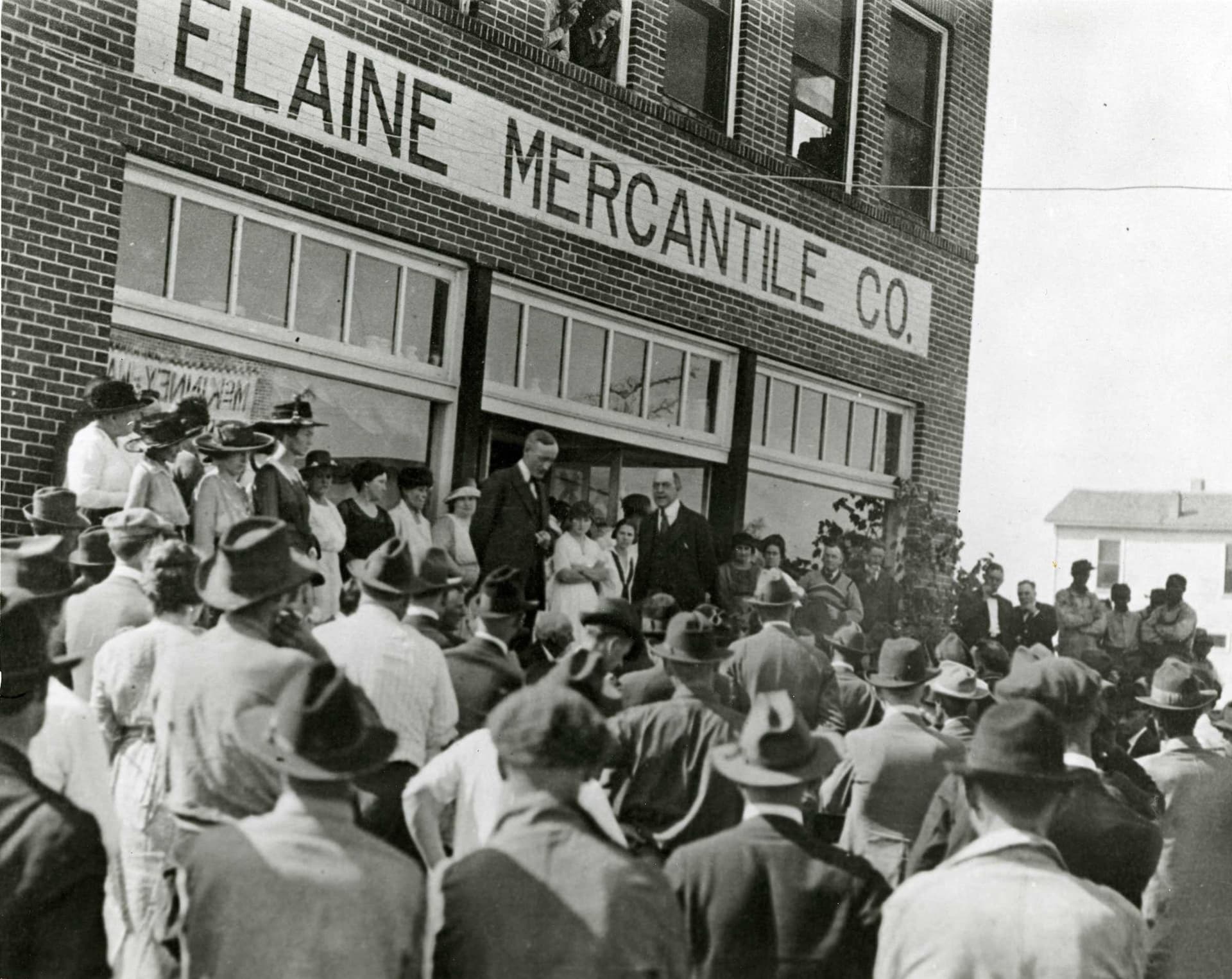
Residents in communities such as Elaine say those management decisions have tangible consequences. Concerns raised at local gatherings center on crop spray drift, the quality of surface and groundwater, and the possible clustering of chronic illnesses in areas downwind or downstream from large scale operations. Those environmental and health worries intersect with longstanding questions about land access, local economic opportunity, and how wealth is extracted from rural places without corresponding local investment.

Community groups including local organizers aligned with the Elaine Legacy Center have responded with meetings, town halls, and public demands for change. National advocacy coalitions focused on institutional investors have added pressure through campaigns aimed at TIAA and related investment managers. The demands advanced by residents and advocates call for reduced pesticide use, greater local control over management decisions, and reparative investment targeted to communities that have experienced disinvestment.
The debate matters for governance and policy in Phillips County because agricultural land use is a primary driver of the local economy and a determinant of public health. When operational authority rests with remote managers, elected officials, public health agencies, and local civic groups face credibility and enforcement challenges. Transparency about ownership, clearer reporting of chemical applications, strengthened contracting preferences for local operators, and engagement between institutional owners and affected communities are among the policy implications that have emerged from public meetings.
As the county navigates economic recovery and prepares for future land use decisions, these conversations will influence civic engagement, local policy priorities, and efforts to balance productive agriculture with community wellbeing and long term resilience.
Sources:
Know something we missed? Have a correction or additional information?
Submit a Tip