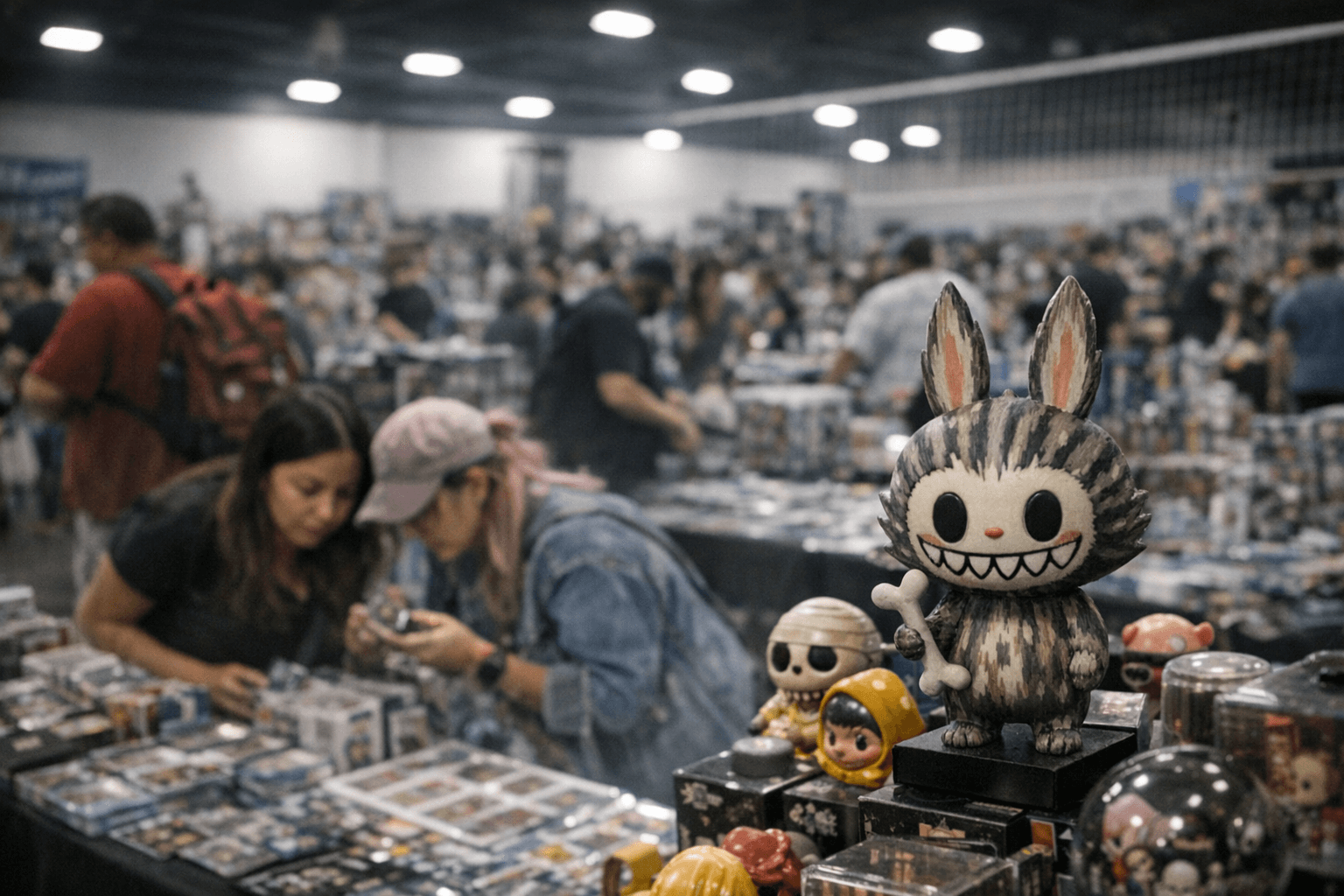
Investigation Finds Underage Workers, Blank Contracts, Excessive Overtime at Labubu Supplier
An investigation found underage workers, blank contracts and excessive overtime at a factory making Labubu figures, raising ethical and supply concerns for collectors.
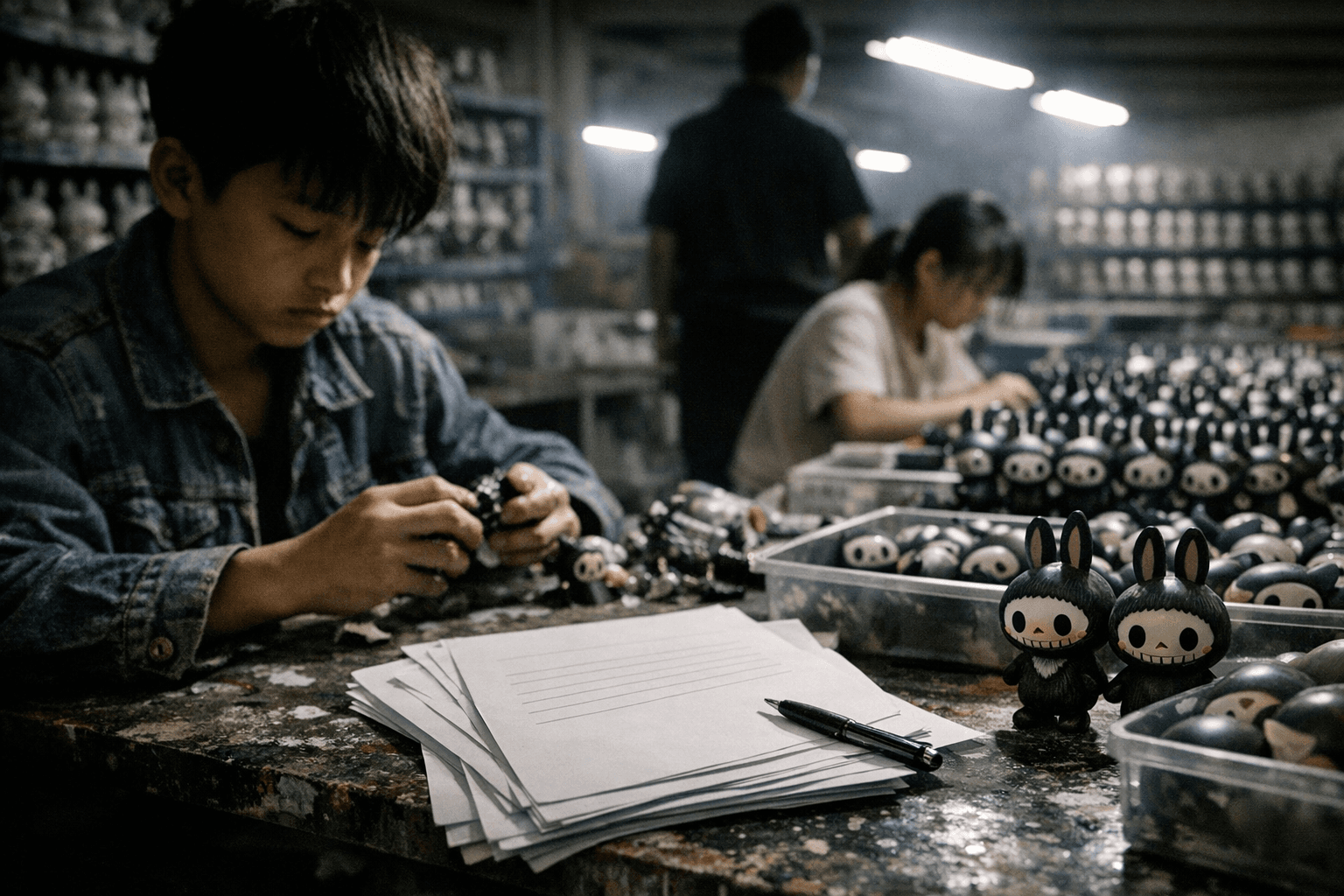
China Labor Watch investigators who interviewed more than 50 employees at Shunjia Toys uncovered a range of labor problems at the factory that produces Labubu figures for Pop Mart. The probe, completed around January 18, 2026, found three workers under 18, incomplete or blank contracts, a lack of clear explanation about contract terms, inadequate health and safety training, and production quotas that drove reports of more than 100 overtime hours a month.
The scale of the operation adds weight to the allegations. CLW reported the factory employs more than 4,500 people dedicated to Labubu production and said output likely already exceeds the factory’s stated capacity. Workers described intense quota pressure tied to the blind-box cycle and the global chase for chase figures, creating a production treadmill that pushed staff into extensive overtime to meet targets.
Blank or incomplete contracts and unclear explanations of contract terms leave workers vulnerable to unstable pay and unpredictable schedules. Inadequate health and safety training raises concerns for shop-floor risks at a plant that appears to run above its designed capacity. Excessive overtime not only affects workers’ health and family life but can also hide capacity constraints that could ripple into supply lines for collectors and retailers.
Pop Mart has publicly pledged to investigate the allegations, strengthen supplier audits and require corrective action if the claims are substantiated. Those steps could force production slowdowns, reconfiguration of shifts, or stricter oversight at Shunjia Toys and other suppliers. For collectors, that could mean short-term shifts in availability, altered release schedules for new Labubu drops, or changes to how many figures reach domestic and international markets.
The story fits into a broader pattern: high global demand for Labubu and other blind-box figures has increased pressure on suppliers to hit tight production targets. When demand outpaces capacity, factories can resort to extended hours, temporary staff surges, and informal contract practices that skirt labor protections. That dynamic can affect product quality, lead times and the ethics of purchases on the secondary market.
What you can do now is watch official Pop Mart updates and vendor notices for any changes to release calendars or shipping timelines. Consider asking retailers about provenance and production timelines before pre-ordering large runs. If you buy on the secondary market, be aware that supply shocks can spike prices and that price alone may not reflect production ethics.
Expect scrutiny to continue as Pop Mart’s audits unfold and as suppliers face pressure to correct workplace conditions. For the Labubu community, this episode is a reminder that the thrill of a pull has real-world costs, and that greater transparency from brands and suppliers will shape both availability and the values behind the figures collectors chase.
Know something we missed? Have a correction or additional information?
Submit a Tip