Iowa farmers face soaring costs, await China trade relief
Diesel costs are up about 50% and fertilizer prices are jumping as Iowa farmers plant, leaving trade hopes for China as the only near-term relief.

Fuel and fertilizer are climbing before any China deal can reach the farm gate, and Iowa producers are feeling the squeeze in the middle of spring planting. Diesel has risen about 50% since the war with Iran intensified, while prices for seed, nitrogen and other inputs are rising at the same time, tightening already thin margins across the Midwest.
In Harlan, Iowa, Rick Chipman farms 1,800 acres of corn and soybeans in Shelby County and also runs a hog operation that helped cushion losses from last year’s trade fight. Even so, Chipman said soybean prices remain depressed, still down nearly a third from 2022, as farmers wait to see whether President Trump’s China outreach will translate into actual sales.
Trump said he had made a deal and told reporters farmers would be “very happy,” with billions of dollars in soybean purchases expected. But China did not immediately spell out timing, volume or even exactly what it would buy, and markets fell back after the summit as traders looked for specifics that never arrived. China’s commerce ministry later said the two sides had agreed in principle to expand agricultural trade through tariff reductions and to tackle non-tariff barriers and market access issues, but it described those steps as preliminary and still to be finalized.
The stakes are high. Reuters reported that U.S.-China farm trade fell 65.7% year-on-year to $8.4 billion in 2025, and China still applies an additional 10% levy on U.S. farm imports after last year’s tariff fight. Beijing had already resumed some purchases of U.S. farm goods after an October meeting and had met a U.S.-stated commitment to buy 12 million metric tons of soybeans by the end of February. Traders have also been watching for a possible 10% cut in soybean tariffs that could help private Chinese crushers re-enter the market.
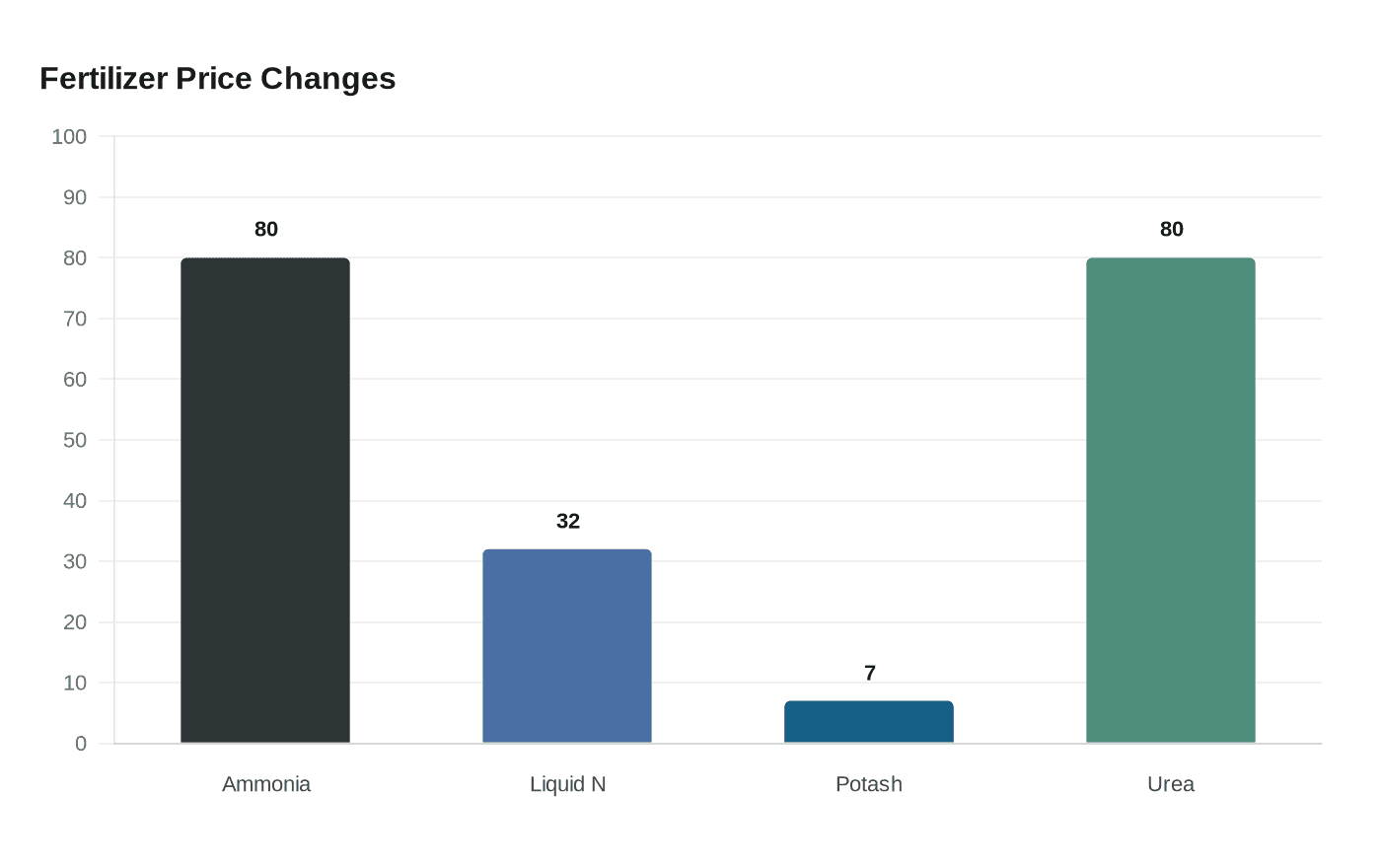
For now, the immediate pain is coming from the cost side of the ledger. The Iowa Farm Bureau’s Christopher Pudenc said 67% of Midwest farmers prebook fertilizer, which cushions some buyers, but it does not stop the global market from reacting to turmoil in the Middle East. Purdue agricultural economists said the Strait of Hormuz closure pushed crude oil above $110 a barrel and lifted nitrogen fertilizer prices more than 30%, with gasoline prices up roughly 17% in the first two weeks of the conflict. Iowa Capital Dispatch reported nitrogen fertilizer costs rising from 27% to 62%, depending on the product, with local suppliers telling farmers that anhydrous ammonia was up 80%, liquid nitrogen 32%, potash 7% and urea 80%.
Purdue said fertilizer accounts for roughly 20% to 30% of total corn production costs, compared with diesel at about 5% to 10%, making both shocks difficult to absorb at once. Farmers across Iowa are entering planting season with less room to maneuver, and the combination of geopolitical risk, fuel shocks and uncertain China policy is now showing up first in the balance sheet.
This article was produced by Prism’s automated news system from verified source data, official records, and press releases, then run through automated quality and moderation checks before publishing. The system is built and supervised by the people who set the standards it runs under. Read our full AI policy.
Did this article answer your question?

