Trump China summit leaves soybean farmers waiting for real deals
Trump's summit eased the politics, but China called the farm deal "preliminary" and soybean growers still face weak prices and war-driven input costs.

American soybean farmers came into President Donald Trump’s China summit hoping for a sale, not another promise. They left with Beijing saying the agricultural talks were only “preliminary,” while market watchers expected any near-term purchases to lean toward grains and meat rather than a major new soybean breakthrough.
The White House had said in November 2025 that China would buy at least 12 million metric tons of U.S. soybeans during the last two months of 2025 and at least 25 million metric tons annually from 2026 through 2028. Those commitments mattered because U.S. agricultural exports to China reached a record $40.9 billion in 2022 before falling sharply as trade tensions and shifting sourcing patterns disrupted the flow of goods.
After the summit, China’s commerce ministry said the two countries had agreed to expand agricultural trade through tariff reductions and to address non-tariff barriers and market-access issues. But Beijing also labeled the tariff, agricultural and aircraft deals “preliminary,” undercutting hopes that the summit had produced a durable fix for one of the most important export markets in U.S. farm country.
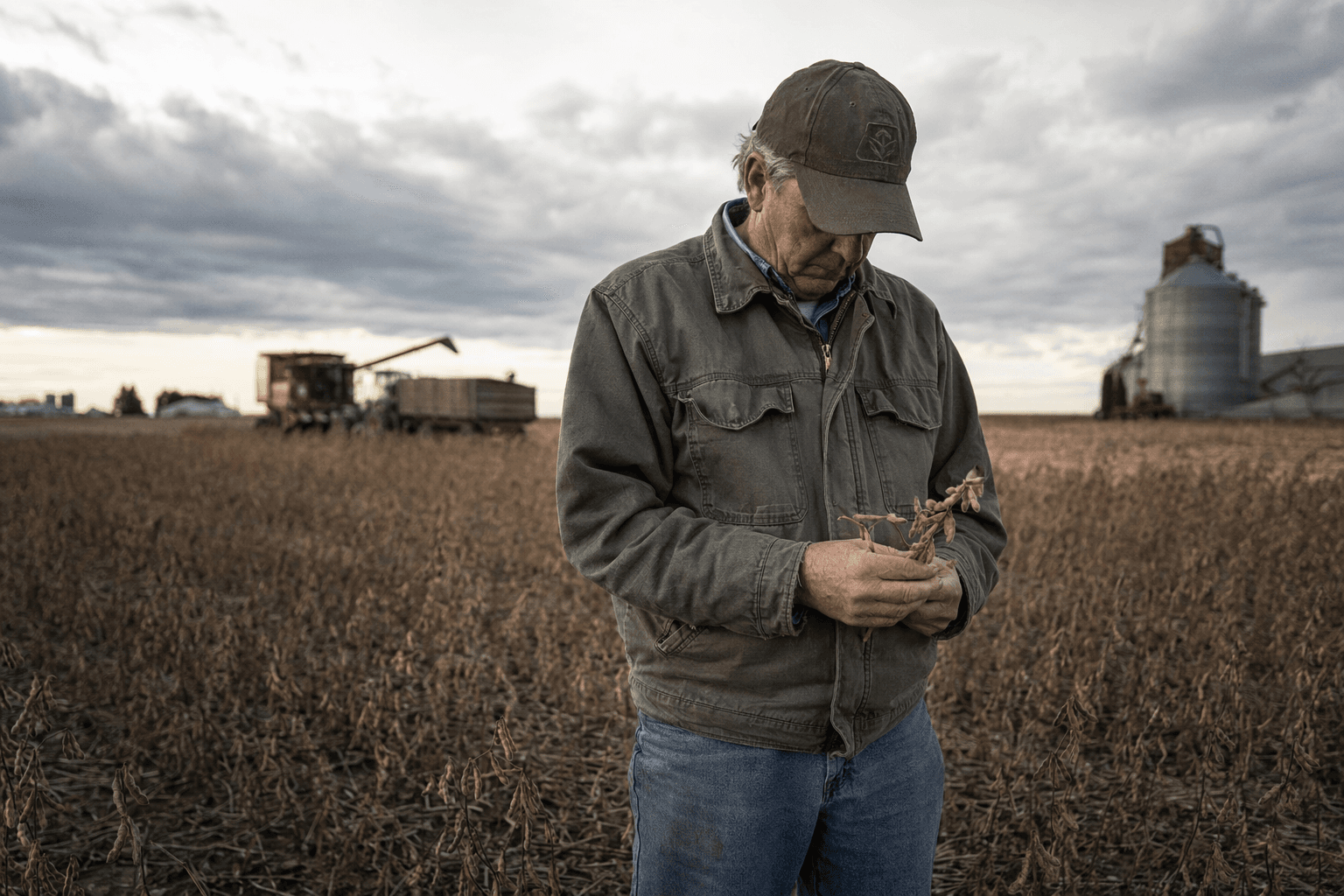
For Doug Bartek, a fifth-generation farmer near Wahoo, Nebraska, the stakes are immediate and personal. Bartek, who chairs the Nebraska Soybean Association, has been squeezed by high costs for fuel, equipment, fertilizer, seed, chemical and parts, while soybean prices have been pinned down by global oversupply. The pressure has been sharpened further by the war in Iran, which has lifted energy-linked costs and made farm operations more expensive at exactly the moment when growers need margins to stay intact.
That is the core problem for soybean producers now: trade policy remains unsettled even as input bills keep rising. Tariffs, supplier “price gouging” and weak prices leave farmers trying to decide how much to spend before planting, how much risk to carry into harvest and how long to wait for China to deliver on its purchase promises.
The summit lowered the political temperature, but it did not remove the squeeze. Until Beijing turns broad agricultural talk into firm buying and Washington locks in terms farmers can count on, growers like Bartek will keep facing the same hard math, paying more to plant while wondering whether China will be there when it is time to sell.
Know something we missed? Have a correction or additional information?
Submit a Tip