Iran Agrees to Reopen Strait of Hormuz as U.S. Halts Strikes
Pakistan brokered a deal that halted U.S. strikes on Iran and reopened the Strait of Hormuz for two weeks, easing a historic disruption to 20% of global oil supply.
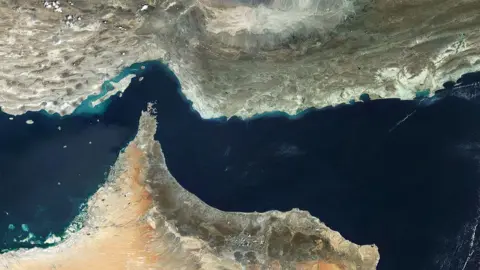
Nearly six weeks after coordinated U.S.-Israeli strikes effectively shut down the single most important oil transit corridor on earth, a ceasefire brokered by Pakistan's top leadership opened a narrow window for maritime traffic to resume through the Strait of Hormuz.
Iran's Foreign Minister Seyed Abbas Araghchi announced the terms on behalf of Iran's Supreme National Security Council. "If attacks against Iran are halted, our Powerful Armed Forces will cease their defensive operations," Araghchi said. "For a period of two weeks, safe passage through the Strait of Hormuz will be possible via coordination with Iran's Armed Forces and with due consideration of technical limitations."
U.S. President Donald Trump agreed to "suspend the bombing and attack of Iran" for two weeks, contingent on Iran's agreeing to a "COMPLETE, IMMEDIATE, and SAFE OPENING" of the Strait. The deal was brokered by Prime Minister Shehbaz Sharif and Field Marshal Asim Munir, who persuaded Trump to pause military operations and urged Tehran to reopen the waterway as a gesture of goodwill. Formal negotiations are to begin in Islamabad, structured around a 15-point U.S. proposal and Iran's 10-point counter-proposal.
The conflict began on February 28, 2026, when the United States and Israel launched coordinated strikes that included the killing of Supreme Leader Ali Khamenei. Within days, roughly 90 percent of shipping through the Strait was diverted; when Iran threatened to attack vessels directly, that figure climbed above 95 percent. The Federal Reserve Bank of Dallas has estimated that a complete cessation of Gulf oil exports could remove close to 20 percent of global oil supplies from the market, about 80 percent of which normally ships to Asia.

The Strait's economic weight makes any disruption catastrophic. In 2024, approximately 20 million barrels per day of oil moved through its waters, about 20 percent of global petroleum liquids consumption. The International Energy Agency calculated that in 2025 the Strait carried nearly 34 percent of global crude oil trade. The waterway also moves 20 percent of the world's liquefied natural gas, including approximately 93 percent of Qatar's LNG exports and 96 percent of the UAE's. Saudi Arabia accounts for roughly 38 to 40 percent of total Hormuz crude flows, while China and India together absorb about 44 percent of all transiting oil volumes. At its narrowest, the entire passage is just 21 miles wide, with two shipping lanes each only two miles across.
Iran's new Supreme Leader Mojtaba Khamenei, who assumed the role following Ali Khamenei's death in the February strikes, stated in his first public remarks that "the closure of the Strait of Hormuz must remain a priority," warning also of opening "new fronts where the enemy has limited experience and is highly vulnerable." That posture shaped Iran's negotiating stance going into the Islamabad talks.
The 2026 conflict marks an unprecedented rupture in maritime history. During the 1980s Tanker War, Iraq launched approximately 283 attacks on merchant shipping and Iran 168, yet the Strait was never fully closed; Iran relied on those same sea lanes for its own oil revenues. This is the first time in modern history that Strait traffic has been effectively halted, which is precisely why the two-week window, conditional on coordination with Iran's armed forces, falls considerably short of the unrestricted passage global energy markets require.
This article was produced by Prism’s automated news system from verified source data, official records, and press releases, then run through automated quality and moderation checks before publishing. The system is built and supervised by the people who set the standards it runs under. Read our full AI policy.
Did this article answer your question?


