Iran and US Harden Stances as Month-Old Middle East War Escalates
Trump posted that Tehran must "get serious soon" while Iran's foreign minister flatly denied talks — as 4,500 fresh U.S. troops converged on a war now entering its 27th day.

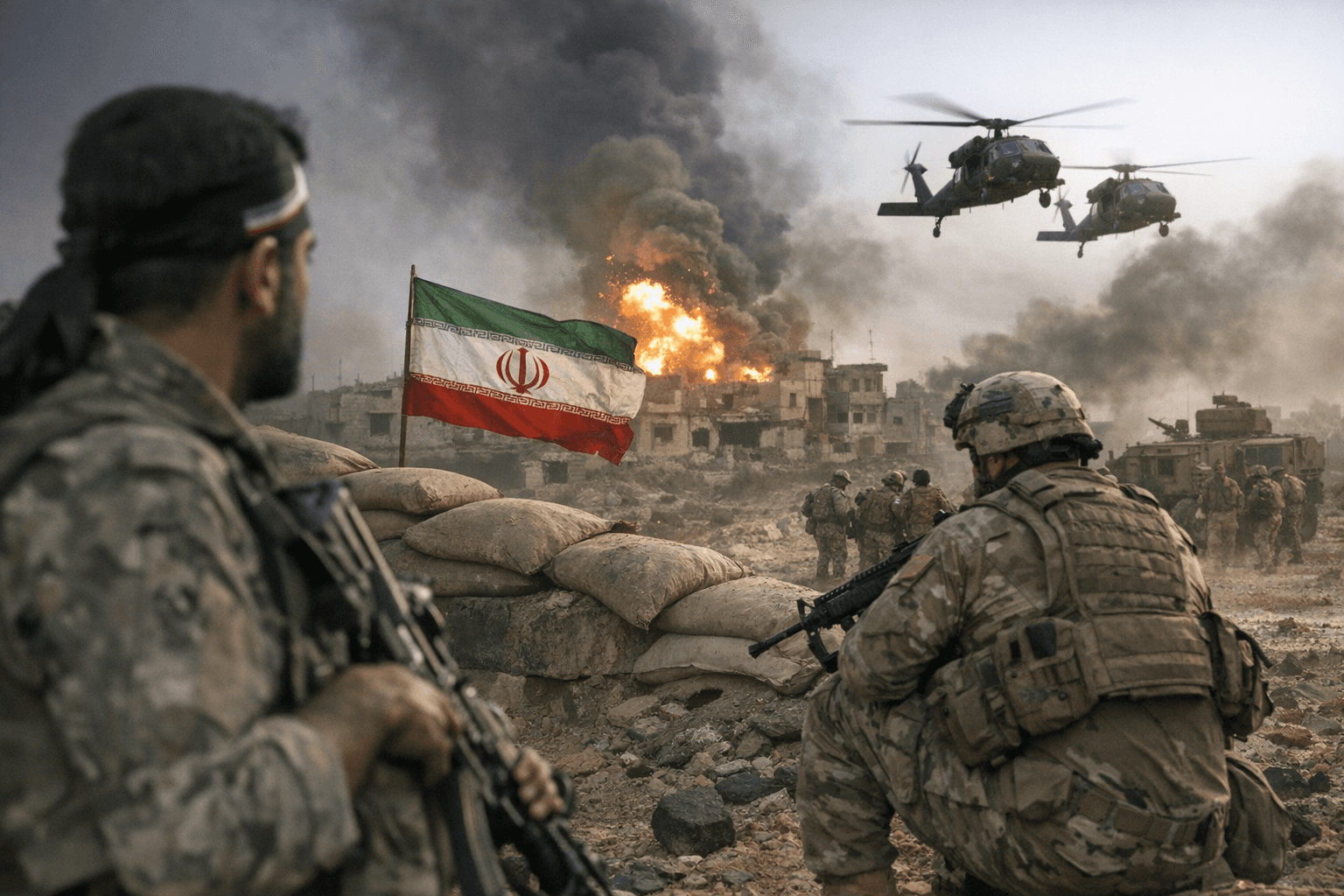
Iran dismissed an American ceasefire plan Thursday, launching more attacks on Israel and Gulf Arab countries even as President Donald Trump insisted diplomacy was alive — a contradiction that exposed just how wide the gap between Washington and Tehran had grown by day 27 of the war.
Trump posted on Truth Social that Tehran needs to "get serious soon" on negotiations and extended the pause on strikes against Iranian energy plants by 10 days, to April 6, writing that "talks are ongoing." Hours later, Iranian Foreign Minister Abbas Araghchi said the opposite. Araghchi said no negotiations were taking place between Tehran and Washington, but acknowledged the U.S. was sending messages through mediators, which "does not mean negotiations." Iran's parliament speaker, Mohammad Bagher Ghalibaf, reinforced the position on social media, writing that "no negotiations" had been held with the United States.
Iran remained highly suspicious of the United States, which twice under the Trump administration had attacked during high-level diplomatic talks, including with the Feb. 28 strikes that started the current war. Araghchi was explicit: "messages being conveyed through our friendly countries and us responding by stating our positions or issuing the necessary warnings is not called negotiation or dialogue," he said, adding that Tehran was not seeking war but wanted a permanent end to the conflict on its own terms.
The fighting showed no sign of pausing. The Israeli military completed several waves of airstrikes in Tehran and also said it had targeted an Iranian submarine development center in Isfahan. Israel's defense minister, Israel Katz, said his country had killed Alireza Tangsiri, the head of the Iranian Revolutionary Guard's navy, a key figure behind the near-total blockade of the Strait of Hormuz. Iran struck back: Iranian forces claimed to fire missiles at a military base in the northern Israeli city of Safed, as well as sites in Tel Aviv, Kiryat Shmona and Bnei Brak. Iranian forces also struck the United Arab Emirates, Bahrain and Saudi Arabia; shrapnel from a missile interception in Abu Dhabi killed two people, while the Saudi Defense Ministry intercepted several drones.
The U.S. military buildup continued in parallel with the diplomatic maneuvering. Approximately 2,500 Marines arrived in the region aboard ships, with an additional 2,000 paratroopers from the 82nd Airborne also deployed. The U.S. was expected to send at least 1,000 more soldiers from the elite 82nd Airborne Division, adding to roughly 50,000 U.S. troops already in the region. Israel also poured more troops into southern Lebanon to fight Hezbollah, which began firing rockets at northern Israel this month in support of Iran; Israeli officials said a civilian woman was killed by their rocket fire.
Both sides tabled formal proposals through intermediaries. Trump's envoy Steve Witkoff confirmed the U.S. had presented a "15-point action list that forms the framework for a peace deal," which mediator Pakistan gave to Iran. The plan, as described by Pakistani officials to the Associated Press, includes sanctions relief, a demand that Iran roll back its nuclear program, and the reopening of the Strait of Hormuz. Unnamed U.S. officials also listed a five-year halt to Iran's missile program, an end to financing for regional proxies, and zero uranium enrichment among the demands. Trump said the U.S. was "in negotiations right now" and that the participants included Witkoff, Jared Kushner, Secretary of State Marco Rubio and Vice President JD Vance.
Iran's counter-offer, relayed through state broadcaster Press TV, rejected the U.S. framework entirely. Iran's five-point plan included a halt to killings of its officials, means to ensure no other war was waged against it, reparations for the war, an end to all hostilities, and Iran's "exercise of sovereignty over the Strait of Hormuz."
That last demand struck Gulf neighbors as particularly threatening. A senior Emirati official called Tehran's restrictions on the strait an "act of economic terrorism." The disruption had already affected roughly 20% of the world's daily oil supply; Brent crude surpassed $100 per barrel in early March for the first time in four years, rising to $126 per barrel at its peak. Gasoline prices in the United States had soared to nearly $4 a gallon since the start of the war.
Pakistan, Egypt and Turkey pressed for a peace meeting between the U.S. and Iran in Islamabad. Mediators pushed for in-person talks perhaps as early as Friday. But with Tehran calling Trump "deceitful" and Trump himself belligerently declaring "I don't care" about reaching a deal just hours after the White House claimed discussions were proceeding — the diplomatic math remained stubbornly unresolvable, even as the bombs continued to fall.
This article was produced by Prism’s automated news system from verified source data, official records, and press releases, then run through automated quality and moderation checks before publishing. The system is built and supervised by the people who set the standards it runs under. Read our full AI policy.
Did this article answer your question?


