Iran conflict splits young Republicans, tests Trump’s America First base
Trump’s Iran strikes are energizing much of the GOP, but among younger conservatives they are reviving doubts about America First and the party’s future.
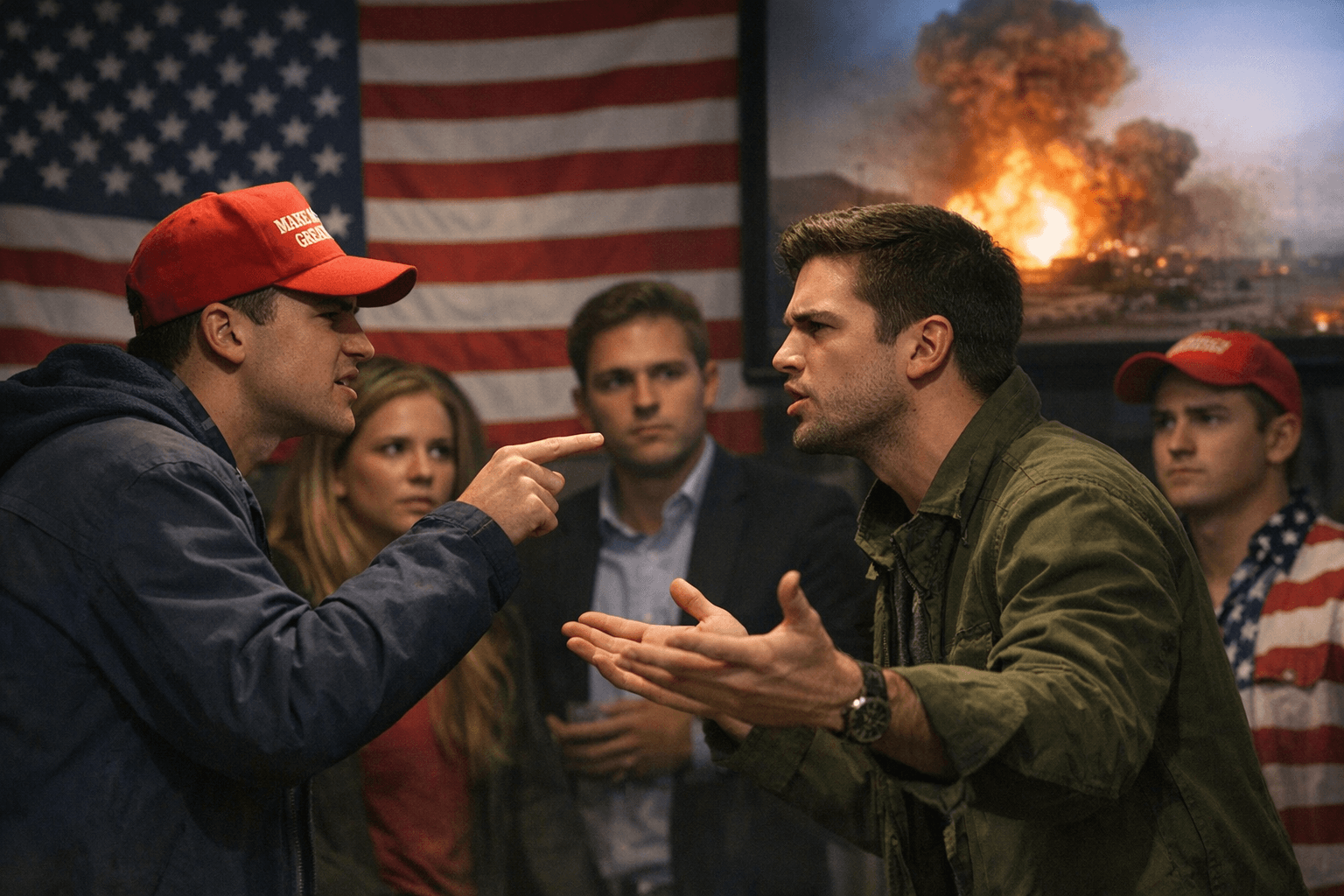
A warning sign inside Trump’s coalition
The fight over Iran is becoming an early fracture test for the Republican coalition, and the clearest fault line is generational. At CPAC in Grapevine, Texas, younger conservatives said Donald Trump’s strikes on Iran felt like a betrayal of his anti-intervention promises, while older attendees were more willing to accept the attacks as a response to a long-running threat from Tehran.
That split matters because it goes beyond a single foreign policy episode. It shows two competing instincts inside the party, America First restraint on one side and hawkish nationalism on the other, with young conservatives increasingly signaling which version of the movement they expect to inherit.
Republicans still trust Trump, but the base is not uniform
The polling suggests Trump still has room to maneuver, even as the politics grow more complicated. An AP-NORC poll found that 63% of Republicans supported airstrikes against Iranian military targets, but only 20% backed deploying American ground troops. At the same time, roughly 6 in 10 Republicans said they were at least somewhat concerned about being able to afford gas in the next few months.
That combination is the key to understanding the moment. Republicans continue to trust Trump on foreign policy, with about three-quarters approving of his handling of the presidency and about 70% approving of how he is handling Iran. But approval is not the same thing as enthusiasm, and the party’s comfort level drops sharply once the question shifts from airpower to boots on the ground, or from battlefield success to the price at the pump.
Young conservatives are sending the loudest warning
The sharpest resistance is coming from younger Republicans, especially on college campuses from the Northeast to the Southwest. A PBS report citing Pew Research Center found that only 49% of adults under 30 approved of Trump’s handling of the conflict, a sign that the president’s support among younger voters is far less sturdy than his overall numbers inside the party.
That unease showed up again at a Turning Point USA event in Washington, D.C., where young conservatives were divided. Some backed Trump, but others said they were conflicted or opposed, a reaction that captures the tension between loyalty to the president and skepticism about another Middle East war. PBS also noted that Turning Point USA now has more than 3,500 university campus chapters and more than 300 staffers, which makes it one of the most important pipelines for recruiting the next generation of Republican activists.
The military buildup is feeding the anxiety
The concern is not abstract, because the war is already being framed as a possible widening conflict. The Associated Press reported that at least 1,000 troops from the 82nd Airborne Division were being prepared for deployment to the Middle East in the coming days, a step that sharpened fears among younger conservatives about escalation.
That detail matters politically because it reinforces the very argument that anti-intervention Republicans have been making for years: once the United States starts striking in the region, pressure builds for a larger commitment. For older conservatives, that risk may be tolerable if the goal is to deter Iran. For younger ones, the troop movement looks less like prudence and more like the first stage of a war they believe Trump promised to avoid.
The midterm stakes are already on strategists’ minds
Republican strategists are not just thinking about ideology, they are thinking about the 2026 midterms. POLITICO reported that some GOP operatives fear the Iran war, higher gas prices, and a fragile ceasefire could help Democrats and damage Republican chances in the House and Senate, with one strategist warning that time is not on the president’s side.
That is where foreign policy meets kitchen-table politics. If oil markets tighten, gas prices rise, and the conflict drags on, Republicans could find themselves defending a war they did not ask for while also answering voters’ concerns about household costs. The AP-NORC finding that about 6 in 10 Republicans are worried about affording gas suggests that economic anxiety could turn a geopolitical crisis into a domestic liability very quickly.
Why the youth split matters more than a single poll
The broader significance of this fight is not just about this week’s headlines. Young conservatives are the Republican Party’s future staffers, activists, donors, campus organizers, and eventually candidates, which means their reaction to Iran is an early signal of how durable America First really is when it collides with global crises.
If the movement can only hold together when Trump is avoiding new wars, then a more interventionist turn risks opening a deeper argument over what the party stands for after him. If, instead, hawkish nationalism reasserts itself whenever Iran enters the picture, the conservative youth network that has been built around Trump may become a battleground for the next generation of Republican politics.
For now, the numbers show a party that is still broadly behind Trump but far from unified in its instincts. The older wing sees deterrence; the younger wing sees betrayal. That tension is not a footnote to the Iran conflict, it is a preview of the fight over who gets to define the Republican Party next.
This article was produced by Prism’s automated news system from verified source data, official records, and press releases, then run through automated quality and moderation checks before publishing. The system is built and supervised by the people who set the standards it runs under. Read our full AI policy.
Did this article answer your question?

