Trump Administration Embraces IMF and World Bank, Pushes Reforms and Mineral Financing
After years of attacking multilateralism, Trump officials are using the IMF and World Bank to advance U.S. leverage on China, minerals, and energy.
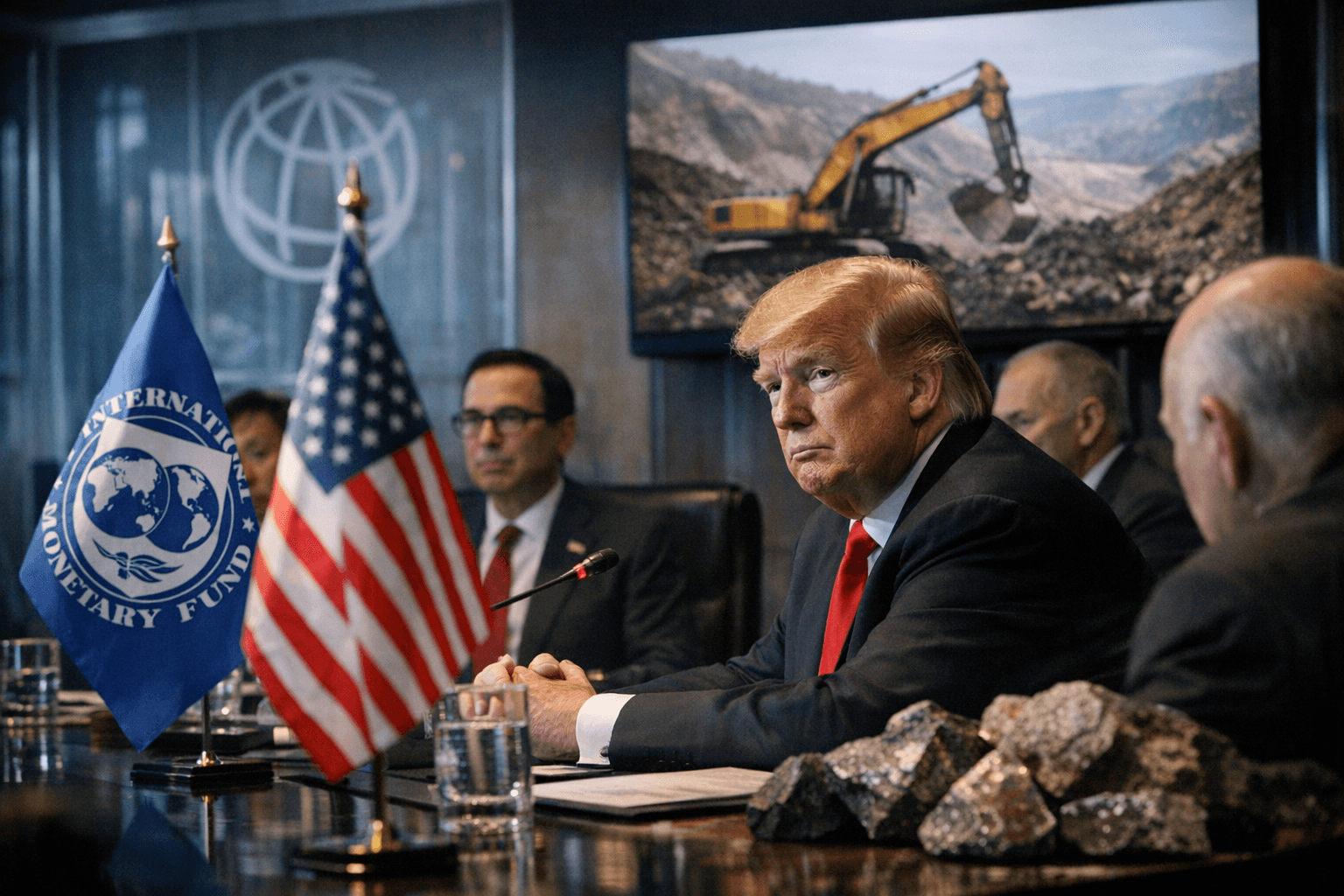
The Trump administration is turning the IMF and World Bank from campaign foils into instruments of leverage. What looked like a sweeping rejection of elite global institutions is now reading, in practice, as a narrower and more transactional doctrine: keep the system, but use it harder.
From attack to accommodation
Treasury Secretary Scott Bessent drew the line clearly in April 2025 when he said the IMF and World Bank “serve critical roles” and that the administration was eager to work with them if they stayed true to their missions. That was a notable tonal shift from the anti-globalist posture that has long defined the political brand around Trump. Yet Bessent paired the olive branch with a warning that the institutions had drifted into “mission creep,” spending too much time on climate, gender and social issues.
That framing matters because it shows the administration is not abandoning confrontation, only redirecting it. The White House is signaling that it will tolerate multilateral institutions when they are useful to U.S. strategy, but will challenge them when they move beyond what the administration considers core economic and security functions. In practice, that makes the IMF and World Bank less symbols of cooperation than policy tools to be disciplined.
What changed inside the institutions
The World Bank helped ease the tension by changing course on one of the most sensitive issues in global development finance. In June 2025, it ended its longstanding ban on financing nuclear power projects, opening the door to support for extending the life of existing reactors and, potentially, small modular reactors in developing countries. That reversal was especially significant because the bank had largely kept away from nuclear finance after Fukushima.
For the Trump team, the shift fits neatly with its “all of the above” energy approach. It also gives the administration a talking point that its energy policy is not just about domestic production, but about reshaping how poor and middle-income countries build power systems. In that sense, the World Bank’s change was not just a technical policy adjustment. It became a rare point of alignment between a multilateral lender and a White House that usually treats multilateralism with suspicion.
China is the through line
By April 15, 2026, the China dimension was even more explicit. Bessent reaffirmed U.S. support for a long-delayed IMF quota revamp and urged the World Bank to move quickly on financing projects to develop critical minerals, saying that would help diversify supplies away from China. That is not the language of retreat from global institutions. It is the language of using them to reduce dependence on a strategic rival.
The critical minerals push reveals the administration’s deeper calculation. Minerals are no longer just an industrial issue; they sit at the intersection of clean energy, defense supply chains and advanced manufacturing. By trying to route that agenda through the World Bank, Bessent is asking the institution to serve a geopolitical purpose that goes far beyond traditional poverty lending.
The IMF fight is about power, not just reform
The IMF side is more politically delicate in Washington. A quota revamp would increase the role of IMF quotas relative to borrowed resources, and some Republicans argue that kind of change could give larger emerging market economies, including China, more influence. That makes the administration’s support politically risky, even as it presents the move as modernization rather than concession.
Still, the fact that Bessent backed the revamp is telling. It suggests the administration sees enough value in the IMF to accept a fight over governance, as long as the result strengthens the institution’s utility in a crisis. The Treasury secretary’s message in Washington was not that the U.S. should step back. It was that the U.S. should stay in the room and shape the rules.
Climate finance loses priority
The World Bank’s climate agenda is another point of friction. Bessent said the administration welcomed the planned July 2026 expiration of the bank’s Climate Change Action Plan and wanted a shift away from what he called a myopic focus on climate and financing volumes toward durable, poverty-reducing projects. That language shows where the administration is trying to draw the boundary: climate projects are acceptable only when they clearly serve broader development and growth goals.
This is a policy reversal with practical consequences. If the bank trims climate ambitions and expands energy and mineral finance, the results could reshape capital flows for years, especially in countries that need both infrastructure and external funding. It also shows that the administration is not rejecting all international economic governance. It is trying to redefine what counts as legitimate governance.
What the reversal reveals
The administration’s own rhetoric offers the clearest clue. “America First does not mean America alone” is not a retreat from nationalism, but a more selective form of it. The phrase captures a governing reality that campaign slogans often obscure: once in office, the United States still needs institutions that can move money, shape standards and influence countries well beyond its borders.
That is the real lesson of this shift. Geopolitical competition with China, pressure to secure critical minerals, the appeal of nuclear power as an energy option, and the politics of IMF power all pushed the administration toward a pragmatic accommodation. The result is not a conversion to multilateralism. It is a more disciplined doctrine, one that keeps the IMF and World Bank in play, strips away what officials call mission creep, and uses the institutions to advance U.S. leverage where Washington thinks it matters most.
This article was produced by Prism’s automated news system from verified source data, official records, and press releases, then run through automated quality and moderation checks before publishing. The system is built and supervised by the people who set the standards it runs under. Read our full AI policy.
Did this article answer your question?

