Iran-Israel War Sends Brent Crude Surging Past $119 as Hormuz Attacks Shake Global Markets
Brent crude spiked to $119.50 before pulling back, as strikes on Saudi, Bahraini, and Qatari energy infrastructure triggered the worst supply shock in years.
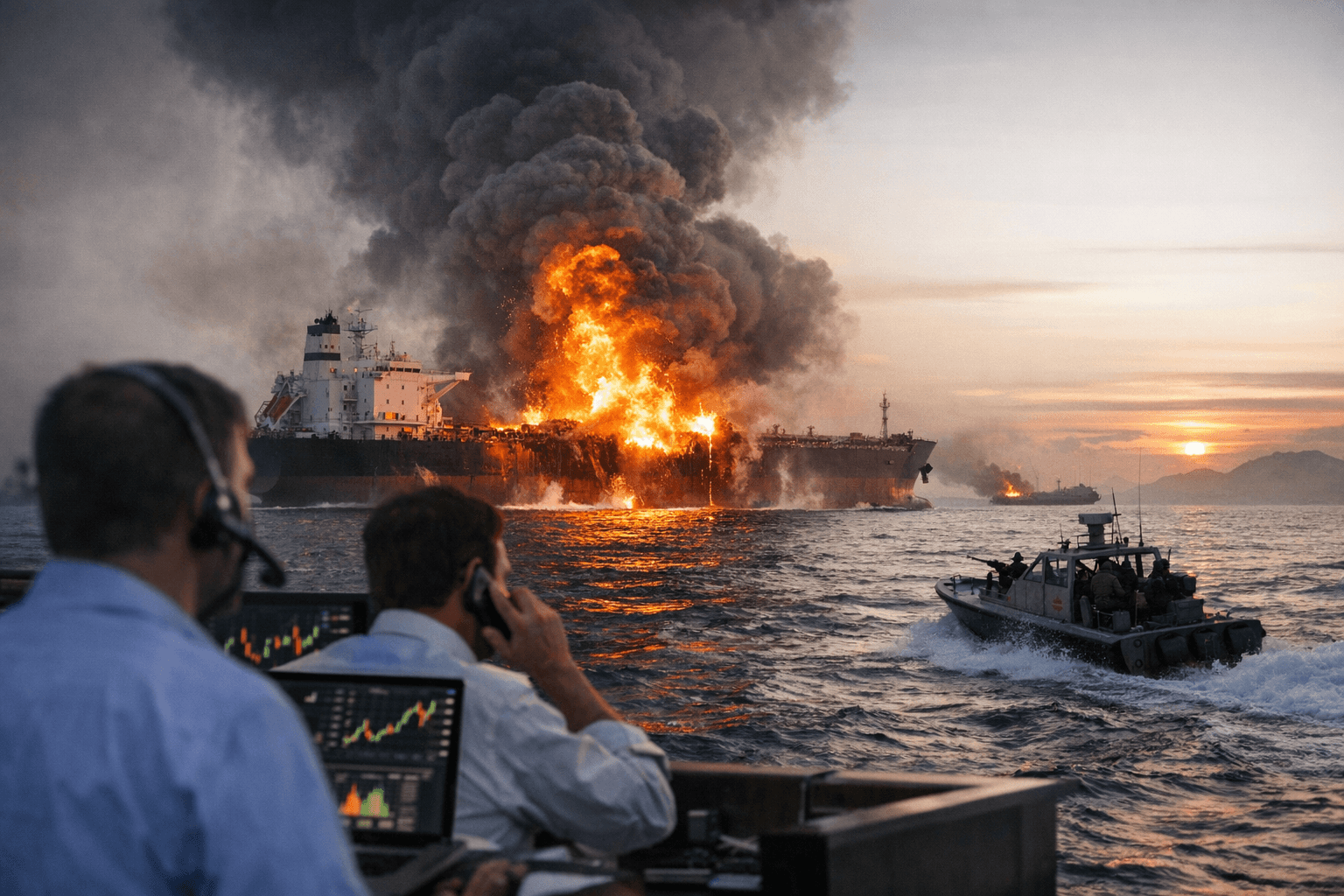
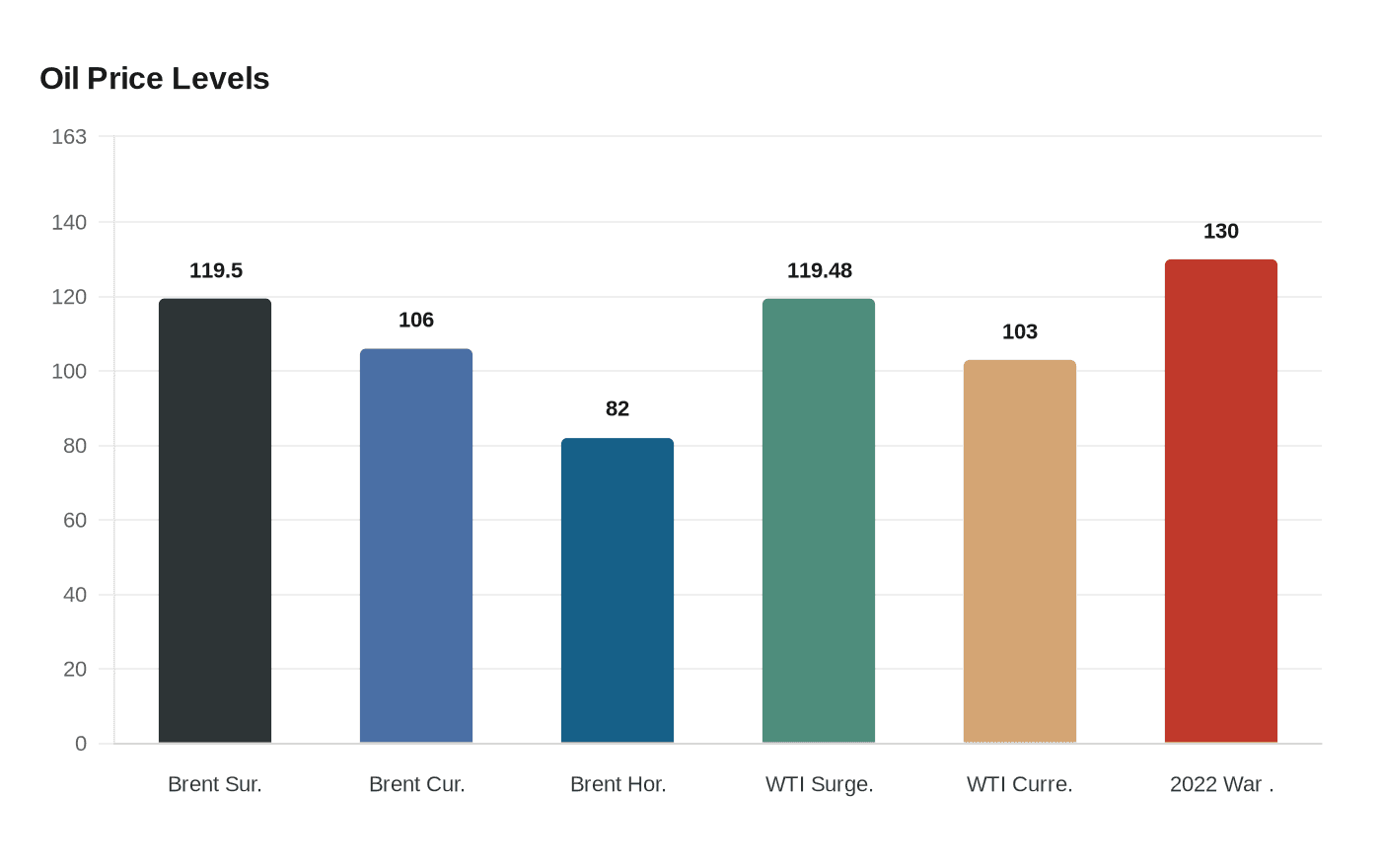
Brent crude surged to $119.50 per barrel before pulling back to around $106, up 14 percent on the day, as the Iran-Israel-U.S. war entered its second week and direct attacks on Gulf energy infrastructure rattled global oil markets. West Texas Intermediate similarly soared above $119.48 before retreating closer to $103.
The violence reached deep into the Gulf's energy backbone. An Iranian drone struck Saudi Aramco's Ras Tanura refinery on March 2, sending workers fleeing as smoke rose over one of the world's most critical oil processing facilities. Oil depots in Tehran smoldered after overnight Israeli strikes. Bahrain accused Iran of hitting a desalination plant vital to its drinking water supply, and Bahrain's national oil company declared force majeure on shipments after an Iranian attack set its refinery complex ablaze. QatarEnergy halted production at its facilities following what the BBC described as "military attacks," triggering a separate spike in natural gas prices.
At least three ships were attacked near the Strait of Hormuz over the weekend, with Brent briefly touching $82 per barrel on that news alone before the larger intraday surge. The Strait, through which a substantial share of global crude flows, now sits at the center of what market analysts are calling one of the largest supply shocks in recent years.
Iran exports roughly 1.6 million barrels of oil per day, mostly to China. Chinese Foreign Ministry spokesman Guo Jiakun addressed the disruption directly: "All parties have their responsibility to ensure stable and smooth energy supplies. China will take necessary measures to safeguard its own energy security."
Policy responses have so far provided only partial relief. OPEC+ agreed to increase output by 206,000 barrels per day, though some experts doubt the increase will meaningfully offset lost flows. Some G7 members were reportedly considering releases from strategic petroleum reserves, and prices moderated somewhat after that news circulated. Strategic reserve releases may help stabilize markets in the short term, but they cannot replace normal trade flows.
The economic consequences extend well beyond the pump. Edmund King, president of the AA, warned that "the turmoil and bombing across the Middle East will surely be a catalyst to disrupt oil distribution globally, which will inevitably lead to price hikes. The magnitude and duration of pump price increases depends on how long the conflict goes on." Subitha Subramaniam, chief economist at Sarasin and Partners, said sustained high prices "will start to cascade into other prices such as food, agriculture, industrial commodities and that's just going to really bleed into inflation."
Not everyone sees a full-blown crisis yet. Robin Mills, chief executive of Qamar Energy, noted that "at the moment, oil prices are not particularly high, they are still below where they were even two years ago so we're not in full-blown oil crisis mode yet," even as he acknowledged that price jumps feed through to consumers almost immediately as traders follow the news in real time.
Technical analysts see the current pullback from the $120 region as temporary. With WTI finding support near the $75 level that previously acted as resistance, market forecasters identify the next key upside targets for WTI at $91 to $95, with a sustained close above $95 potentially opening the path toward $110 to $115. For Brent, the $100 to $105 range is the critical zone to watch. If the conflict deepens, scenario analysis points toward the 2022 wartime highs near $130 per barrel and beyond.
This article was produced by Prism’s automated news system from verified source data, official records, and press releases, then run through automated quality and moderation checks before publishing. The system is built and supervised by the people who set the standards it runs under. Read our full AI policy.
Did this article answer your question?