Iran Launched Ballistic Missiles at Diego Garcia, Missing the Base but Sending a Message
Iran fired two long-range ballistic missiles toward the U.S.-U.K. base at Diego Garcia, missing the target but revealing strike capabilities far beyond what Tehran had previously acknowledged.
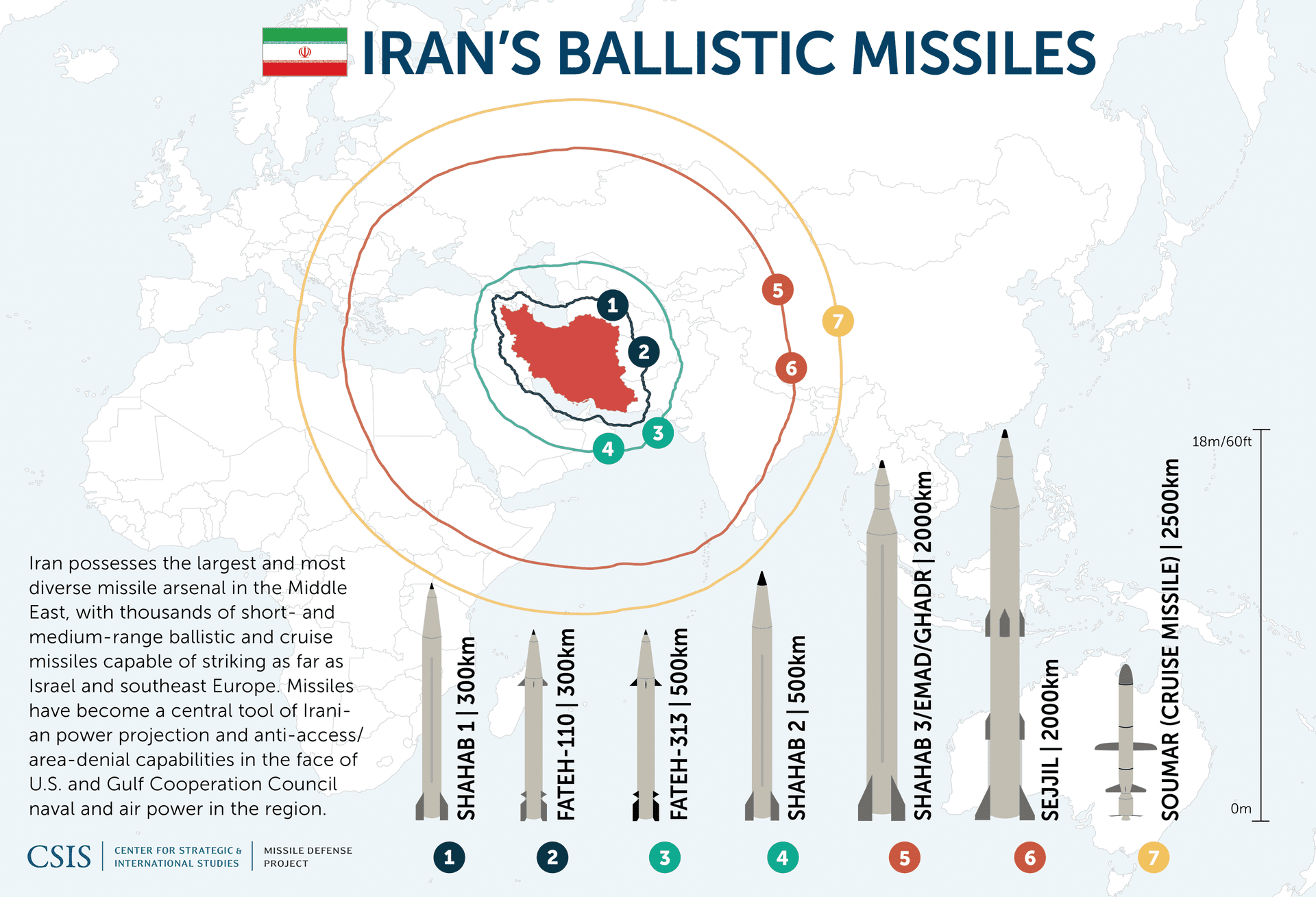
Iran fired two long-range ballistic missiles toward the joint U.S.-British military base on Diego Garcia on Friday, Iranian semiofficial media and multiple international outlets reported, in what analysts and allied governments described as a deliberate demonstration of strike capability stretching thousands of kilometers beyond Iran's previously acknowledged limits.
Neither missile hit the base, Iran's semiofficial Mehr news agency reported. Neither Iran nor the United Kingdom specified how close the weapons came to the atoll, and it remains unclear whether the missiles carried any payload.
The U.K. Ministry of Defence condemned the attack in sharp terms: "Iran's reckless attacks, lashing out across the region and holding hostage the Strait of Hormuz, are a threat to British interests and British allies." The statement came the same day Britain announced it would permit U.S. forces to use its bases, including Diego Garcia, to strike targets near the Strait of Hormuz, a sequence that suggested the missile launch was timed as a direct warning.
Diego Garcia sits more than 2,000 miles from Tehran, according to NBC News, placing it at roughly the same distance from Iran as much of central Europe. WION and the Jerusalem Post cited a range of approximately 4,000 kilometers. The discrepancy reflects a broader disagreement among reporting outlets over classification: WION described the weapon as a "two-stage intercontinental ballistic missile," while NBC called the missiles "intermediate-range ballistic missiles" and the Jerusalem Post referred to them as "long-range ballistic missiles." No independent technical body has publicly confirmed the missiles' classification or precise range.
The IDF's chief, whose statement was cited in a video briefing reported by WION, warned that European capitals now fall within range of Iran's long-range weapons. The briefing marked the first time, according to that account, that Iran had used such capability in the four-week-old conflict.
Tom Karako, who directs the missile defense project at the Center for Strategic and International Studies, told NBC News: "So it's not at all surprising." He added that there had long been speculation Iran possessed strike capabilities beyond its officially claimed range of around 1,250 miles. The Diego Garcia launch, he said, would seem to be the moment Iran showed its hand.
The Jerusalem Post framed the event not as a tactical success but as a calculated signal. "Friday's firing of ballistic missiles with a range longer than many thought Iran possessed was not only an Iranian demonstration of capacity; it was also a strategic message," the paper's analysis read. "Even a failed strike has utility. But utility is not victory."
Separately, Israeli emergency services were reportedly activated in southern Israel following reports of missile activity near Dimona, home to Israel's nuclear research complex. The scope and outcome of any strikes in that area have not been independently confirmed.
What the Diego Garcia launch does confirm is that Iran has extended the geographic logic of this conflict well beyond the Middle East. A base that once represented safe operational depth for U.S. strategic assets, including B-2 Spirit stealth bombers previously staged there, now sits within a range Iran has demonstrated it is willing to use.
This article was produced by Prism’s automated news system from verified source data, official records, and press releases, then run through automated quality and moderation checks before publishing. The system is built and supervised by the people who set the standards it runs under. Read our full AI policy.
Did this article answer your question?


