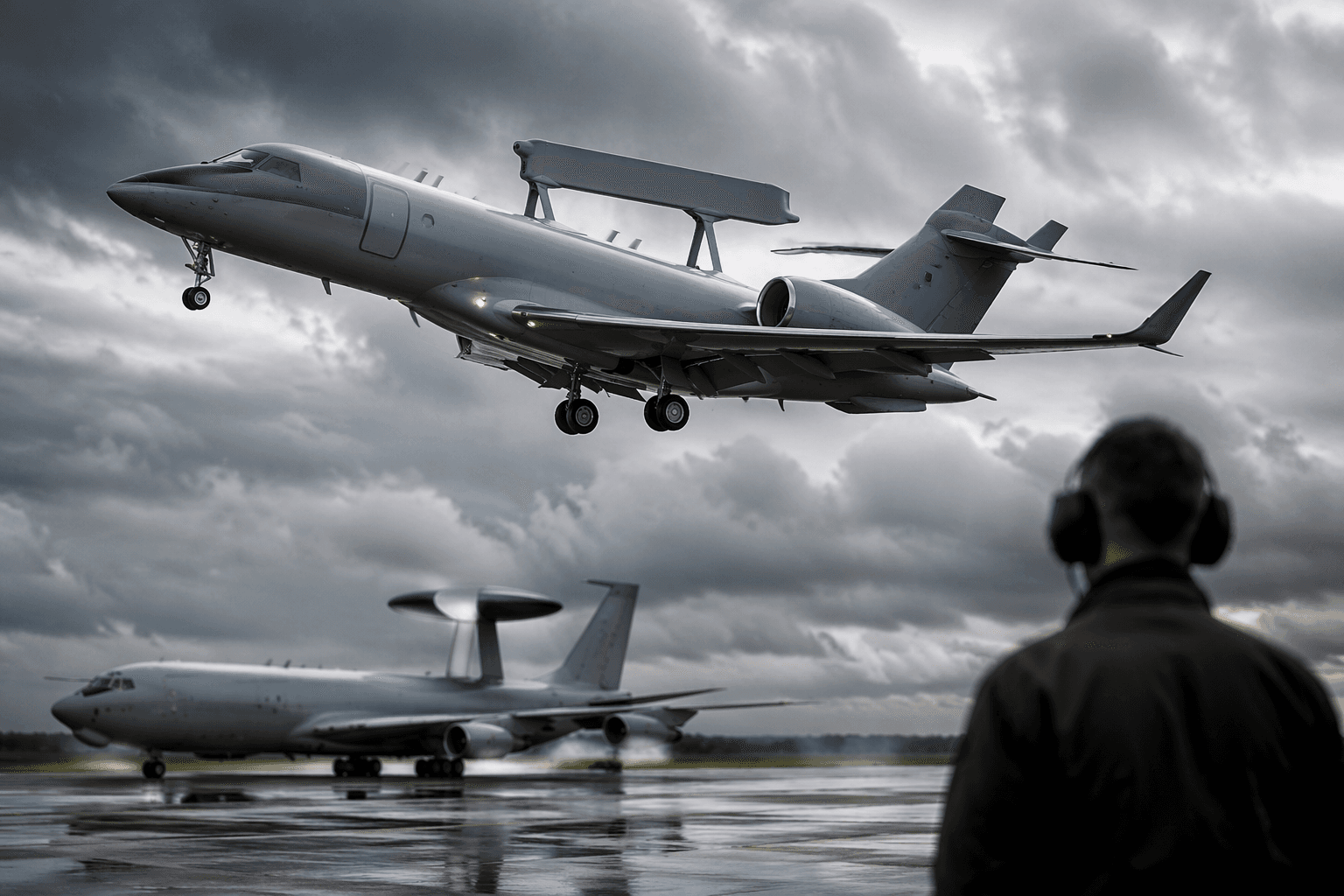
Iran Missile Strike on Saudi Base Destroys U.S. AWACS in First Combat Loss
Iran's first-ever combat kill of a U.S. AWACS leaves the Air Force with just 15 of the aging planes, no confirmed replacement, and a Saudi flight line that proved far less hardened than assumed.
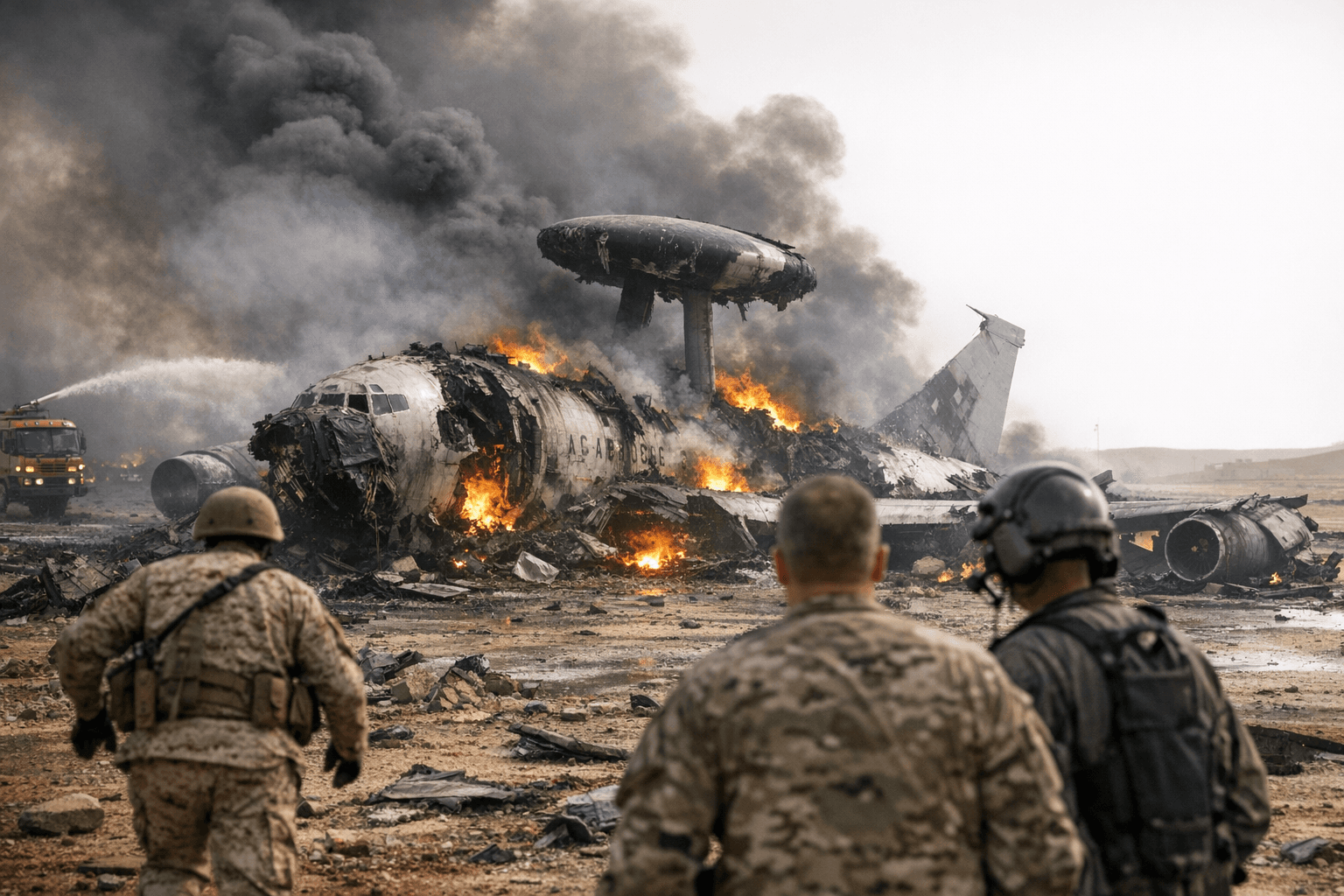
The rotating radar dome that gave E-3G serial 81-0005 eyes across a 250-mile arc of sky lay crumpled on the Saudi flight line, hurled from its mount by an Iranian ballistic missile. The aircraft, assigned to the 552nd Air Control Wing at Tinker Air Force Base in Oklahoma and deployed as part of Operation Epic Fury, became the first E-3 Sentry ever destroyed in combat — a distinction the U.S. Air Force can ill afford with only 15 of the planes now remaining in its inventory.
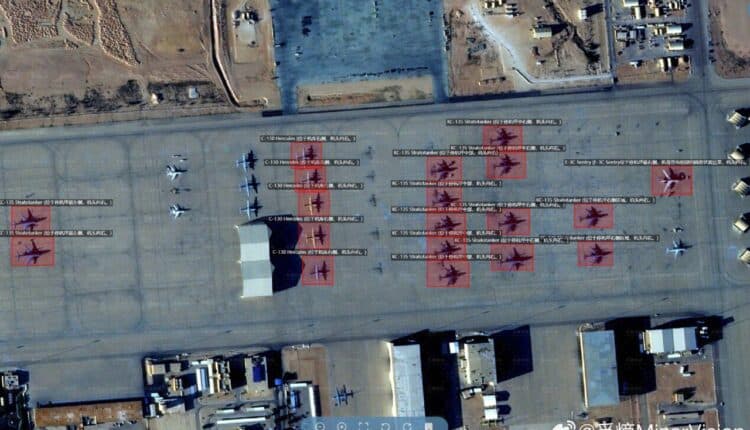
Iran struck Prince Sultan Air Base, located roughly 60 miles southeast of Riyadh, on March 27 using a combination of six ballistic missiles and 29 armed drones in an attack that wounded at least 12 American service members. The strike hit aircraft parked on the flight line, splitting the E-3G's fuselage in two and collapsing the support structure of its AN/APY-2 radome. Multiple KC-135 Stratotanker refueling aircraft were also hit, with at least five sustaining damage. U.S. Central Command declined to comment.
The E-3 Sentry is not simply an airplane; it is the airborne nervous system of a theater air war. Its rotodome radar scans from the surface to the stratosphere and gives commanders the picture they need to direct fighters, tankers and strike packages in real time across hundreds of miles of contested sky. Losing that node does not remove one aircraft from the order of battle; it narrows coalition warning time, degrades the ability to coordinate missile intercepts and leaves surviving aircraft flying without the coverage they depend on for survivability.
"It's a big deal," said Peter Layton, a former Royal Australian Air Force officer and visiting fellow at the Griffith Asia Institute, noting that the incident exposes how vulnerable large support aircraft are even when parked at supposedly hardened bases.
The loss lands against a backdrop of fleet strain that predates this conflict. The Air Force had already cut its E-3 inventory from 31 to 16 aircraft, retiring less-capable variants to sustain what remained. Even at 16 planes, the fleet's mission-capable rate in fiscal year 2024 stood at roughly 56 percent, translating to fewer than nine aircraft operationally available on any given day. Six of those 16 had been deployed to the Middle East at the time of the strike. The destruction of 81-0005 leaves a theater that already had thin coverage one critical node shorter.
Compounding the damage is the absence of a credible near-term replacement. The Air Force had planned to acquire 26 Boeing E-7 Wedgetail aircraft, with the first arriving in 2027, but Defense Secretary Pete Hegseth cancelled the program in summer 2025, describing the E-7 as "sort of late, more expensive, and 'gold-plated.'" The Pentagon has since pointed toward the Navy's smaller E-2D Advanced Hawkeye as a potential stopgap, though the Hawkeye is optimized for carrier operations and offers a narrower surveillance envelope than the E-3. The space-based sensing architecture officials have cited as an eventual substitute remains years from operational maturity.
The strike on Prince Sultan Air Base came exactly one month after U.S. and Israeli forces launched air operations against Iran on February 28. While American crewed aircraft have not been lost in aerial combat during the campaign, numerous MQ-9 Reaper drones have been shot down, illustrating a steady erosion of U.S. assets in contested airspace. The AWACS loss adds a qualitatively different dimension: Iran demonstrated that its ballistic missile inventory can reach and destroy some of the most consequential enabling infrastructure in the American arsenal without an air-to-air engagement taking place at all.
For base planners and allied commanders, the immediate questions are about concentration and shelter. A single strike found six E-3s clustered on the same flight line and destroyed one while damaging tankers parked alongside it. Dispersal practices, hardened aircraft shelters and missile-defense postures at Gulf air bases will face urgent review. The aircraft manufactured in 1981 and sent abroad as part of an aging fleet without a confirmed successor did not survive to fly home.
This article was produced by Prism’s automated news system from verified source data, official records, and press releases, then run through automated quality and moderation checks before publishing. The system is built and supervised by the people who set the standards it runs under. Read our full AI policy.
Did this article answer your question?