Iran Rejects Trump Ceasefire Offer but Remains Open to Diplomacy
Iran's state media rejected Trump's 15-point ceasefire plan, calling it unacceptable, while mediators push for in-person U.S.-Iran talks as soon as Friday in Pakistan.
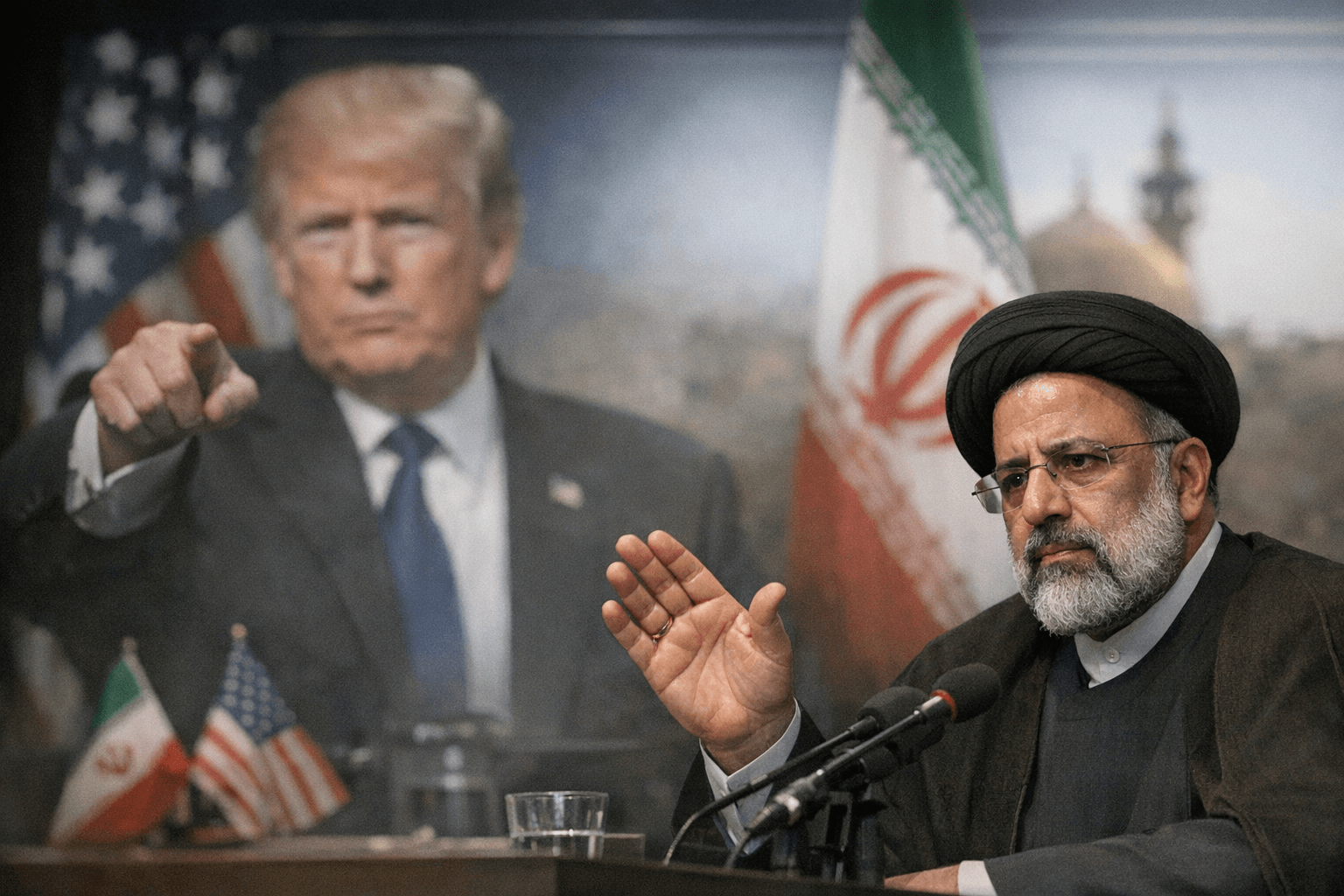
Iran formally rejected a U.S.-backed 15-point ceasefire proposal Wednesday, according to its state-run English-language broadcaster Press TV, which cited an anonymous official. The rebuff came less than 24 hours after the Trump administration quietly transmitted the plan to Tehran, and it sets up one of the most consequential diplomatic standoffs of the ongoing conflict.
Two Pakistani officials described the proposal broadly, saying it addressed sanctions relief, a rollback of Iran's nuclear program, limits on missiles, and the reopening of the Strait of Hormuz, through which a fifth of the world's oil is shipped. The plan was submitted to Iran by intermediaries from Pakistan, who have offered to host renewed negotiations between Washington and Tehran.
An anonymous official cited by Press TV was unsparing in the rejection: "Iran has responded negatively to an American proposal aimed at ending the ongoing imposed war," the official said. "The end of the war will occur when Iran decides it should end, not when Trump envisions its conclusion."
Iran did not simply say no. The official offered Iran's own five-point plan, which consisted of a halt to killings of its officials, the means to ensure no other war is waged against it, reparations for the war, the end of hostilities, and Iran's "exercise of sovereignty over the Strait of Hormuz." Those measures, particularly reparations and its continued chokehold over the Strait of Hormuz, likely will be unacceptable to the White House as energy supplies worldwide remain affected by the war.
President Trump, who had projected optimism going into the exchange, insisted Iran remained willing to deal. Trump said Iran agreed that "They're not going to have a nuclear weapon. That's number one. That's number one, two and three," adding that Iran had agreed to that point. "They will never have a nuclear weapon." Iran's ambassador to Pakistan flatly contradicted that framing. "Based on my information, contrary to Trump's claim, no direct or indirect negotiations have taken place between the two countries so far," Reza Amiri Moghadam said. He added that "friendly countries seek to lay the ground for dialogue between Tehran and Washington, which we hope will be fruitful in ending this imposed war."
Iranian military spokesperson Lt. Col. Ebrahim Zolfaghari was more caustic. In a recorded video statement aired on Iranian state television Tuesday, Zolfaghari said there were no talks between the United States and Iran. "The strategic power you used to talk about has turned into a strategic failure," he said. "The one claiming to be a global superpower would have already gotten out of this mess if it could. Don't dress up your defeat as an agreement. Your era of empty promises has come to an end." He added: "Have your internal conflicts reached the point where you are negotiating with yourselves?"
The White House pushed back on the rejection narrative. A U.S. official said the Trump administration had yet to receive any messages from Iran rejecting the offer. Press Secretary Karoline Leavitt told reporters the U.S. was "close to achieving its core objectives" in the war and claimed Iran was looking for an "exit ramp."
It remains unclear how much of the Iranian position represents posturing versus actually closing the door on negotiations. Mediators are pushing for possible in-person talks between Iran and the U.S., perhaps as soon as Friday in Pakistan, according to Egyptian and Pakistani officials.
Retired Gen. Jack Keane, a Fox News senior strategic analyst and former four-star Army general, cautioned against any ceasefire, arguing that military pressure remains the only effective lever. "If we go to ceasefire, that's playing right into their hands," Keane said Tuesday on Fox's "Hannity." "We want to keep the pressure on them to make a deal that makes some sense, and that is the path." Keane cited what he called a pattern of Iranian duplicity: "We're dealing with a regime that's pathological liars and cheaters, and they have done everything they can to deceive us in the past."
The Israeli military said it had targeted an Iranian underwater research center in Isfahan, stating in a Telegram post that the facility was "the only facility in Iran responsible for the design and development of submarines and support systems." Israeli officials, who have been advocating for Trump to continue the war against Iran, were reportedly surprised by the submission of a ceasefire plan.
Despite the diplomatic outreach, Trump has also approved the deployment of more than 1,000 soldiers from the 82nd Airborne Division to the Middle East. Trump has said the U.S. is "in negotiations right now" and that the participants include special envoy Steve Witkoff, his son-in-law Jared Kushner, Secretary of State Marco Rubio, and Vice President JD Vance.
Pakistan's army chief, Field Marshal Syed Asim Munir, is seen as a potential facilitator of dialogue between Iran and the U.S., given his believed close links to the influential Islamic Revolutionary Guard Corps. Pakistan, which has long-standing ties to Iran's Islamic Republic and has sought a better relationship with Trump, is emerging as a peacebroker. Whether Tehran is willing to meet that moment remains, for now, unanswered.
This article was produced by Prism’s automated news system from verified source data, official records, and press releases, then run through automated quality and moderation checks before publishing. The system is built and supervised by the people who set the standards it runs under. Read our full AI policy.
Did this article answer your question?


