Iran Tightens Grip on Strait of Hormuz, Alarming Global Energy Markets
Iran's blockade of the 39-kilometer-wide Strait of Hormuz has sent Brent crude to $126 a barrel, while U.S. intelligence warns Tehran has no incentive to reopen the world's most critical oil chokepoint.
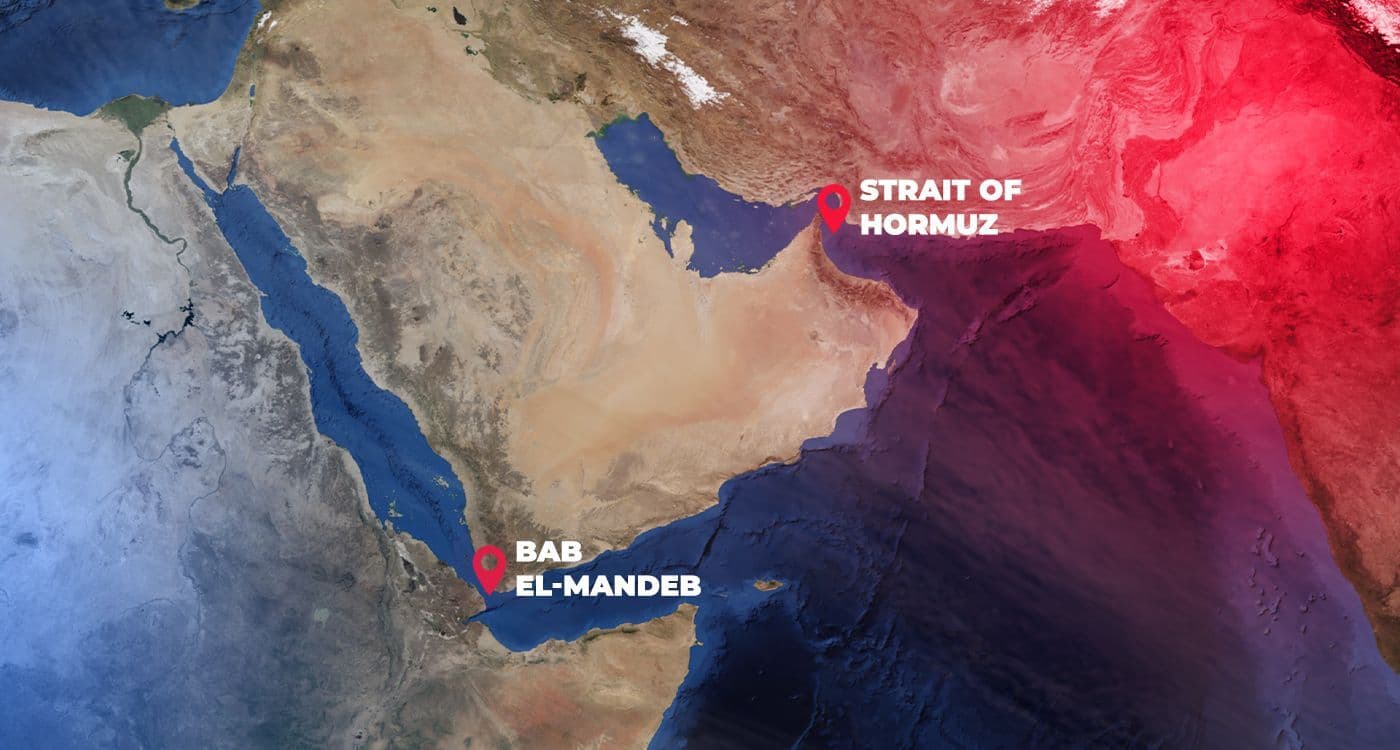
Standing at the southern shore of the Strait of Hormuz, Oman shares the waterway's narrow geography with an adversary that has effectively turned it into a toll gate for the global oil trade. The strait is just 39 kilometers wide at its tightest point, and since late February, Iran has transformed that sliver of water into the fulcrum of a worldwide energy crisis.
U.S. intelligence reports warn that Iran is unlikely to open the Strait of Hormuz any time soon, because its grip on the world's most vital oil artery provides the only real leverage it has over the United States. The finding suggests Tehran could continue to throttle the strait to keep energy prices high as a means of pressuring President Donald Trump to find a quick resolution to the conflict.
Amid fears of prolonged supply shortages, oil prices surged faster than during any other conflict in recent history. Brent crude surpassed $100 per barrel on March 8, 2026, for the first time in four years, rising to $126 per barrel at its peak. Crude oil supply shortfalls are estimated at around 12 million barrels per day, resulting in a global supply shortage nearing 400 million barrels.
The chokepoint's leverage is rooted in geography as much as firepower. Seven Iranian islands, namely Abu Musa, Greater Tunb, Lesser Tunb, Hengam, Qeshm, Larak, and Hormuz, form what researchers at Sun Yat-sen University in Zhuhai call Iran's "arch defense." A hypothetical curve connecting these islands, the researchers wrote, illustrates Iran's strategic superiority in controlling the security of the Hormuz strait. Larak Island sits at the narrowest point of the strait and serves as a key export point for Iran's oil industry. Iran uses Larak, which has a network of bunkers and attack craft capable of destroying cargo ships, to monitor and maintain control over the waterway. Shipping journals have taken to calling the Iranian-approved corridor near Larak the "Tehran Toll Booth."
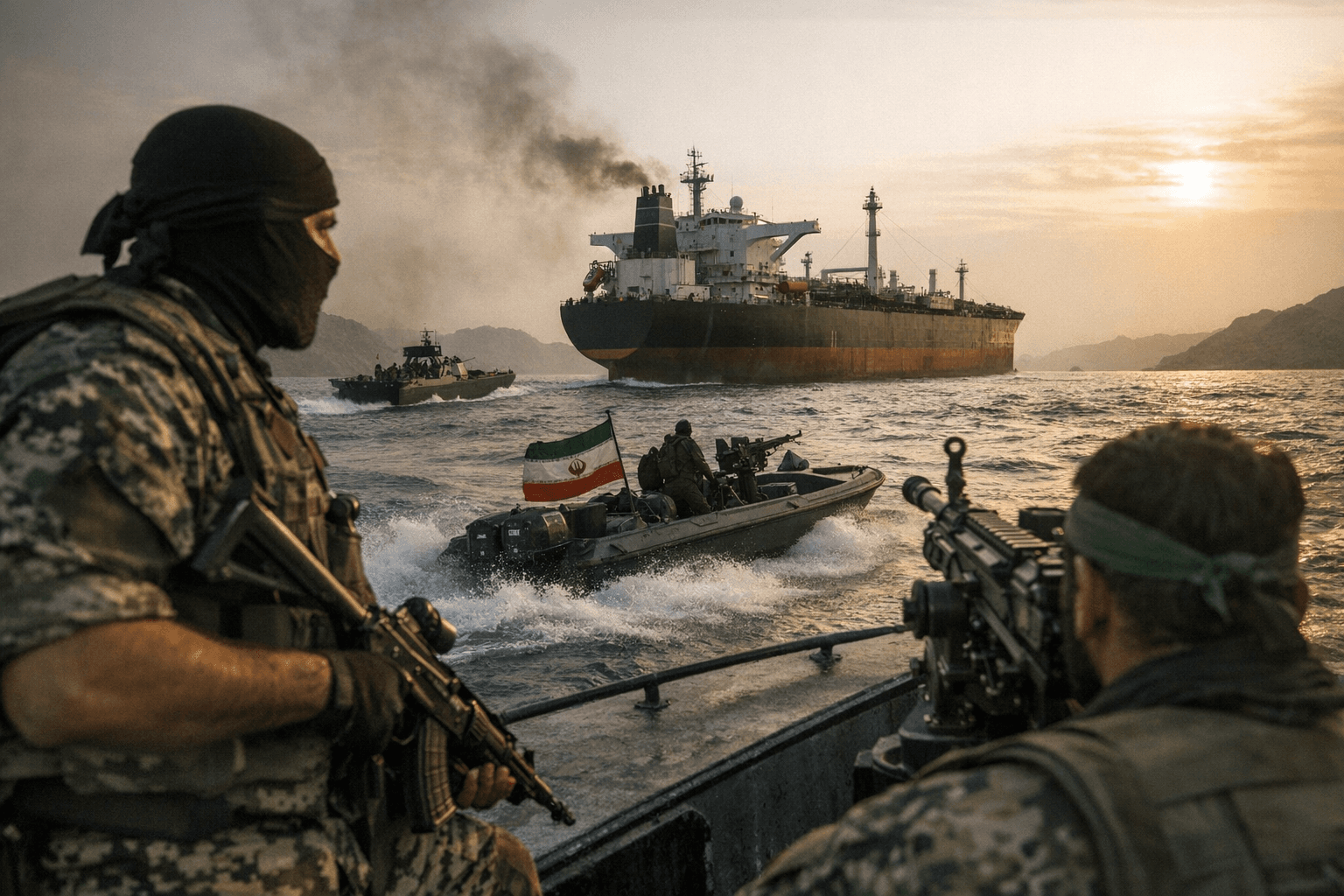
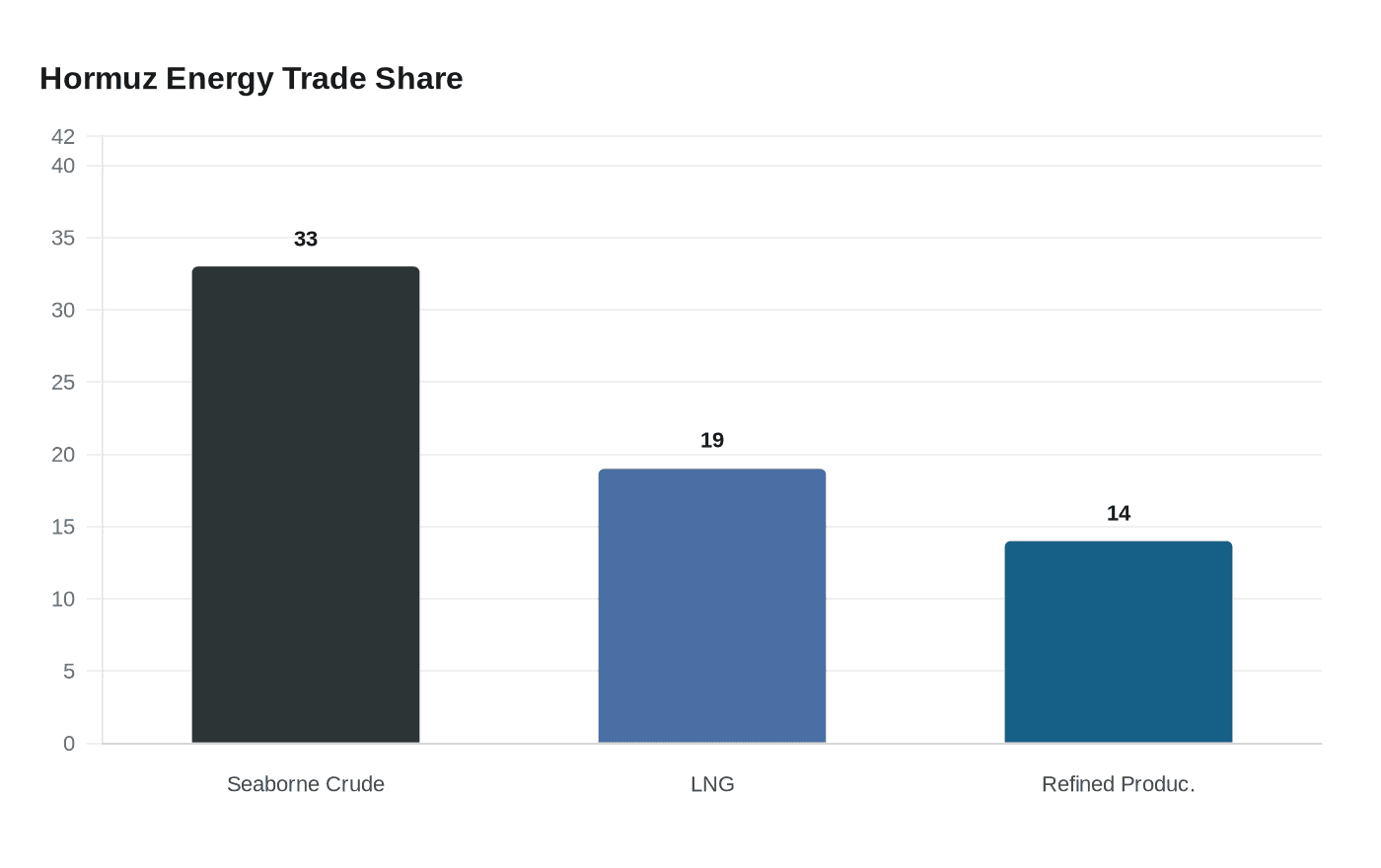
The financial consequences have cascaded far beyond the Persian Gulf. Major carriers including Maersk, MSC, CMA CGM, and Hapag-Lloyd have suspended voyages through the Gulf, while others are diverting cargo away from the strait, lengthening transit times and forcing companies to incorporate geopolitical risk into their operational planning. War risk insurance premiums have surged 300%, making Hormuz the world's most expensive waterway. It is estimated that roughly one-third of seaborne crude oil trade moves through the waterway, alongside 19 percent of global liquefied natural gas flows and 14 percent of global refined products trade.
From Oman's Sultan Qaboos Port in Muscat, the paralysis is visible at anchor. Bulk carriers have sat idle for weeks as shipowners weighed whether any premium was worth the risk of transit. On April 3, three Oman-linked tankers, the very large crude carriers Habrut and Dhalkut and an empty LNG tanker, crossed the strait by hugging the Omani Musandam Peninsula to the south, a route no other vessels had been tracked taking for nearly three weeks. The passage was notable precisely because it bypassed the Iranian corridor entirely.
Oman has moved quickly to formalize its mediating role. Oman and Iran held deputy foreign minister-level talks on Saturday, discussing options to ensure the smooth transit of vessels through the strait. The Omani Foreign Ministry said the meeting was attended by specialists from both sides. Iranian official Kazem Gharibabadi said that tanker traffic "should be supervised and coordinated" with the two countries, according to Iranian state news agency IRNA.
Ali Vaez, director of the Iran Project at the International Crisis Group, framed Tehran's calculus in stark terms. "In the attempt to try to prevent Iran from developing a weapon of mass destruction, the U.S. handed Iran a weapon of mass disruption," Vaez said, adding that Tehran understands its chokehold on the strait "is much more potent than even a nuclear weapon."
Trump has signaled interest in a forceful solution, posting on Truth Social: "With a little more time, we can easily OPEN THE HORMUZ STRAIT, TAKE THE OIL, & MAKE A FORTUNE." But analysts have long warned that trying to use force against Iran, which controls one side of the strait, could prove costly and draw the U.S. into a protracted ground war. With intelligence assessments pointing toward a prolonged standoff, the tankers anchored off Muscat may be waiting far longer than their owners had hoped.
This article was produced by Prism’s automated news system from verified source data, official records, and press releases, then run through automated quality and moderation checks before publishing. The system is built and supervised by the people who set the standards it runs under. Read our full AI policy.
Did this article answer your question?