Iran War Disrupts Jet Fuel Supplies, Threatens Higher Airfares Worldwide
Jet-fuel inventories in Europe were down to about six weeks, raising the risk of fare hikes, route cuts and summer travel chaos if the Strait of Hormuz stayed blocked.
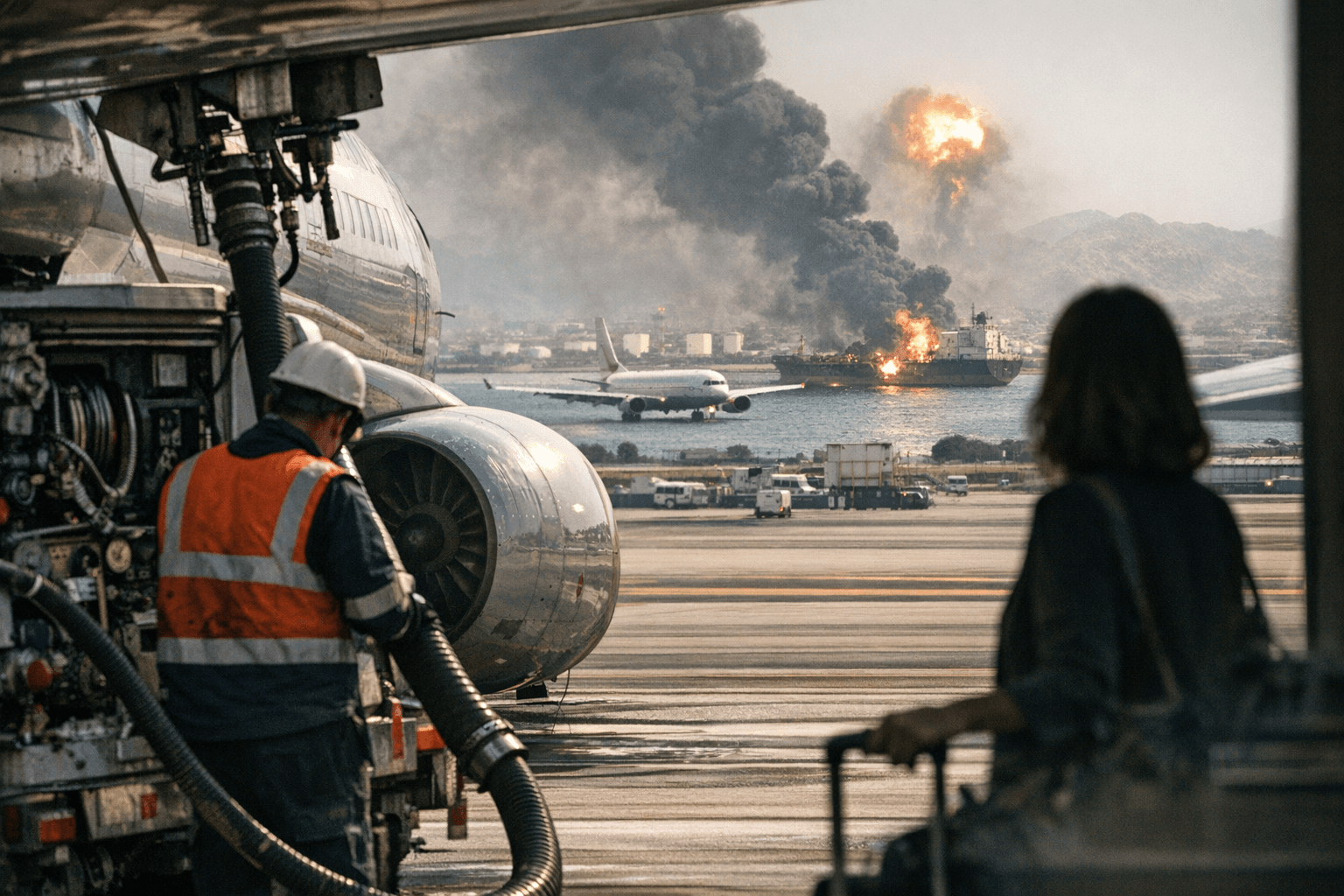
Airlines were already beginning to push conflict costs onto travelers as the war in Iran squeezed jet-fuel supplies and raised the odds of higher fares, fuel surcharges, baggage fees and route cuts. The disruption threatened not just Europe and Asia, where shortages could emerge first, but also transatlantic travelers heading into the peak summer season.
Fatih Birol, the executive director of the International Energy Agency, said Europe had “maybe six weeks or so” of jet fuel left if shipments remained blocked. Analysts told CNBC the shortage could turn “systemic” within three or four weeks, with severe flight cuts in Europe starting in May and June. The warning underscored how quickly a supply shock in the Middle East could move from refinery and storage tanks into ticket prices and seat availability.
The key bottleneck was the Strait of Hormuz, where any prolonged blockade would disrupt oil and fuel shipments out of the Middle East. Europe was especially exposed because it imported about 30% to 40% of its jet fuel, with at least half of that volume coming from the Middle East. To keep planes moving, the United States sent about 150,000 barrels per day of jet fuel to Europe in April, roughly six times normal levels, a stopgap that showed both the scale of the shortage and the strain on global trade flows.
The consumer impact was already visible. Some airlines were passing higher fuel costs through to travelers via baggage fees, fuel surcharges and ticket prices, while airport groups warned of possible route cuts if supplies tightened further. If inventories ran down as expected, the first cancellations and schedule reductions were likely to hit Europe, then ripple into Asia and long-haul networks that depend on stable connections through major hubs.
Brussels was preparing guidance to cut dependence on Middle Eastern jet fuel and increase imports from the United States, while also leaning on sustainable aviation fuel and synthetic fuels to build more resilience. The European Union was also weighing coordinated stock releases if the Strait of Hormuz disruption persisted.
The stakes reached far beyond airlines. ACI Europe said air travel generated about 851 billion euros in annual GDP and supported 14 million jobs across Europe, a reminder that a jet-fuel crunch could hit tourism, cargo, airports and local economies at the same time it raised the cost of a summer ticket.
This article was produced by Prism’s automated news system from verified source data, official records, and press releases, then run through automated quality and moderation checks before publishing. The system is built and supervised by the people who set the standards it runs under. Read our full AI policy.
Did this article answer your question?

