Iran War Drives Oil Prices Higher as Tehran Rejects Trump's Deal Optimism
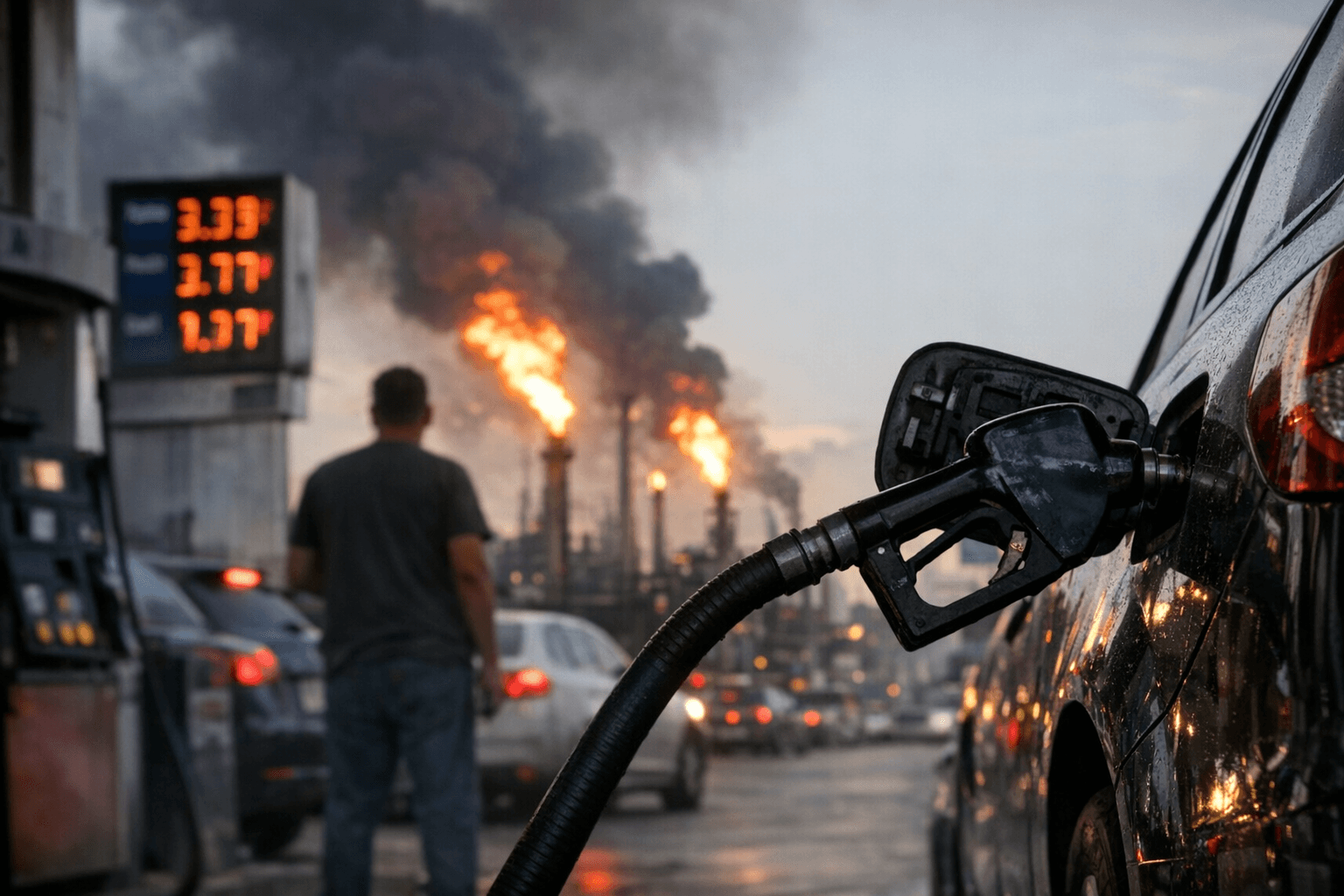
Gas prices jumped from below $3 to $3.48 per gallon in a week as oil topped $116 and Tehran flatly rejected Trump's deal optimism.
Oil topped $116 a barrel as the U.S.-Israeli war with Iran entered its fifth week, and gas prices at the pump climbed to $3.48 per gallon from below $3 the previous week. President Trump declared he was optimistic about ending the fighting with what he called a "more reasonable" regime already in power. Tehran was not impressed.
Iran's government continued to downplay any ongoing diplomacy even as Trump voiced confidence in a deal. Oil surged past $116 after Trump stated he wanted to "take the oil" in Iran and as Yemen's Houthi militia formally entered the conflict, driving benchmarks to multi-year highs. U.S. crude futures rose more than 25% to nearly $115 per barrel, while Brent, the international benchmark, jumped more than 20% to $110 per barrel. Oil had crossed $100 per barrel for the first time since July 2022 before continuing to climb, with Brent on pace for a record monthly surge.
The mechanics behind the price spike extended well beyond market anxiety. Regional oil producers found themselves unable to move barrels through the Strait of Hormuz, where a bottleneck forced several to slow output as their storage facilities filled to capacity. Reuters warned that crude oil and LNG supply faced the risk of the "worst-possible scenario." With export volume strangled at the chokepoint, upward pressure on global prices had no immediate release valve.
Iran, along with its proxy forces Hezbollah in Lebanon and the Houthis in Yemen, continued launching missiles and drones at Israel and Persian Gulf states. Explosions struck Israeli oil infrastructure in the northern city of Haifa on Monday. Israel had struck Iranian oil depots over the weekend, with Tehran continuing to retaliate across the Middle East, steadily widening the geographic footprint of the war.
A U.S. Central Command spokesperson said Friday that 13 American service members had been killed since the U.S. and Israel launched the war with Iran, with more than 300 wounded in action, most of whom had returned to duty.
The conflict also reshaped Iran's leadership. Mojtaba Khamenei was appointed the country's new supreme leader, succeeding his father more than a week after the elder Khamenei was killed in U.S.-Israeli strikes. Trump cited the change as evidence of a more flexible governing authority in Tehran. The new supreme leader inherited a country still actively at war, with no public signal that his appointment had altered Iran's strategic posture.
The financial damage spread beyond crude. Wall Street closed Friday with its fifth straight week of losses, the longest such streak in nearly four years. Asian share prices mostly fell Monday on escalation fears before posting modest recoveries after Trump's comments soothed rattled investors. European stocks managed moderate gains in early trading, and U.S. futures were also higher.
This article was produced by Prism’s automated news system from verified source data, official records, and press releases, then run through automated quality and moderation checks before publishing. The system is built and supervised by the people who set the standards it runs under. Read our full AI policy.
Did this article answer your question?