Iran War Highlights Urgent Need to Counter Foreign Influence Campaigns
The US dismantled three key anti-disinformation agencies before Iran's war started, leaving a critical gap as AI-generated propaganda floods social media.
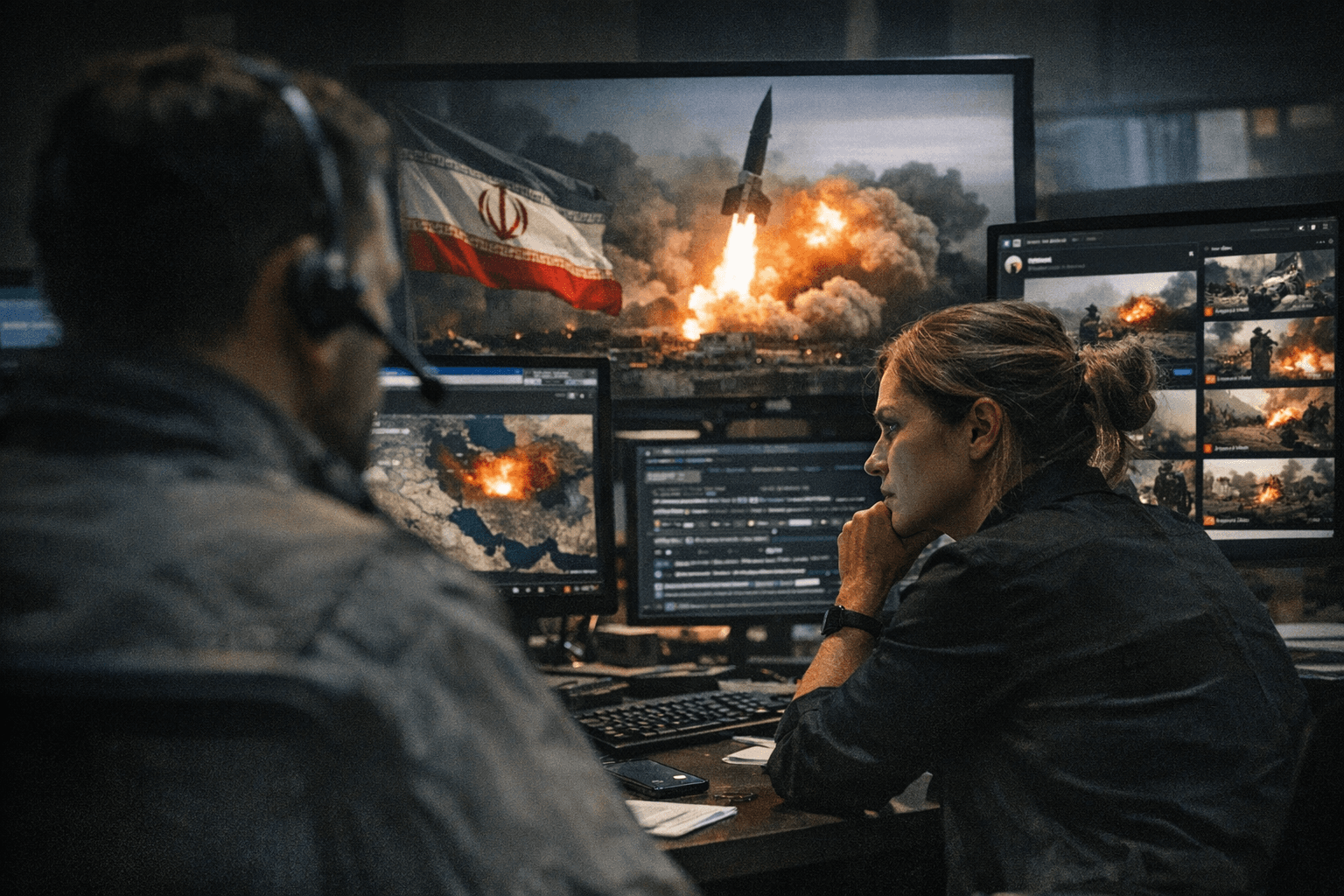
When the United States and Israel launched Operation Epic Fury on February 28, the kinetic campaign was immediately shadowed by another battle playing out across social media feeds and smartphone screens worldwide. Iranian state media began labeling verified footage of the war as fabricated, substituting doctored images in their place. Deepfakes of downed American fighter jets allegedly being paraded through Tehran spread rapidly. Russia and China amplified the posts. And American officials found themselves fighting an information war with their sharpest tools already dismantled.
The Trump administration had previously shut down the FBI's Foreign Malign Influence Task Force, the State Department's Global Engagement Center, and the Foreign Malign Influence Center at the Office of the Director of National Intelligence. The Global Engagement Center alone had employed roughly 120 specialists and operated on approximately $61 million annually, focused on tracking, exposing, and countering foreign propaganda streams before Secretary of State Marco Rubio announced its closure in April 2025. Emerson Brooking, strategy director of the Atlantic Council's Digital Forensic Research Lab, put it bluntly: "We have effectively made ourselves blind to this threat, even as the White House seems increasingly set on" escalating confrontation with Tehran.
Iran's influence apparatus did not wait for the bombs to fall. According to researchers at NewsGuard, a U.S. company that tracks disinformation, Iranian state-run media have significantly ramped up disinformation efforts throughout the conflict, backing alleged battlefield victories with old or manipulated imagery. The campaign is not limited to social media fabrications. As Israelis fled a missile strike in early March, some Android phone users received texts offering links to real-time shelter information. Those links downloaded spyware giving hackers access to cameras, locations, and personal data. Brooking noted that Tehran's information and covert operations are not separate programs: "Threatening and surveilling Iranian Americans is part of the same apparatus that runs the social media campaigns."
Issue One, a nonpartisan reform group, has documented over 50 new false narratives spread this year by China, Russia, and Iran specifically targeting U.S. citizens. The White House itself was not immune to credibility damage, facing backlash after circulating a video that mixed genuine war footage with clips from a video game, a misstep that critics said blurred the line between official communications and propaganda.
The administration's response has centered on the newly formalized State Department Bureau of Emerging Threats, tasked with anticipating dangers from adversaries weaponizing artificial intelligence, cyberattacks, and space technology. Rubio had announced the bureau's creation when he unveiled a sweeping State Department reorganization plan, but few operational details had emerged until the Iran conflict gave the office its first live-fire test. Officials say the bureau's mandate extends beyond Iran to cover China, Russia, North Korea, and foreign terrorist organizations.
Critics argue the bureau cannot fill the institutional void left by the agencies that were shuttered. Rebuilding the FBI task force, the Global Engagement Center, and the ODNI's Foreign Malign Influence Center, each of which brought distinct analytical and operational capabilities, would take years, and the conflict is happening now. Iran's March 10 internet policy made the asymmetry plain: the government spokesperson announced that online access would be provided to "those who can carry our voice further," a direct instrument of narrative control that the U.S. currently lacks a coordinated mechanism to counter.
The broader lesson of the Iran war's information dimension may ultimately be institutional: counter-disinformation capacity atrophies quickly when defunded and rebuilds slowly under fire.
This article was produced by Prism’s automated news system from verified source data, official records, and press releases, then run through automated quality and moderation checks before publishing. The system is built and supervised by the people who set the standards it runs under. Read our full AI policy.
Did this article answer your question?

