Iran War Live Updates: U.S. Rescues Officer From Downed Fighter Jet in Iran, Trump Says
CIA deception and hundreds of special ops rescued a downed U.S. airman from Iran after 48 hours, marking the first American warplane lost to enemy fire since 2003.
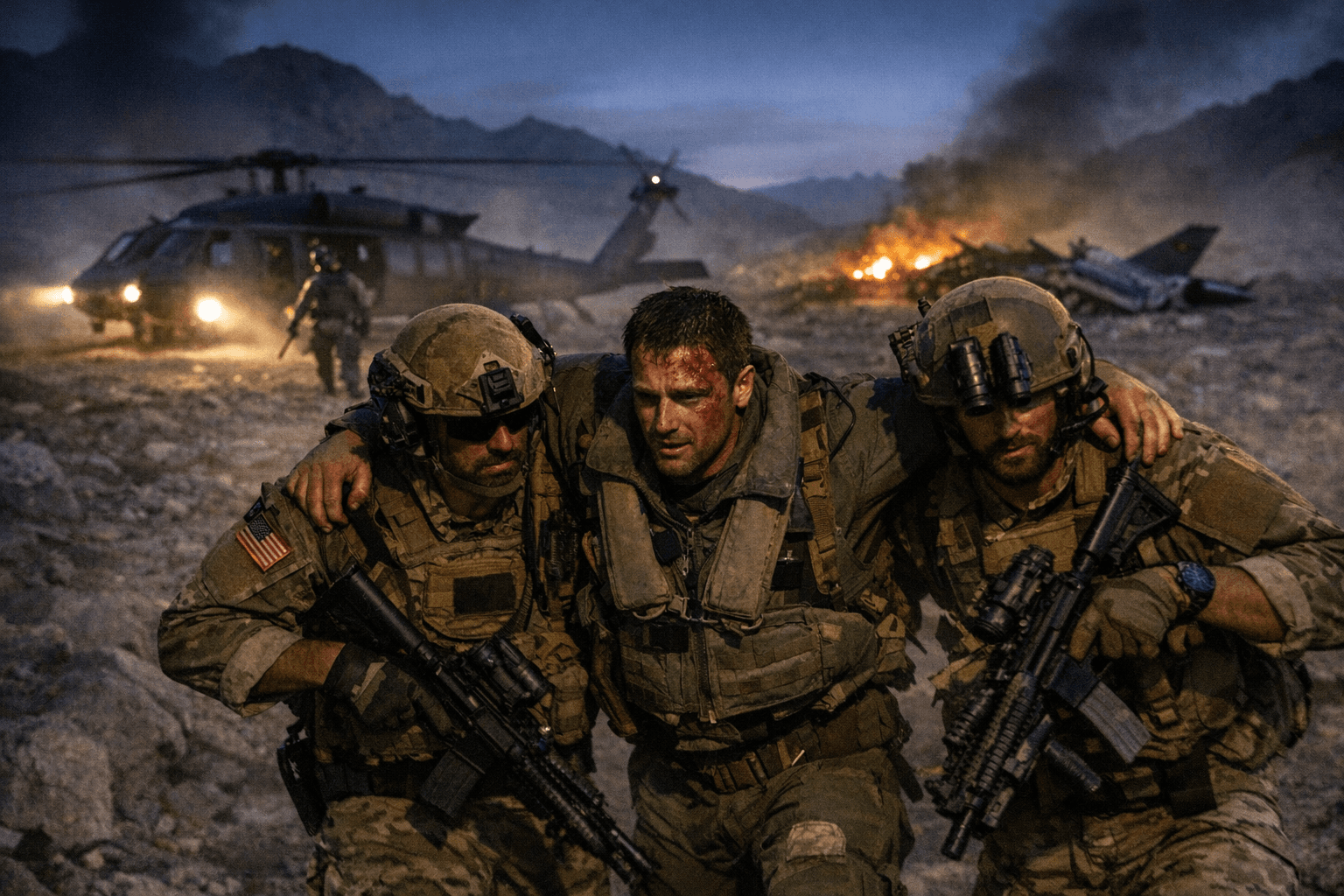
The rescue took two days, a CIA deception campaign, hundreds of special operations forces, and the temporary cancellation of Israeli airstrikes across Iran. When American forces finally extracted the weapons systems officer from a downed F-15E Strike Eagle on Sunday, April 5, they had to fire weapons to push back Iranian personnel closing in on the recovery site. President Trump announced the successful operation, calling it "one of the most daring Search and Rescue Operations in U.S. History" and saying the officer was "now safe and sound."
The cascading sequence of events that led to that extraction laid bare how fully the United States has committed its intelligence and special operations apparatus to what is rapidly becoming an open military confrontation with Iran.
The F-15E Strike Eagle, belonging to the Air Force's 48th Fighter Wing, was shot down by Iranian forces on Friday, April 3, over western Iran. It was the first American warplane downed by enemy fire since 2003. Both crew members ejected. The pilot was recovered within hours, but during that initial rescue operation, Iran struck a U.S. Blackhawk helicopter, wounding several crew members, though the aircraft continued flying. An A-10 Warthog that joined the search-and-rescue effort was also hit by hostile fire; its pilot ejected safely over the Persian Gulf and was recovered.
The WSO's disappearance triggered an immediate intelligence race. Iranian state television urged citizens to turn over any "enemy pilot" to police, and a regional governor announced a formal bounty. Local merchants offered the equivalent of roughly $60,000 for the crew's capture. With the WSO's beacon as the primary tracking signal, Trump directed hundreds of special operations forces to the effort and paused other operations in Iran to concentrate resources on the recovery.
The CIA, deeply involved in the mission according to a senior administration official, launched a deception campaign inside Iran, spreading disinformation that U.S. forces had already found the officer and were moving him on the ground. The operation was designed to freeze Iranian search teams in place. Israel, which had planned its own airstrikes elsewhere in Iran, stood them down during the rescue window and provided intelligence support to help locate the WSO. The IRGC, meanwhile, claimed it had shot down yet another American aircraft searching for the missing officer over Isfahan Province.
The rescue's operational profile carries implications that extend well beyond the immediate crisis. U.S. forces firing weapons at Iranian personnel during a recovery mission represents a significant engagement threshold: it signals that Washington has established rules of engagement authorizing lethal force in the Iranian interior to protect downed crew, even outside formal strike packages. Each layer of the operation, the CIA's active deception inside a sovereign nation, Israeli intelligence coordination, and the massing of special operations forces, moves the conflict further from precision strikes and closer to sustained ground-level warfare.
Those dynamics unfolded against a backdrop of escalating bombardment. On Saturday, April 4, a joint U.S.-Israeli operation struck Iran's Mahshahr Special Petrochemical Zone in Khuzestan Province, killing at least five people and wounding approximately 170. The Fajr 1 and 2, Rejal, and Amir Kabir petrochemical plants were among the facilities hit. The IDF stated the complex had been used to manufacture materials for ballistic missiles and explosives. A separate strike hit near the Bushehr Nuclear Power Plant in southern Iran, killing one person. In total, 272 strikes were conducted across 14 Iranian provinces on Saturday, producing 184 reported casualties, with the heaviest concentration in Tehran.
The architecture required to pull off a single crew recovery, covert deception operations, Israeli coordination, and a firefight on Iranian soil, offers a precise measure of how far the United States has already traveled down the road of direct military engagement with Iran.
This article was produced by Prism’s automated news system from verified source data, official records, and press releases, then run through automated quality and moderation checks before publishing. The system is built and supervised by the people who set the standards it runs under. Read our full AI policy.
Did this article answer your question?