Trump's Iran Bombing Threats May Push Tehran Closer to Nuclear Weapon, Experts Warn
Trump's threat to bomb Iran "back to the stone ages" may backfire: experts warn the ongoing war is pushing Tehran closer to building the nuclear weapon it was attacked to prevent.

President Donald Trump delivered a primetime address from the White House on April 1, threatening to bomb Iran "back to the stone ages" unless Tehran agrees to end the war, while warning that if "no deal is made, we have our eyes on key targets," including a threat to "hit each and every one of their electric generating plants very hard and probably simultaneously." Yet the escalating pressure may be producing precisely the outcome the military campaign was designed to prevent.
Although strikes can set back Iran's nuclear program and destroy key infrastructure, military force cannot eliminate Tehran's proliferation risk. At the end of the conflict, Iran will retain the nuclear expertise and likely key materials necessary for building a nuclear bomb. That calculus has alarmed nonproliferation specialists who argue the threats are reshaping Tehran's strategic incentives.
Sina Azodi, author of "Iran and the Bomb: The United States, Iran and the Nuclear Question," said Iran's hardliners and the Islamic Revolutionary Guard Corps now see an opening to abandon the country's long-standing nuclear doctrine. "One of the reasons they exercised nuclear forbearance was the fear of attacks by Israel and the U.S.," Azodi said. "But at this point where they attacked anyways, all bets are off for them."
Iran entered the conflict holding 440 kilograms of uranium enriched to 60 percent purity, enough, if further enriched, for as many as 10 nuclear weapons. The exact location of that stockpile remains uncertain. IAEA Director General Rafael Grossi, in a CBS News interview, warned that even destroyed centrifuge infrastructure cannot erase the underlying knowledge. "You cannot unlearn what you've learned," Grossi said, describing how Iran has developed "the most sophisticated, fast and efficient machine that exists" for uranium enrichment.
Iranian Foreign Minister Abbas Araghchi made the same point in starker terms. "Yes, you destroyed the facilities, the machines," Araghchi said. "But the technology cannot be bombed, and the determination also cannot be bombed."
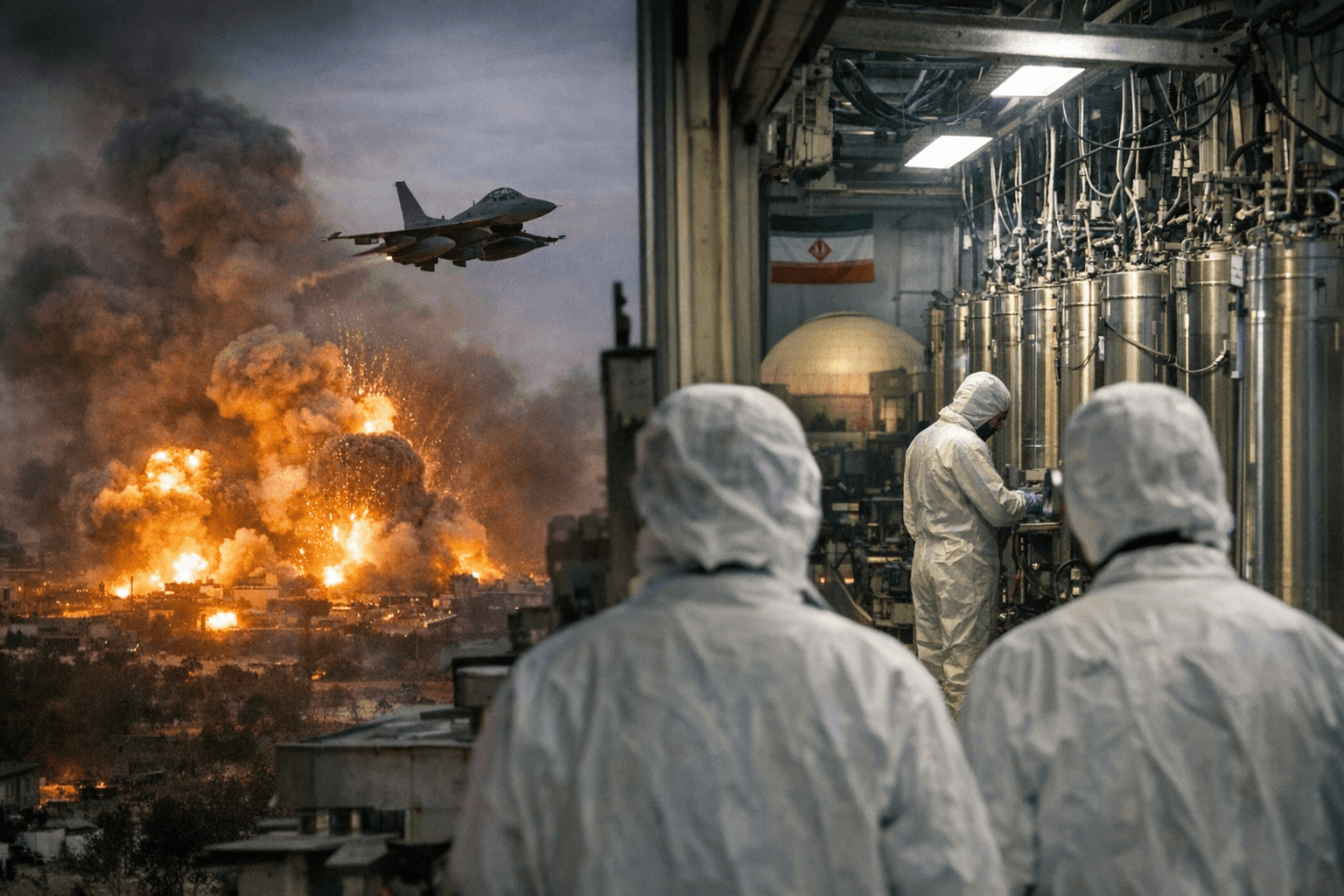
Trump claimed in his address that Iran's nuclear sites had been "obliterated" by B-2 bombers and said, "If we see them make a move, even a move for it," the U.S. would respond. He appeared to back away from earlier plans to dispatch special operations forces to seize highly enriched uranium at sites that had been bombed.
Trump has continued to allege, without evidence, that Iran's nuclear program posed an imminent threat to the United States, justifying his decision to join Israel in striking Iran on February 28. The 2026 U.S. worldwide threat assessment, published in March, does not indicate that Iran had made a decision to weaponize its nuclear program.
Legal experts added a separate layer of concern. More than 100 law experts signed a letter warning that attacks on Iran's power plants could constitute a war crime and violate international law.
The central paradox facing the Trump administration is one analysts have raised since the joint U.S.-Israeli operation began: a military campaign framed as preventing Iran from obtaining a nuclear weapon may, by demonstrating that conventional deterrence has failed, give Tehran the strongest strategic argument yet for crossing the nuclear threshold.
This article was produced by Prism’s automated news system from verified source data, official records, and press releases, then run through automated quality and moderation checks before publishing. The system is built and supervised by the people who set the standards it runs under. Read our full AI policy.
Did this article answer your question?