Face the Nation Covers Iran War, Artemis II Mission, and Weekly Politics
Maryland Gov. Wes Moore warned Sunday that the U.S. is "lurching again into another forever war" in Iran, as a military archbishop said the conflict likely fails the church's just war test.
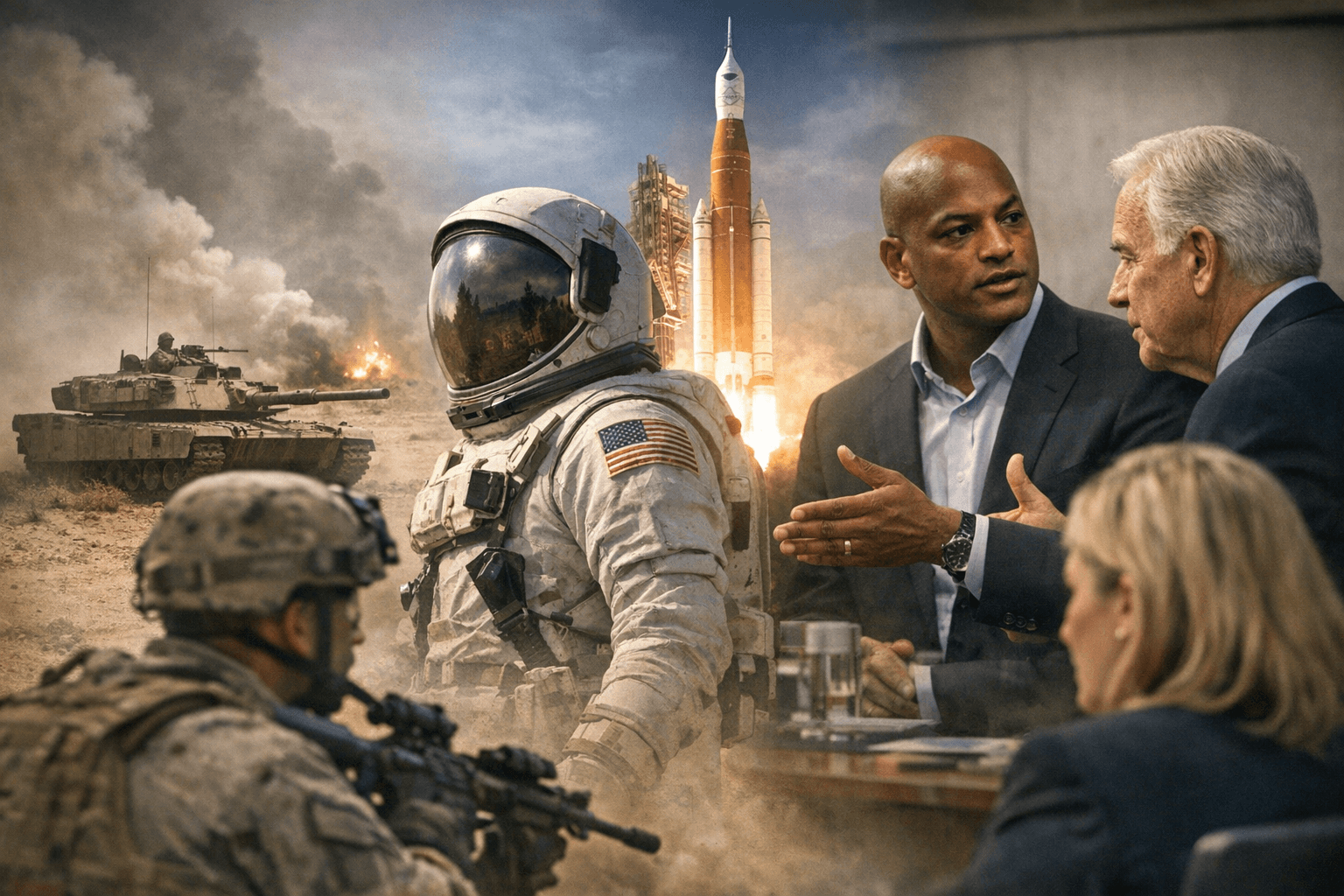
Five weeks into Operation Epic Fury, the questions no one in Washington is fully answering became the organizing logic of Sunday's "Face the Nation with Margaret Brennan," moderated by CBS News senior White House correspondent Ed O'Keefe: What exactly is the objective in Iran? How will anyone know when it's achieved? Who is paying, in blood and treasure? And where is Congress?
Retired Gen. Frank McKenzie, former commander of U.S. Central Command, outlined takeaways on the search-and-rescue mission for a missing U.S. airman and called it a "hard lesson for Iran." The rescue followed confirmation that an American F-15E fighter jet was downed over Iran on Friday, with one crew member rescued; a search-and-rescue operation remained ongoing. U.S. officials told CBS News the plane was shot down by Iranian forces. The U.S. military's death toll stands at 13, with seven classified as hostile deaths, including six killed in an Iranian strike in Kuwait and one who died after being wounded in Saudi Arabia.
McKenzie said Sunday that the U.S. military has been working on plans for a ground raid in Iran for years, including options along the southern coast of Iran involving seizing islands and small bases. "If you seize Kharg Island, you really can shut down the Iranian oil economy completely," he said. The former CENTCOM chief's testimony reframes Trump's two-to-three week timeline not as a finish line but as a pressure point: the question is not whether the military has plans, but whether anyone has articulated what "finished" actually means.
That was precisely Maryland Gov. Wes Moore's charge. Moore, a Democrat who served in Afghanistan as a member of the Army's 82nd Airborne Division, said he fears the United States is "lurching again into another forever war" paid for by the American people, yet with no clear articulation from President Trump as to what success in the military operation against Iran looks like. He warned the war has driven up prices and invoked Afghanistan as the cautionary model: the U.S. spent over $2.5 trillion there, lost over 2,400 American lives, and 20 years later the Taliban remains in charge. Moore also pressed a broader geopolitical cost, noting that the U.S. launched the war simultaneously with the dismantling of USAID, hollowing out American soft power at the moment it was most needed. Trump's prediction the war would wrap in two to three weeks, Moore said, "is sitting horribly with me," adding: "I'm thinking about the families of our service members, who right now are afraid to pick up the phone because they're afraid to hear what is on the other end of the line."
The moral reckoning fell to Archbishop Timothy Broglio, who heads the Catholic Archdiocese for the Military Services and is the closest thing the U.S. military has to an institutional chaplain-general. His verdict was unambiguous. Broglio said the war is likely not justified under Just War Theory, arguing the military action was "compensating for a threat" before the threat had "actually been realized." He said he would "line himself up with Pope Leo," who has been urging negotiation. He acknowledged the Trump administration "may have information that led them to think that was the only choice they had," but added he could not make a judgment without knowing it. For military families parsing what their country is asking of their service members, Broglio's interview offered the starkest framing of the episode: the war may be legal, but that is a different question from whether it is right.
NASA Administrator Jared Isaacman appeared to discuss the Artemis II mission, which launched April 1 with a four-person crew composed of three Americans and one Canadian, including the first woman, the first person of color, and the first Canadian expected to travel to the moon. The crew will spend about 24 hours orbiting Earth, running checks on their spacecraft and life support systems, before heading toward the moon on a 10-day journey. "After a brief, 54-year intermission, NASA is back in the business of sending astronauts to the moon," Isaacman said after the launch. The mission is a stepping stone toward a planned lunar landing in 2028.
The political panel, featuring Amy Walter of the Cook Political Report, David Sanger of the New York Times, and Bloomberg's Jeff Mason, rounded out a broadcast that captured a single week's collision of war aims, moral authority, and mission scope. The through-line across every guest: the administration has moved faster than its answers.
This article was produced by Prism’s automated news system from verified source data, official records, and press releases, then run through automated quality and moderation checks before publishing. The system is built and supervised by the people who set the standards it runs under. Read our full AI policy.
Did this article answer your question?


