First American Pope Calls for Peace as White House Tests Vatican Relations
Pope Leo XIV's Easter plea to 'lay down weapons' landed as U.S. strikes passed 3,000 targets in Iran, putting the first American pope on a collision course with Hegseth's divine war framing.
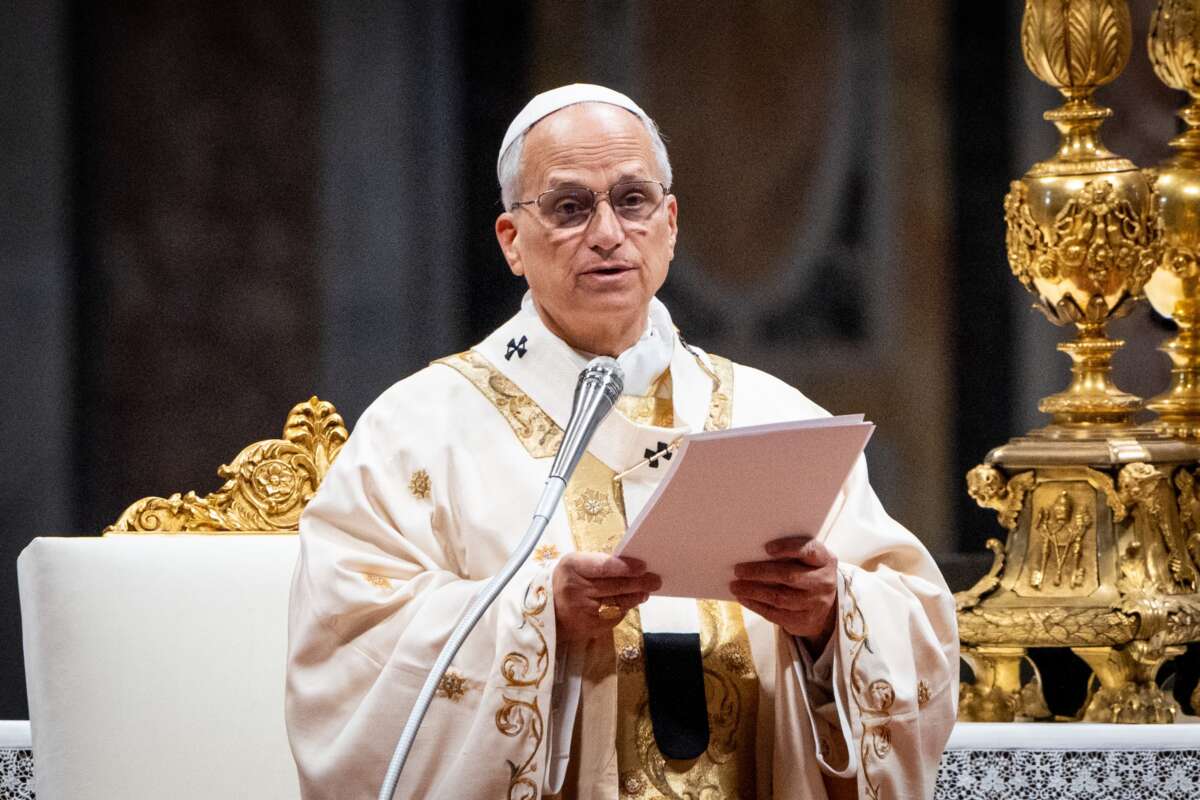
Standing on the central balcony of St. Peter's Basilica before tens of thousands of pilgrims Easter Sunday, Pope Leo XIV issued the sharpest challenge yet to the White House's war in Iran. "Let those who have weapons lay them down! Let those who have the power to unleash wars choose peace! Not a peace imposed by force, but through dialogue! Not with the desire to dominate others, but to encounter them!"
The Urbi et Orbi address came as the United States and Israel were already deep into a military campaign against Iran. Since the war started on February 28, the United States is reported to have hit more than 3,000 targets across Iran. In March 2026, Leo had already condemned U.S. and Israeli military efforts and rebuked a gathering at the White House to pray over President Trump, saying, "War is not holy; only peace is holy because it is willed by God."
Leo hopes President Donald Trump will find an "off-ramp" to end the war with Iran, and he is increasingly speaking out as Defense Secretary Pete Hegseth frames the war effort as divinely supported, even using scriptural justification. Hegseth invoked the imprecatory psalms during a Pentagon prayer service, asking God to "pour out your wrath" against the enemies of the United States. Leo, the first American ever to lead the Roman Catholic Church, spent most of his first ten months keeping a deliberate distance from U.S. political affairs, avoiding mentioning Trump by name and appearing intent on crafting a global identity rather than a national one. That period of restraint is now decisively over.
On Good Friday, April 3, Leo spoke by telephone with Israeli President Isaac Herzog and Ukrainian President Volodymyr Zelenskyy, urging diplomatic solutions and humanitarian support. The Vatican statement on the Herzog call stressed "the need to reopen all possible channels of diplomatic dialogue" to achieve "a just and lasting peace throughout the Middle East."
The rebuke extended well beyond Rome. Archbishop Timothy Broglio, who oversees more than 200 Catholic chaplains serving U.S. service members, told CBS's Face the Nation that Catholic troops are not morally bound to obey every order in a conflict that fails the Church's just war criteria, and that Hegseth's invocation of Jesus Christ to justify the war is "problematic." "Under just war theory, no," Broglio said when asked directly whether the conflict is justified, explaining the war "anticipates a nuclear threat rather than responding to realized danger." He aligned himself with Leo's repeated calls for negotiation. The assessment carried particular weight because Broglio is among the most conservative Catholic prelates in the country.
Vatican Secretary of State Cardinal Pietro Parolin told reporters at an academic conference at the Vatican Apostolic Library on March 26 that the U.S.-Israel war against Iran "does not seem to meet the conditions" for a just war. Cardinal Robert W. McElroy, Archbishop of Washington, has also voiced opposition.
Conservative commentators have pushed back. Allie Beth Stuckey argued that the idea God is against war per se is false, while commentator Buzz Patterson dismissed Leo's Palm Sunday message as not Biblical. Those objections carry less institutional authority than a military archbishop responsible for the spiritual care of the troops flying the missions.
Leo departed from the papal tradition of listing specific conflicts by name in the Urbi et Orbi address. He invited everyone to join him in a prayer vigil for peace at St. Peter's Basilica on April 11. The bombing runs over Iran will not pause for it, but for a Chicago-born pope whose own country is the one whose weapons he is pleading to have put down, the vigil signals that Vatican pressure on Washington has no scheduled end date.
This article was produced by Prism’s automated news system from verified source data, official records, and press releases, then run through automated quality and moderation checks before publishing. The system is built and supervised by the people who set the standards it runs under. Read our full AI policy.
Did this article answer your question?