Trump Threatens to Bomb Iran, Abandoning U.S. Commitment to War's Legal Limits
Trump vowed to bomb Iran "back to the stone ages," marking a sharp departure from decades of U.S. insistence on following international law in warfare.
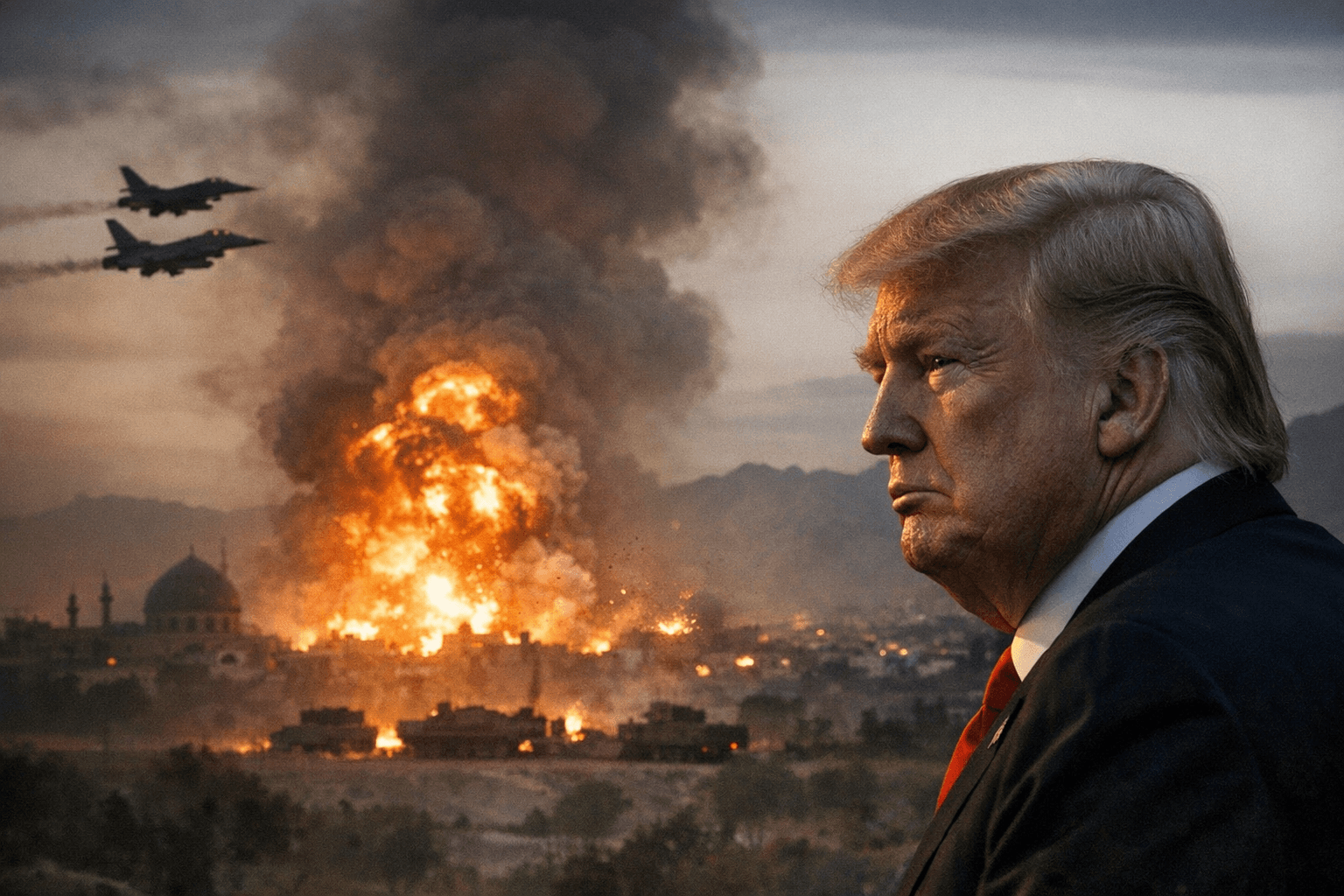
When President Trump stood at the White House Cross Hall on April 1 to deliver his first major address on the U.S. war against Iran, he did not speak in the careful legal language that has long characterized American presidents in wartime. "We are going to hit them extremely hard over the next two to three weeks," he said. "We are going to bring them back to the stone ages, where they belong."
Within minutes, Secretary of Defense Pete Hegseth posted two words on X: "Back to the Stone Age."
The exchange, terse as it was, crystallized what legal experts and former government officials have spent weeks warning about: the Trump administration has not only launched a war of disputed legality, but has systematically dismantled the internal structures that once kept American military conduct tethered to international law.
The conflict began February 28 with coordinated U.S.-Israeli strikes on Iran, now entering its fifth week. What followed has alarmed legal scholars on multiple fronts. A letter signed by over 100 law experts, including senior professors from Harvard and former government legal advisers, declared the war "a clear violation of the United Nations Charter" and warned that Trump's threatened strikes on power plants and oil fields, if carried out, "could entail war crimes." The Security Council did not authorize the attack, and Iran had not struck U.S. or Israeli territory before the opening strikes.
On April 3, a U.S.-Israeli airstrike destroyed the B1 Bridge near Tehran in Karaj. Iranian state media reported eight people died. Trump subsequently posted on Truth Social that the "New Regime leadership knows what has to be done, and has to be done, FAST!" and warned that the U.S. "hasn't even started" targeting bridges and power plants.
Sarah Yager, Washington director of Human Rights Watch, said that crippling Iran's power grid would be "devastating to the Iranian people," cutting off electricity to hospitals and water supplies for a nation of 90 million. Hegseth's 2026 national defense strategy, critics noted, contained no reference to civilian protection or international law.
The legal architecture that once constrained such choices has been quietly gutted. Under Hegseth, who declared at a March 2 news conference there would be "no stupid rules of engagement," the Pentagon fired the Army and Air Force judge advocates general, Lt. Gen. Joseph Berger III and Lt. Gen. Charles Plummer, the top legal advisers for their respective services. Senior military lawyers across the Army, Navy, and Air Force were similarly replaced. The 100-plus experts' letter warned this had "undermined legal oversight of military activities."
Previous administrations, including those responsible for the invasions of Afghanistan and Iraq, at least maintained the public posture of compliance with the laws of war, even as critics challenged specific tactics. That posture is now gone. International law professor Tom Dannenbaum noted that war crimes carry universal jurisdiction and no statute of limitations, meaning prosecution remains possible regardless of current political conditions. But with the war still in its fifth week, and the president publicly promising weeks more of heavy bombardment, any such accountability remains a distant prospect.
This article was produced by Prism’s automated news system from verified source data, official records, and press releases, then run through automated quality and moderation checks before publishing. The system is built and supervised by the people who set the standards it runs under. Read our full AI policy.
Did this article answer your question?


