Shot Down Over Enemy Territory, One Colonel Became a Bargaining Chip
A seriously wounded U.S. colonel survived 48 hours hunted by Iran's IRGC in 7,000-foot mountain terrain before a CIA deception mission made his rescue possible.
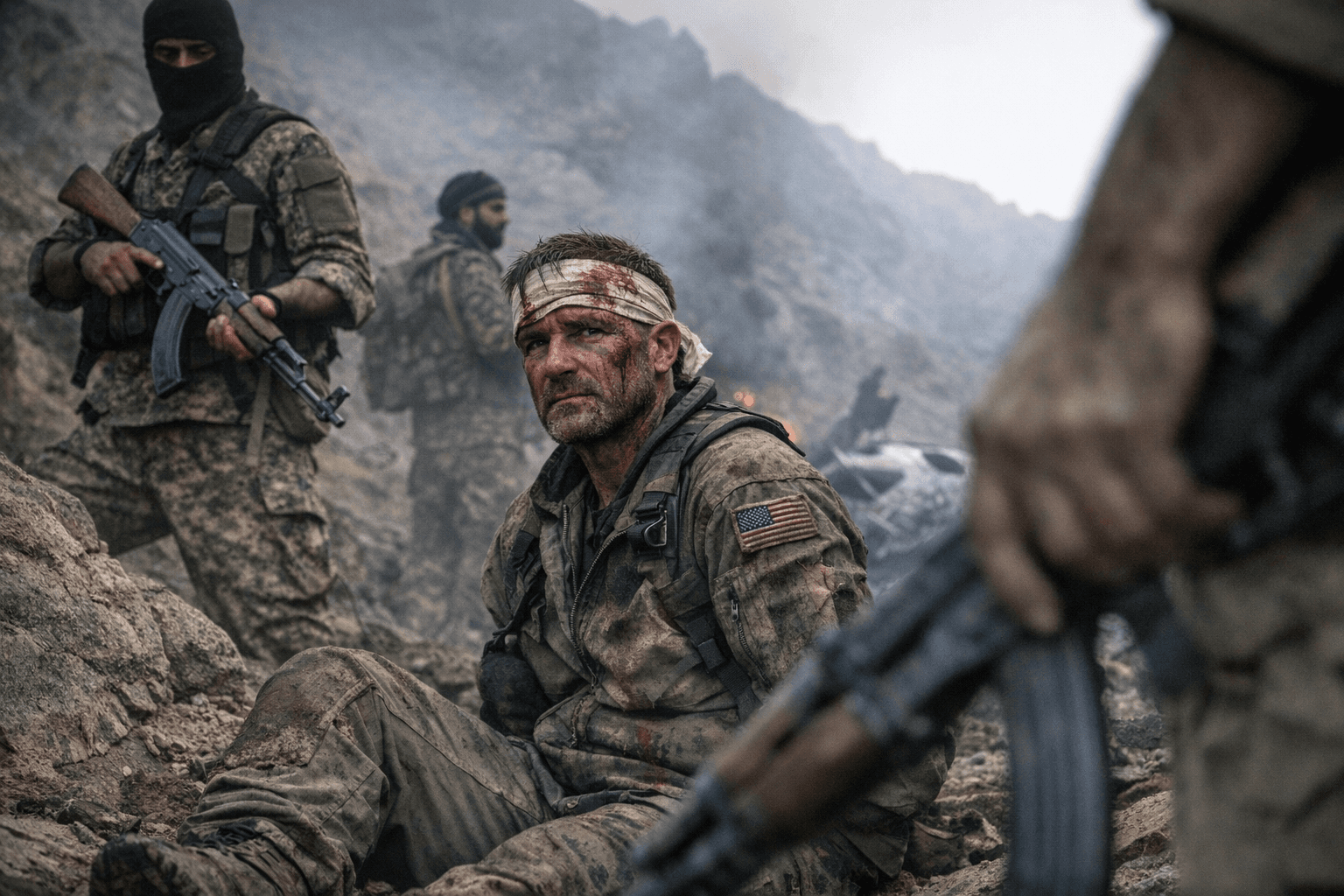
When the F-15E Strike Eagle from the 48th Fighter Wing went down over southwestern Iran's Kohgiluyeh and Boyer-Ahmad province on Friday, April 3, the two crew members who ejected landed in very different situations. The pilot was recovered by American forces the same day. The weapons system officer, a colonel described by President Trump as "seriously wounded" and "highly respected," was not. For nearly 48 hours, he became the most hunted man in Iran.
Iran's Islamic Revolutionary Guard Corps launched an immediate manhunt. Iranian state television urged ordinary citizens to scour nearby hillsides, reportedly offering cash rewards for locating the downed officer. Local residents near the area known as Black Mountain were still entering the search zone past 4 a.m. local time on Saturday. For Iran's government, capturing a senior U.S. Air Force colonel alive would have constituted an enormous propaganda victory and a concrete bargaining chip in a conflict already straining both nations' political tolerances.
The colonel gave his pursuers almost nothing to find. After ejecting, he climbed a ridgeline to roughly 7,000 feet and concealed himself inside a mountain crevice. Seriously wounded, he activated an emergency beacon and established contact with U.S. forces via encrypted communication, which allowed the search effort to center on his location without immediately revealing it to Iranian forces.
The initial rescue attempt failed. Two HH-60W Jolly Green II helicopters dispatched to recover him on Friday took Iranian ground fire, injuring crew members aboard both aircraft. The window for a clean, fast extraction closed.
What followed was a joint CIA-military operation that U.S. officials and former military figures described as among the most complex combat search-and-rescue missions in American history. Before any aircraft moved toward the colonel's position, the CIA launched a deliberate deception campaign, spreading word through multiple channels inside Iran that U.S. forces had already located the officer and were moving him out of the country via a maritime ground exfiltration route. The aim was to pull Iranian search teams away from the actual rescue corridor. A senior administration official described the operation bluntly: "This was the ultimate needle in a haystack but in this case it was a brave American soul inside a mountain crevice, invisible but for CIA's capabilities."
When U.S. forces finally converged on the colonel's location early Sunday, April 5, a firefight broke out. Hundreds of special operations troops were involved in the broader operation; Trump said dozens of aircraft flew in support. The colonel was extracted alive and transported to a hospital in Kuwait.
Iran disputed the American account, with state media claiming two Black Hawk helicopters and a C-130 transport were destroyed during the operation. U.S. officials contradicted those claims. Iran also initially insisted the jet was an F-35, though tail markings photographed at the crash site were consistent with the 494th Fighter Squadron of the 48th Fighter Wing, based at RAF Lakenheath in Suffolk, England.
Trump announced the rescue in a Truth Social post shortly after confirmation: "WE GOT HIM!" The shoot-down itself had already marked a significant threshold in the conflict, representing the first manned U.S. aircraft lost to enemy fire in Operation Epic Fury and the first American fighter jet downed in combat since an A-10 Thunderbolt II was struck during the 2003 invasion of Iraq. That the colonel was recovered before Iran could turn that threshold into something worse was, by any measure, the more consequential outcome of the 48 hours that followed.
This article was produced by Prism’s automated news system from verified source data, official records, and press releases, then run through automated quality and moderation checks before publishing. The system is built and supervised by the people who set the standards it runs under. Read our full AI policy.
Did this article answer your question?


