Trump Warns Iran of Total Destruction Without Peace Deal in 48 Hours
Trump threatened to blow up "the whole country" of Iran on Sunday if Tehran doesn't reach a peace deal within 48 hours, naming bridges and power plants as specific targets.

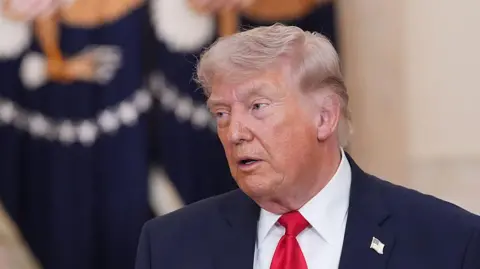
In a phone interview with ABC News senior political correspondent Rachel Scott, President Donald Trump issued his most explicit threat yet against Iran, warning that the United States would destroy the country's bridges and power plants by Tuesday if Tehran failed to agree to a peace deal within 48 hours.
"If it happens, it happens. And if it doesn't, we're blowing up the whole country," Trump said. "We're blowing up, as I said, it's going to be bridge day and it's going to be power plant day in the country of Iran." The remarks came in response to a question from Scott about whether his previously stated timeline of two to three weeks for a deal remained accurate. "It should be days, not weeks," Trump said, adding that Iran "has been decimated."
Trump said Iran had 48 hours to agree to a deal to open the Strait of Hormuz or make peace. Minutes after the interview, Trump reinforced the threat on social media with precise language about what Tuesday would bring. "Tuesday will be Power Plant Day, and Bridge Day, all wrapped up in one, in Iran. There will be nothing like it!!!" Trump wrote in the post. He told the Iranian regime directly, "you'll be living in Hell" if the Strait of Hormuz was not reopened.
The Strait of Hormuz, which Iran has effectively shut down, is a trade route through which 20 percent of the world's oil passes. Tehran's closure has triggered a worldwide energy crisis. The Sunday ultimatum represented the latest escalation in a conflict that began with joint U.S.-Israeli strikes on Feb. 28, targeting military and government sites. The war has since killed thousands, shaken global markets, cut off key shipping routes, and spiked fuel prices.

A total of 365 American service members have been injured as part of U.S. operations against Iran, according to newly released Pentagon figures. Iran has not absorbed the strikes passively. Shrapnel from intercepted drones injured four people in Bahrain on Saturday, and two buildings in Dubai were hit by debris, including one housing the U.S. cloud computing firm Oracle.
Over the last ten days, the U.S. and Iran held indirect negotiations through Pakistan, Egypt, and Turkey to try to reach a deal or ceasefire in return for opening the strait. No significant progress was achieved. Iran had previously rejected a 15-point U.S. plan presented through Pakistani mediators. Trump had extended a five-day deadline to April 6 as talks continued, but with his 10-day window now expired, the president's tone on Sunday left little ambiguity about what comes next if Tehran does not act.
The interview with Scott followed closely on the heels of a dramatic military rescue. Trump posted his statement just minutes after offering details of a rescue that unfolded "deep inside the mountains of Iran" of an F-15E crew member, whom he described as a "respected colonel," after the aircraft was downed on Friday. Whether the rescue emboldened or simply preceded Trump's escalating rhetoric, the convergence of events signals that the window for a negotiated resolution to the conflict is closing fast.
Sources:
Know something we missed? Have a correction or additional information?
Submit a Tip