Retired Gen. McKenzie Says Airman Rescue Could Deliver Hard Lesson for Iran
Retired Gen. Frank McKenzie said Iran's failed attempt to turn its own people against a downed U.S. airman may signal deep public disaffection with the regime.
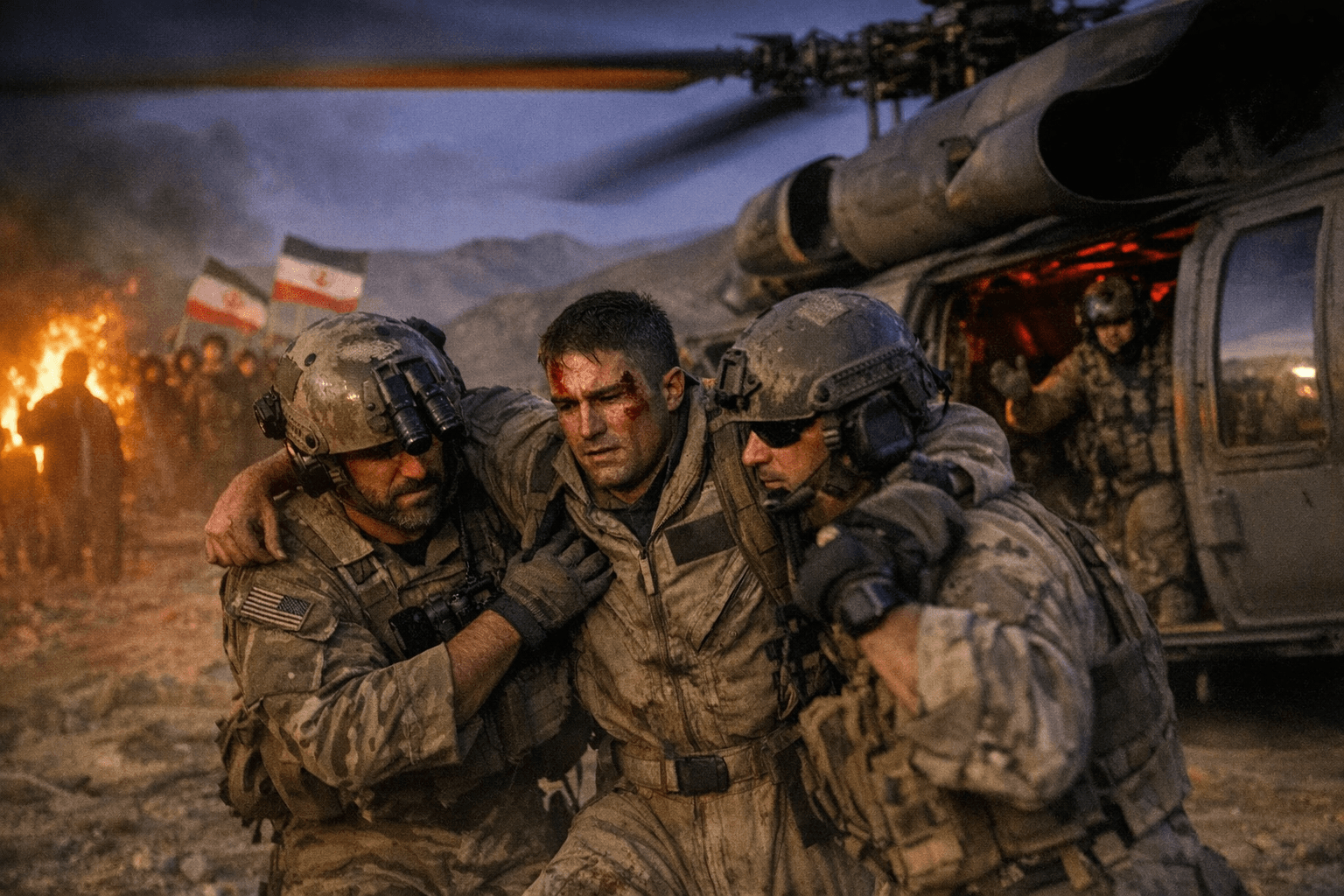
Retired Gen. Frank McKenzie framed the successful rescue of a U.S. weapons systems officer from deep inside Iran not merely as a tactical win but as a revealing stress test of Iranian state authority, telling CBS News' Ed O'Keefe on "Face the Nation" Sunday that the operation could deliver a "hard lesson for Iran."
The officer, whose F-15E Strike Eagle was shot down over southwestern Iran on Friday by Iranian fire, spent more than 24 hours evading capture in mountainous terrain, scaling to a ridgeline roughly 7,000 feet above sea level with little more than a pistol, a communication device, and a tracking beacon. Iranian state television broadcast a public appeal urging civilians to locate the airman and offered a prize to anyone who turned him over to police alive.
McKenzie, the former commander of U.S. Central Command, zeroed in on what that appeal did not accomplish. "That does not appear to have been successful," he told O'Keefe. "That's maybe a sign of disaffection. Don't know, but you can't be happy with that if you're a senior leader in Tehran this morning." The assessment carries weight beyond one mission: if Iran's government cannot mobilize its own population to hand over a wounded American hiding in their mountains, it suggests the regime's domestic grip may be weaker than its military posture implies.
McKenzie called the search-and-rescue operation itself "pretty effectively" executed, and pushed back on any accounting of the operation that tallies aircraft losses as a net negative. The U.S. lost a number of aircraft during the rescue mission, but McKenzie dismissed that calculus. "It takes a year to build an aircraft," he said, "it takes 200 years to build a military tradition where you don't leave anybody behind." He added: "We train for this endlessly. It's a part of every time we send air crew over enemy territory, we have detailed, elaborate plans to go get them."
The intelligence picture behind the operation adds another layer to the deterrence argument. The CIA reportedly employed what a senior administration official described as "unique, exquisite capabilities" to locate the officer hidden in a mountain crevice and immediately shared his exact coordinates with the Pentagon and the White House. Before the rescue launched, U.S. intelligence ran a deception campaign spreading disinformation inside Iran that American forces had already found and were moving the airman on the ground, sowing confusion in Iranian search efforts. President Trump ordered the rescue mission upon receiving the location, and CENTCOM executed it using special operations forces backed by heavy air cover, including aircraft dropping bombs to clear the area around the extraction point.
Israel, which had postponed planned strikes Friday to avoid interfering with the search-and-rescue effort, offered intelligence support throughout the operation. Israeli Defense Minister Israel Katz called the rescue "another expression of the close cooperation between Israel and the United States, even in the most complex moments."
The pilot, the other crew member aboard the two-seat F-15E, was recovered shortly after Friday's shootdown. Trump announced the second rescue in the early hours of Sunday on Truth Social: "WE GOT HIM!" He later described the airman as "seriously wounded" and "really brave."
What the mission leaves unanswered may ultimately shape its strategic legacy as much as the rescue itself. McKenzie's "hard lesson" framing is a deterrence argument, suggesting that Iran should internalize both the reach of U.S. special operations and the limits of its own social cohesion. But the same operation that proved American forces can extract a wounded airman from a 7,000-foot ridgeline also confirmed that Iran can shoot down a front-line U.S. fighter jet, a threshold crossed that no amount of rescue footage can uncross.
This article was produced by Prism’s automated news system from verified source data, official records, and press releases, then run through automated quality and moderation checks before publishing. The system is built and supervised by the people who set the standards it runs under. Read our full AI policy.
Did this article answer your question?