Iran Warns U.S. Against Ground Invasion as Pentagon Draws Up War Plans
Iran's parliament speaker declared forces are "waiting" to set U.S. troops "on fire" as the Pentagon drew up ground war plans and 3,500 troops arrived in the Gulf region.
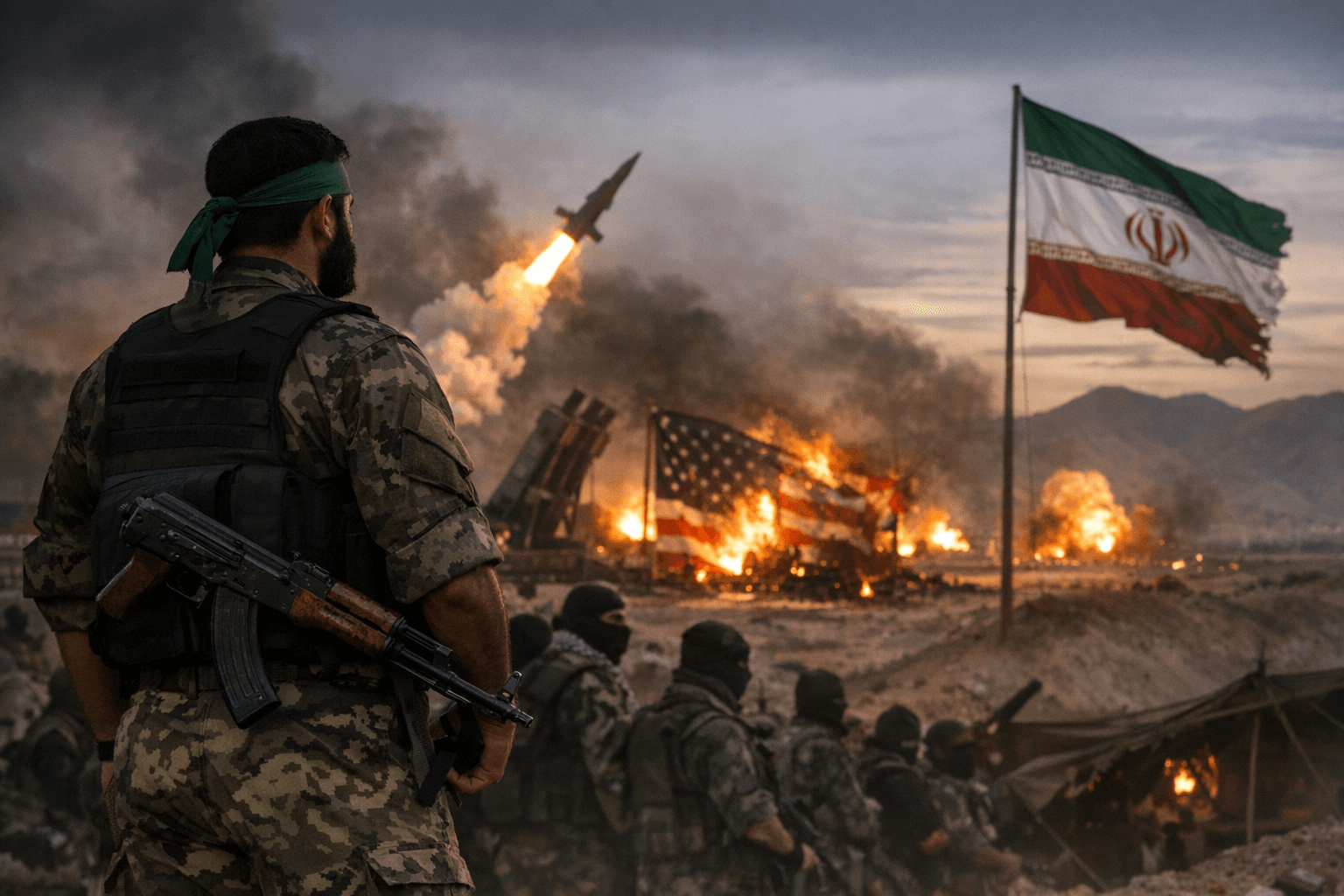
Iranian Parliament Speaker Mohammad-Bagher Ghalibaf issued the bluntest warning yet from Tehran on Sunday, declaring that his country's forces were "waiting for the arrival of American troops on the ground to set them on fire and punish their regional partners forever." The statement came on the 30th day of the U.S.-Israeli war with Iran, hours after the Pentagon quietly drew up plans for weeks of ground operations inside the country short of a full-scale invasion. U.S. officials have not confirmed any deployment order, and President Donald Trump and senior White House figures have signaled a preference for ending the conflict.
Ghalibaf, speaking through Iranian state media outlets IRNA and Tasnim, accused Washington of conducting a double game: "The enemy, openly, sends messages of negotiation and dialogue, but secretly is planning a ground attack." He added that the United States was "unaware that our men are waiting for American soldiers to enter on the ground so they can set them ablaze and punish their regional partners forever." He closed with a declaration that read less like political rhetoric than a military posture statement: "Our firing continues. Our missiles are in place. Our determination and faith have increased."
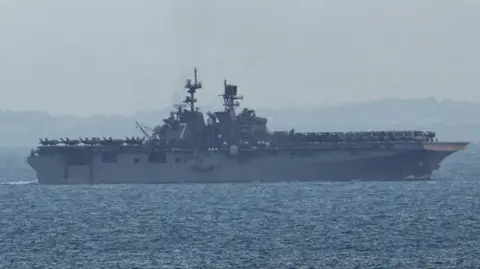
The warning landed the same weekend U.S. Central Command announced the arrival of the USS Tripoli, an amphibious assault ship previously deployed to Japan, leading a Marine Expeditionary Unit into the Middle East from the Pacific. CENTCOM said the MEU is composed of about 3,500 sailors and Marines and carries transport and strike fighter aircraft along with amphibious assault and tactical assets. A second MEU of about 2,200 Marines and three warships departed California last week and remains en route, with arrival expected to take several more weeks.
Thirteen U.S. service members have been killed in the war with Iran; two more have died of noncombat causes.
The positioning of amphibious assault ships within range of Iran's coastline represents a fundamentally different threat calculus than the last time the U.S. and Iran exchanged fire in the Gulf. Operation Praying Mantis in April 1988 was a single-day naval and air exchange targeting Iranian oil platforms, with no ground force involvement and no U.S. combat deaths. Today, thousands of Marines trained in shore landings are positioned in the same waterway, alongside IDF forces that said Sunday they were days from striking every target inside Iran classified as top priority.
The economic stakes are already being felt far from the Gulf. Iran's grip on the Strait of Hormuz has disrupted global oil, natural gas and fertilizer markets and curtailed air travel. The Houthi rebels' entry into the conflict now threatens the Bab el-Mandeb strait, the chokepoint linking the Red Sea to global shipping routes. Kharg Island, through which the bulk of Iran's oil exports flow, has emerged as a potential flashpoint that could widen the damage to energy markets.
The Islamic Revolutionary Guard Corps sharpened the threat closer to home, warning it would consider "Israeli universities and branches of U.S. universities in the region 'legitimate targets'" unless offered safety assurances for Iranian institutions. The Guard named institutions including Georgetown, New York University and Northwestern, all of which have campuses in Qatar or the UAE, and gave Washington until midday Monday: "If the U.S. government wants its universities in the region spared, it should condemn the bombardment" of Iranian universities.
Regional foreign ministers from Egypt, Turkey, Saudi Arabia and Pakistan gathered Sunday in Islamabad in hopes of opening direct U.S.-Iran talks. Neither Washington nor Tehran sent representatives. Bahrain announced a maritime curfew along its Gulf coastline to remain "until further notice." Iran's own civilian population has been cut off from the internet for at least 696 hours, according to internet watchdog NetBlocks, a blackout that entered its 30th day the same morning Ghalibaf announced his forces were ready to add American casualties to that count.
At least 1,000 additional troops from the 82nd Airborne are set to deploy to the Middle East, a reinforcement that suggests the window for miscalculation, already narrow, is closing.
Know something we missed? Have a correction or additional information?
Submit a Tip