Iranian Americans Divided Over Conflict, Regime Change in Their Homeland
'War is the only hope for a new Iran,' one protester declared in Washington. A poll found 53% of Iranian Americans oppose U.S. military action.
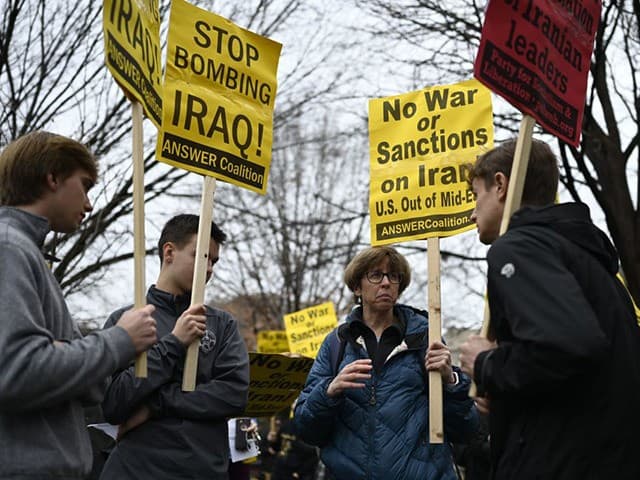
At a Washington protest where one demonstrator's sign read "rich man's war poor peoples blood!," the fractures running through America's Iranian diaspora were hard to ignore. As conflict in the Middle East broadened, Iranian Americans gathered on the streets of the capital, many declaring alignment with the United States and Israel and calling openly for regime change in Tehran. Others came to oppose those very strikes on a country many still call home.
The rationale driving the pro-war faction was rooted in accumulated exhaustion. "We don't want war, but at the same time what do we do? We tried protesting against the regime and they just killed more people," said one unnamed demonstrator, referring to this year's deadly demonstrations in Iran. "War is the only hope for a new Iran."
That position placed him at direct odds with other diaspora members. Ariana Jasmine, a New York-based activist and commentator, said she understood the reasoning behind those who backed the war but did not support it herself. She described feeling like a "black sheep" within the Iranian diaspora because of that stance.
The divide was reflected in polling, though numbers may be shifting. A survey conducted last year by the National Iranian American Council and YouGov found that 53% of Iranian Americans surveyed opposed U.S. military action against Iran. Jamal Abdi, president of NIAC, a nonpartisan nonprofit that aims to give voice to the Iranian American community, said a new poll with updated numbers was set for release next week.
Online, the conflict sharpened the language of intra-community debate. Since the attack on Iran, diaspora social media became especially volatile. Those perceived as supporting military action were labeled "Zionists," a term that since the Oct. 7, 2023, Hamas attacks on Israel has increasingly been used as a slur against Jews. Anti-war voices, meanwhile, faced accusations of being pro-regime. The result was a discourse where holding middle ground carried social cost from both directions.
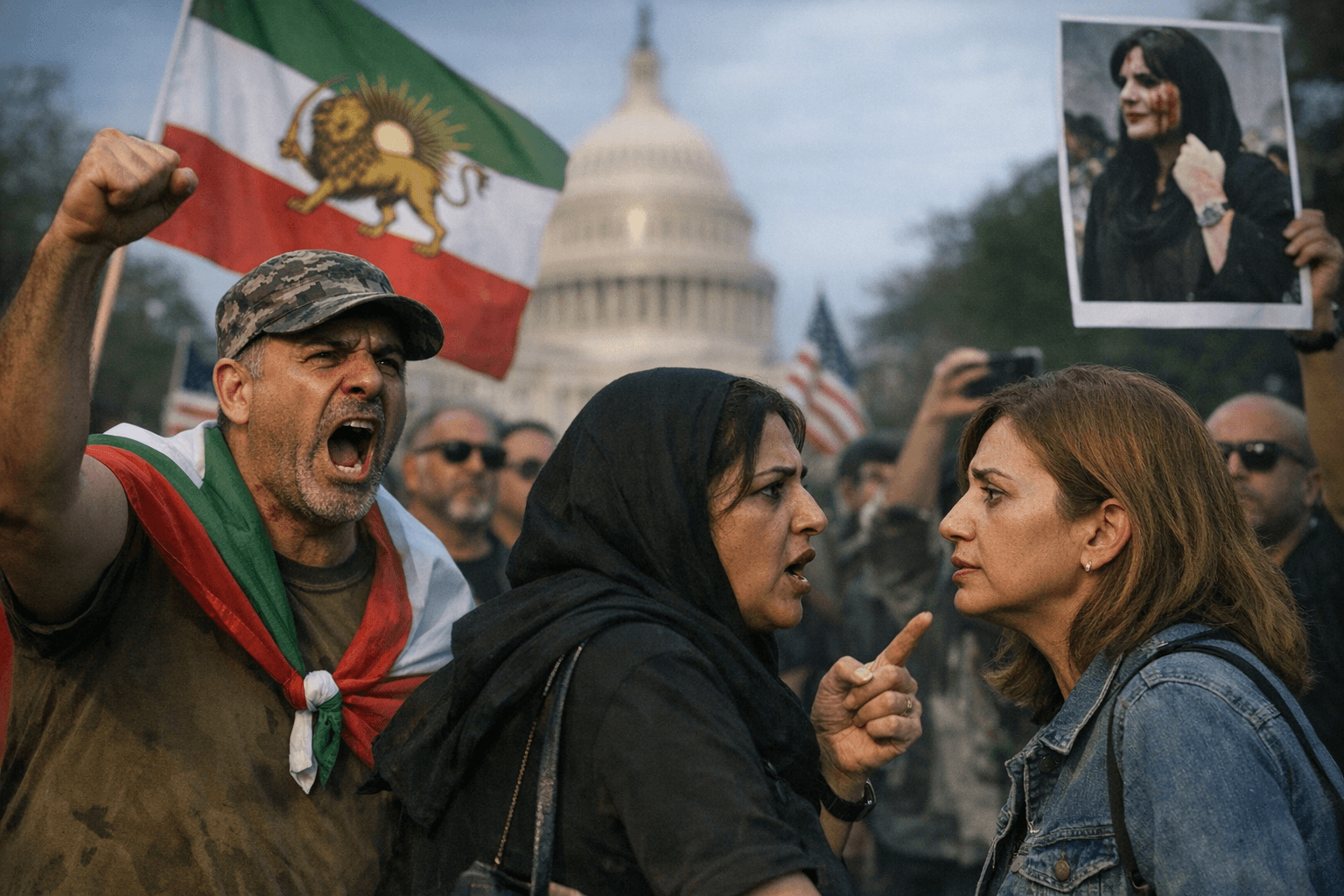
Milani, who observed these dynamics closely, framed the toll plainly. "The images of the destruction and the very joyous support that some give to the idea of war has become a source of more tension than we normally get in the diaspora," Milani said. "It will get harder before it dissipates."
The question of what comes after the current government proved equally contentious. Some in the diaspora rallied around Reza Pahlavi, the son of the last shah, as a potential leader for a post-Islamic Republic Iran. Others remained wary of returning any figure associated with the former monarchy to power. The gap between opposing the regime and agreeing on a successor was wide.
Against that backdrop, the Iranian Diaspora Collective, an Instagram account with over 81,000 followers, pushed back against the assumption that any single political position defined the community. "We are not a monolith," the account wrote. "Millions of people will never share the same ideology or identity and that plurality is the strength of any free society."
Whether that argument could hold as the conflict intensified and political pressure on Washington mounted remained an open question the diaspora was still working out in real time.
This article was produced by Prism’s automated news system from verified source data, official records, and press releases, then run through automated quality and moderation checks before publishing. The system is built and supervised by the people who set the standards it runs under. Read our full AI policy.
Did this article answer your question?

