Iranian negotiator returns to Pakistan as U.S. cancels talks
Abbas Araghchi was back in Islamabad after Trump scrapped a U.S. envoy trip, exposing how far apart Washington and Tehran remained over the Strait of Hormuz blockade.
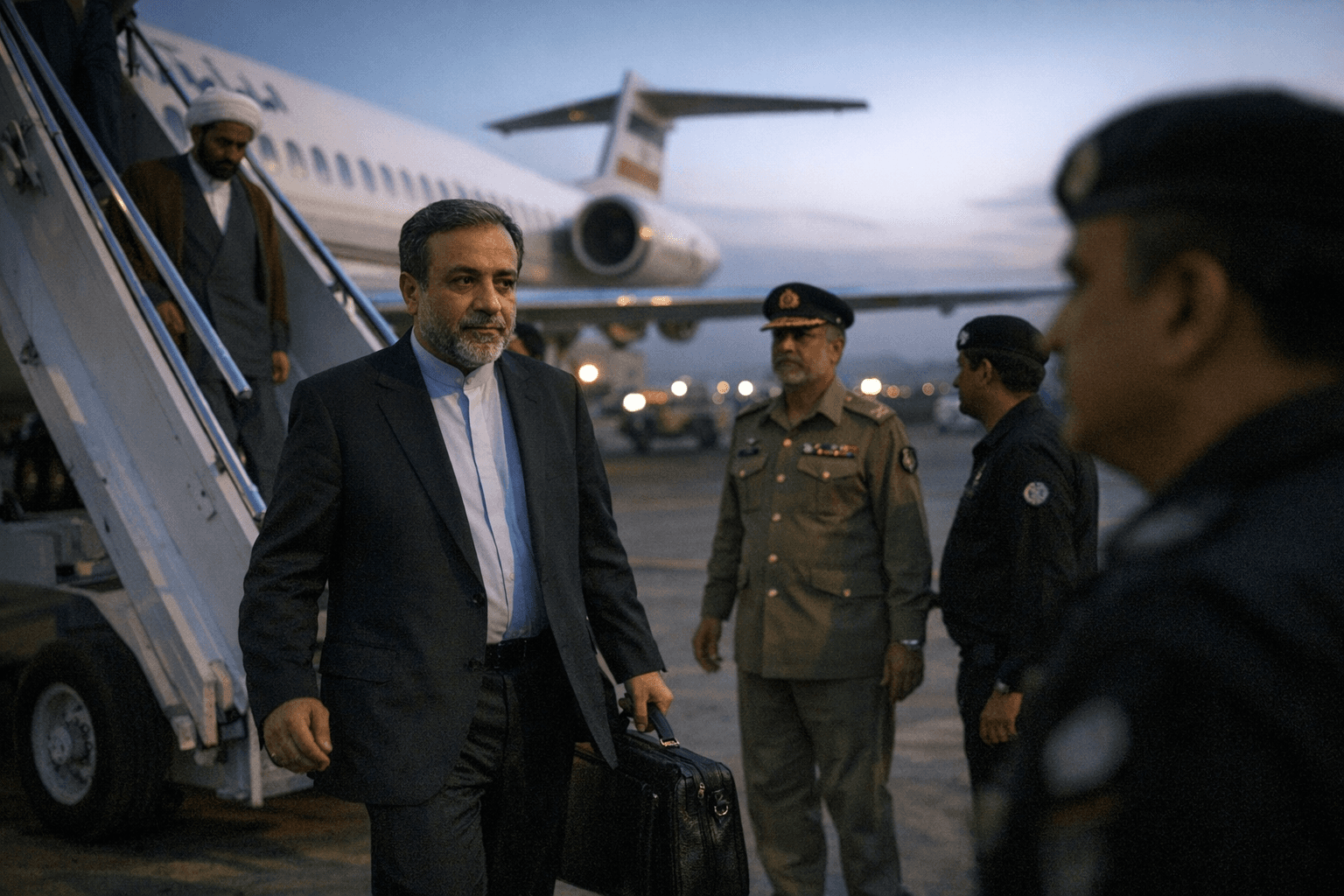
Abbas Araghchi was back in Islamabad on Sunday after President Donald Trump abruptly canceled a planned trip by Steve Witkoff and Jared Kushner, a sharp reminder that the backchannel between Washington and Tehran remained brittle. Araghchi had left late Saturday, then returned to Pakistan before continuing on to Moscow, as Pakistan’s leaders tried to keep the diplomacy alive.
The collapse of the U.S. travel plans underscored how little trust remained on either side. The White House had said Friday that Witkoff and Kushner would travel to Islamabad for a second round of talks, but Trump cut the mission short Saturday, saying there had been “too much travel and too little progress.” He added that Iran could call the U.S. if it wanted to talk, then later told Fox News that Washington had “all the cards.”
The talks carried far greater weight than the canceled flight schedule. They were tied to the broader U.S.-Iran war that began after joint U.S.-Israeli strikes on February 28, 2026, and to the standoff over the Strait of Hormuz, where about a fifth of the world’s oil normally moves in peacetime. Iran has been limiting movement through the waterway while the U.S. has enforced a blockade of Iranian ports, a confrontation that has already disrupted oil, liquefied natural gas, fertilizer and other global shipments.
Tehran has made clear it does not want direct talks under the current conditions. President Masoud Pezeshkian told Pakistani Prime Minister Shehbaz Sharif in a phone call Saturday night that Washington should first remove the blockade and other operational obstacles before any new negotiations can begin. Iran’s foreign ministry said any discussions would be indirect and routed through Pakistani intermediaries, reflecting deep distrust after earlier rounds of indirect diplomacy ended in attacks by the U.S. and Israel.
Araghchi’s movements showed how many channels are still being used to prevent the talks from collapsing altogether. He had already met in Islamabad with Shehbaz Sharif and Pakistan’s military chief, Field Marshal Asim Munir, before heading to Oman, which has previously mediated contacts and sits on the other side of the Strait of Hormuz. On Sunday, Araghchi also spoke by phone with officials in Qatar and Saudi Arabia. Pakistan-led mediators are still trying to bridge the gap, but the dispute over the blockade, and over whether any talks should be direct or indirect, left the next phase of diplomacy hanging on by a thread.
This article was produced by Prism’s automated news system from verified source data, official records, and press releases, then run through automated quality and moderation checks before publishing. The system is built and supervised by the people who set the standards it runs under. Read our full AI policy.
Did this article answer your question?