Iranian Strikes Damage U.S. AWACS Aircraft, Radar Assets Across Multiple Bases
Photographs show an E-3G Sentry AWACS in ruins at Prince Sultan Air Base after Iranian strikes injured 15 U.S. troops and damaged radar systems across four regional bases.
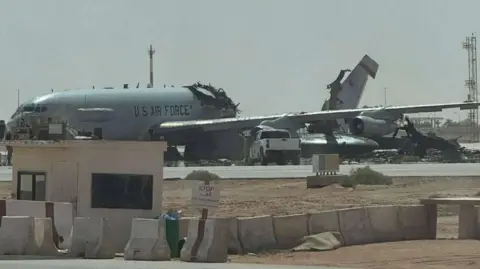
The tail section of the E-3G Sentry lay detached, collapsed onto the runway at Prince Sultan Air Base in Saudi Arabia, surrounded by scattered debris. The midsection had been blown apart, exposing internal components to open air. Personnel in protective suits walked beneath the wing of the crippled aircraft, their presence suggesting hazardous material precautions as much as damage assessment.
Photographs of the wreckage document the aftermath of an Iranian missile and drone strike that reportedly involved at least six ballistic missiles fired on Friday. Around 15 U.S. service members were injured in the attack, including five seriously, according to PBS.
Air and Space Forces magazine identified the stricken aircraft as an E-3G Sentry airborne warning and control aircraft, a platform designed to track aircraft and coordinate air defense across vast distances. The damage concentrated at the aircraft's rear, the section housing the rotating radar dome and sensitive electronics tied to its surveillance system.
The E-3G was not the only target. Satellite imagery and videos show a systematic campaign to degrade radar infrastructure across four U.S. regional installations in the opening days of the conflict. On February 28, described as the first day of the conflict, a video posted on social media captured an apparent drone striking a radome at the U.S. Navy's Fifth Fleet headquarters in Manama, Bahrain. A satellite image from March 1 showed a plume of smoke rising from a building at Prince Sultan Air Base that, as of January, had housed an AN/TPY-2 radar system, though it is not clear whether the radar was present in the building at the time of the strike. On March 4, satellite imagery of Camp Arifjan in Kuwait showed multiple radar domes appearing damaged, damage that Kuwait confirmed. Five days later, satellite images captured apparent damage to satellite dishes at Al Udeid Air Base in Qatar.

The AN/TPY-2 is the primary sensor for a THAAD battery, each unit costing approximately half a billion dollars according to publicly available Defense Department documents. The Missile Defense Agency puts the total U.S. Army inventory at eight THAAD batteries, two of which are committed on a long-term basis to Guam and South Korea, leaving limited redundancy across the broader theater.
Each radar lost represents not just a $500 million asset destroyed, but a gap in the interlocking sensor network that underwrites regional air defense. "Taking out one TPY-2 does not take down your theater missile defense capability. It just reduces, you're just partially blinded," said Alberque. "You can network together your radar picture in order to cue targeting pretty well, but you would just always rather have the exquisite capabilities."
U.S. Central Command has not publicly commented on the incident.
This article was produced by Prism’s automated news system from verified source data, official records, and press releases, then run through automated quality and moderation checks before publishing. The system is built and supervised by the people who set the standards it runs under. Read our full AI policy.
Did this article answer your question?


