Iranians Grow Divided and Angry as Rifts Over the War Deepen
Inside Iran, the US-Israeli war has shattered family bonds: neighbors who mourned Khamenei face those celebrating his death, while the IRGC patrols the streets and internet blackouts silence dissent.
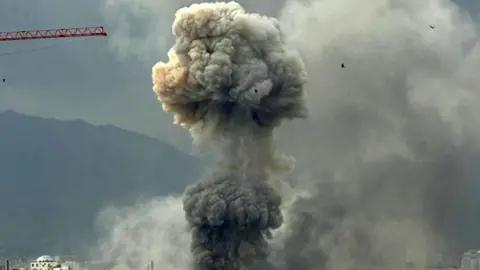
The bombs that began falling on February 28 did more than crater Tehran's streets. For many Iranians, they detonated something inside the home: long-suppressed arguments about the regime, the protests, and the price of change that could no longer be contained in whispers.
Since the United States and Israel launched Operation Epic Fury, killing Supreme Leader Ali Khamenei in the opening strikes and targeting military sites and nuclear facilities across the country, Iranians have been navigating a conflict that is simultaneously external and catastrophically internal. The US-based human rights group HRANA documented at least 1,464 civilians killed, including at least 217 children, in the first month of fighting. US Central Command reported striking more than 10,000 targets across Iran. But the damage to social cohesion, already badly frayed by the January 2026 uprising in which Iranian security forces killed thousands of protesters, may prove harder to measure.
Khamenei's death, confirmed by Iranian state media, produced a visible rupture. Regime supporters mourned publicly; opponents celebrated openly, at least briefly, before IRGC units resumed patrolling streets with weapons. The divide was not ideological abstraction. It played out at Nowruz gatherings, in apartment stairwells, across family WhatsApp threads that the government has periodically blocked. A woman writing daily dispatches from Tehran, shared with NPR, captured the strange compression of ordinary life and mortal fear: "Many are fleeing and many buildings are empty. I still plan to stay in Tehran and continue my daily life." She bought firecrackers for Nowruz despite the Basij ban on celebrations. A café she frequented, which had played live rock music, closed this month after nearby shelling.
The political fracture runs along generational lines sharpened by a decade of crackdowns. Younger Iranians who took to the streets in January, chanting "Death to the Dictator," and who watched thousands of peers die in what became the largest domestic uprising since 1979, had arrived at a stark calculus long before the first US aircraft appeared on radar. "We are willing to pay the price for the Islamic Republic to disappear," wrote a former academic collaborator living in Tehran, a woman in her 30s who had, as recently as June 2025, vehemently opposed any foreign military attack on her country.
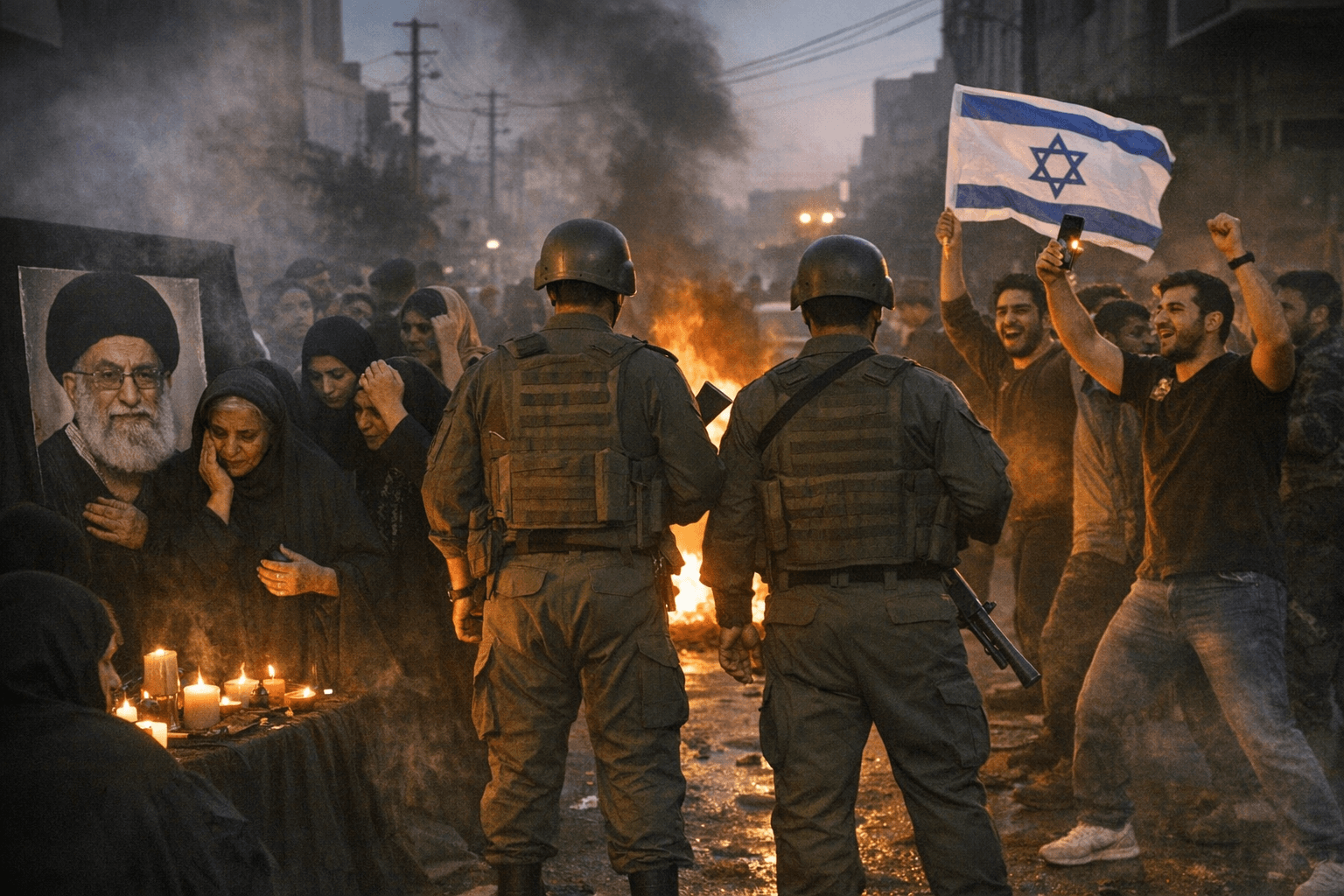
That shift, from categorical opposition to the war to grim acceptance of it, represents one of the most significant social developments of the conflict, and one of the most painful. It is also what makes the rifts uniquely Iranian. The Islamic Republic spent decades deploying surveillance, propaganda, and state violence to make political disagreement feel existential. Families with members in the Basij or IRGC face not just ideological differences but impossible loyalties. In mid-February, before the war began, schools had already transitioned into spaces of surveillance and interrogation. When the bombs arrived, those pressures did not lift; they intensified. The Islamic Republic threatened in March to seize the assets of diaspora members who cooperated with foreign governments, a warning aimed directly at the pressure Iranians abroad apply to relatives at home.
The diaspora itself is divided. In Los Angeles, where one of the largest Iranian communities outside Iran lives, competing protests filled the streets within days of the February 28 strikes. Majid Golzari, born in the southeastern city of Kerman and now a resident of Los Angeles, watched the US bombing campaign with anguish. "Bombs never solved anything," he said. "I don't understand how people are happy about bombing others." Across town, others waved Israeli and American flags, calling for regime change at any cost.
That split, between those who fled pre-revolutionary Iran and carry a monarchist nostalgia, those who escaped the Islamic Republic's prisons and executions, and those who simply left for economic survival, has always existed in the diaspora. The war collapsed those distinctions into something rawer. Reza Arzanian, an Iranian American in Los Angeles, managed to reach his parents in Tehran by phone and learned that munitions had struck close to their home. The conversation, like thousands of others conducted across fractured internet connections and under the shadow of government monitoring, carried the specific weight of love meeting politics in a moment when both demand an answer.
This article was produced by Prism’s automated news system from verified source data, official records, and press releases, then run through automated quality and moderation checks before publishing. The system is built and supervised by the people who set the standards it runs under. Read our full AI policy.
Did this article answer your question?


