Iran’s history shows a willingness to endure heavy losses
Tankers in Hormuz can jolt markets fast, but they may also be pushing Iran toward the isolation it wants to avoid. History suggests Tehran can endure pain, yet endurance is not the same as leverage.
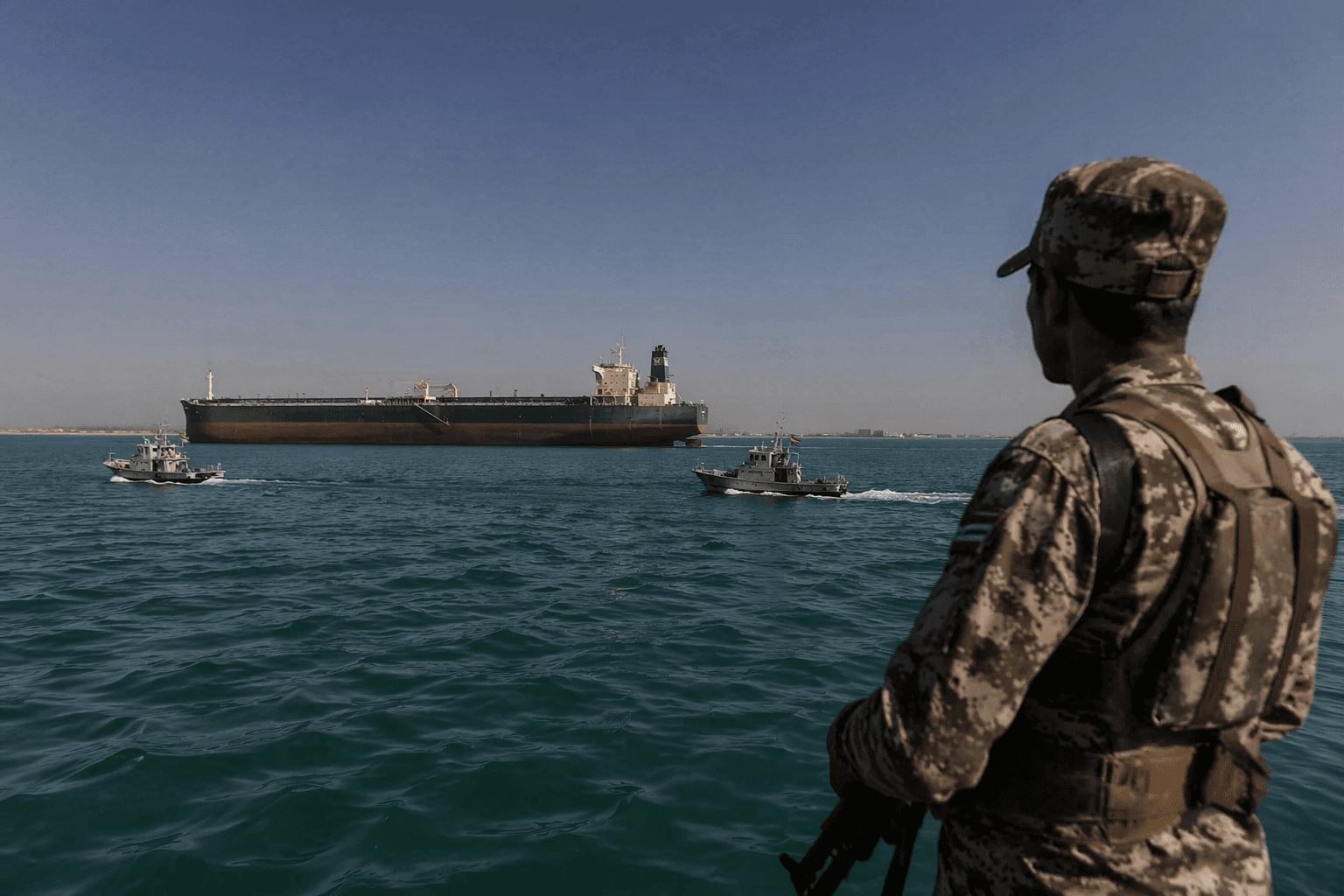
Iran’s attacks on tankers in the Strait of Hormuz deliver instant shock, but they also invite a faster, clearer backlash from Washington, shipping authorities and the energy market. The question is no longer whether Tehran can make the waterway dangerous. It is whether it is mistaking disruption for leverage and hardening opposition without improving its hand.
Why the strait matters
A chokepoint with few substitutes
The Strait of Hormuz is not just symbolic terrain. The U.S. Energy Information Administration says oil flow through the strait averaged 20 million barrels a day in 2024, about 20 percent of global petroleum liquids consumption, and the agency notes that very few alternatives exist if the route is closed. The International Energy Agency also describes it as one of the world’s most critical oil transit chokepoints, with navigable channels only a few miles wide inside a waterway that borders Iran and Oman.
That makes the crews on the water part of the story, not a footnote. The International Maritime Organization says hundreds of ships and roughly 6,000 seafarers remain stranded in the Persian Gulf, and it has urged all sides to exercise maximum restraint and de-escalate the situation without delay. Its warning is blunt because the danger is blunt: every attack forces mariners, shipowners and flag states to choose between business, safety and delay.
A fragile reopening has already been shaken
The current round of attacks hit a Qatari LNG tanker and a Saudi crude tanker near the strait, and maritime authorities raised the transit threat level to severe. Reuters reported that traffic through the waterway had picked up but remained spotty, ranging between one-third and one-fifth of pre-war levels, even after Washington and Tehran agreed in late June to reopen the strait following a three-month war that had throttled global energy supplies. That fragile détente was already thin; the tanker strikes made it thinner.
The political response moved just as quickly. The White House revoked the license it had granted Iran in June to sell oil, calling Iran’s actions in the strait wholly unacceptable and warning of consequences. The Joint Maritime Information Center also raised the threat level from substantial to severe, the first time it had been set that high since June 15, because the pattern pointed to deliberate hostile action under current conditions.
A familiar Iranian habit: endurance under pain
History suggests Tehran can absorb punishment
Iran’s willingness to live with losses is not a new feature of this conflict. The Iran-Iraq War, which began with Iraq’s invasion on September 22, 1980 and ended in an August 20, 1988 ceasefire, caused more than 1,000,000 casualties by Britannica’s estimate, with Iran suffering the greatest losses. The same war elevated hard-line figures in Iran’s leadership and helped turn the Islamic Revolutionary Guard Corps into the country’s most powerful armed force.
That history matters because it complicates any assumption that pain alone will force Iranian restraint. The Islamic Republic has repeatedly shown that it can treat damage as something to endure if leaders believe the long game still serves regime survival, territorial control or strategic relevance. In that sense, the current tanker attacks fit an older Iranian pattern: absorb costs now, seek advantage later. That is an inference from the historical record, but it is one the current crisis makes hard to ignore.
But endurance is not the same as success
The current war already shows the limits of raw disruption. Reuters reported that the world has absorbed the loss of more than a billion barrels of oil supply since the Iran war began, while the International Energy Agency described the four-month conflict as the biggest energy disruption in history. Even so, benchmark Brent prices ended up lower than when the conflict began, because Saudi Arabia and the United Arab Emirates found alternate routes, China cut buying, and countries pulled roughly 1 billion barrels from reserves, including a record release led by the IEA.
That is the strategic gap Iran has to confront. It can still force rerouting, premiums and panic, but the market has already shown it can cushion a shock for a while if reserves are available and alternative supply lines exist. Tactical disruption, on its own, has not produced strategic control of the energy system or a decisive shift in the war’s terms.
Where the gamble turns risky
The U.S. can turn maritime chaos into a wider campaign
The latest attacks did not just unsettle shipping. After the tanker strikes, U.S. Central Command said it completed strikes that hit more than 80 targets and targeted more than 60 Islamic Revolutionary Guard Corps small boats to degrade Iran’s ability to attack commercial shipping. The same U.S. statement said the attacks were a clear and dangerous violation of the ceasefire and undermined freedom of navigation. Iran’s maritime pressure, in other words, gave Washington a public rationale for a broader military response.
That response matters for the balance Iran may be trying to alter. If the goal is to make Washington negotiate over Iran’s nuclear ambitions or its desire to control Hormuz, the attacks risk doing the opposite by strengthening the case for sanctions, maritime patrols and more coercive strikes. Reuters noted that broader talks over Iran’s nuclear ambitions and its desire to control Hormuz were already underway, while the United States said it wants to prevent Iran from acquiring a nuclear weapon.
Markets feel the pressure, but not necessarily on Iran’s terms
Oil traders did react. Brent crude settled 3.01 percent higher at $74.16 a barrel and U.S. West Texas Intermediate rose 2.76 percent to $70.44 after the tanker attacks and the U.S. revocation of Iran’s oil license. But that price move was paired with a larger reality: the system has already adjusted to months of disruption, and the biggest risk now is not just another spike but the way repeated incidents erode shipping confidence, raise insurance costs and expose seafarers to prolonged danger.
That is where the political cost can outweigh the tactical gain. Each strike may remind the world that Iran can still threaten a vital chokepoint, but it also keeps the Gulf in a permanent state of alarm and gives every outside actor a stronger reason to treat Iran as a destabilizer rather than a negotiator. A strategy built on fear can force attention; it does not automatically win concessions.
Iran’s history shows that its leaders can tolerate severe losses when they believe survival or leverage is at stake. The harder test now is whether they have misread how quickly tactical disruption in Hormuz can turn into a strategic liability that leaves them more isolated, not more powerful.
This article was produced by Prism’s automated news system from verified source data, official records, and press releases, then run through automated quality and moderation checks before publishing. The system is built and supervised by the people who set the standards it runs under. Read our full AI policy.
Did this article answer your question?