Iran's Hormuz Blockade Plunged Asia Into Deepening Energy Crisis
Iran shut the Strait of Hormuz, cutting Gulf oil flows to below 10% of normal and sending Asian energy markets into crisis.
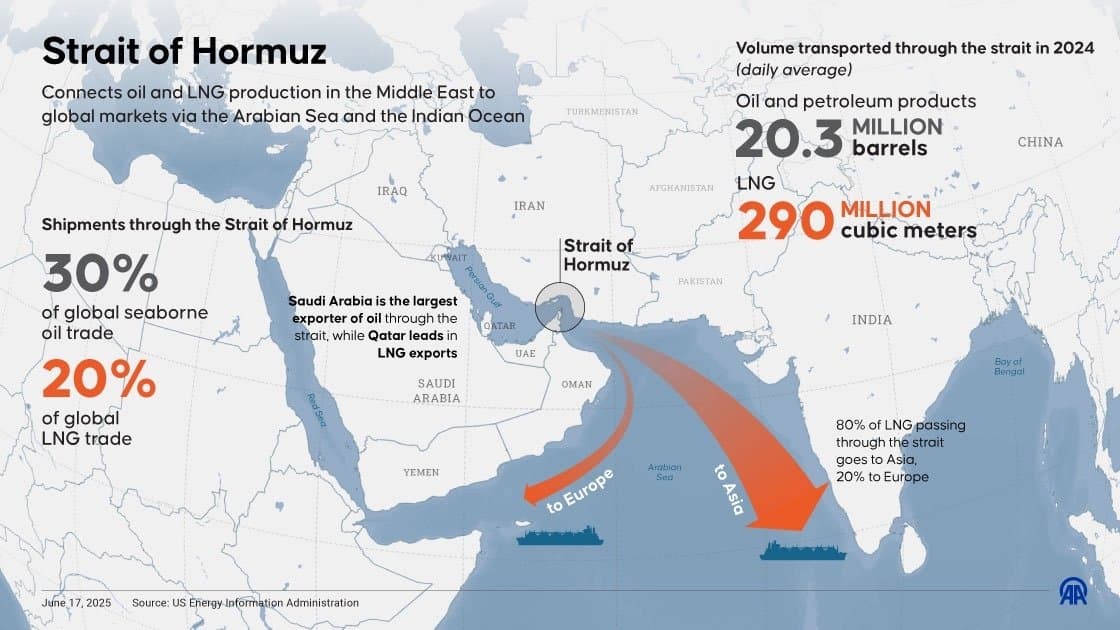
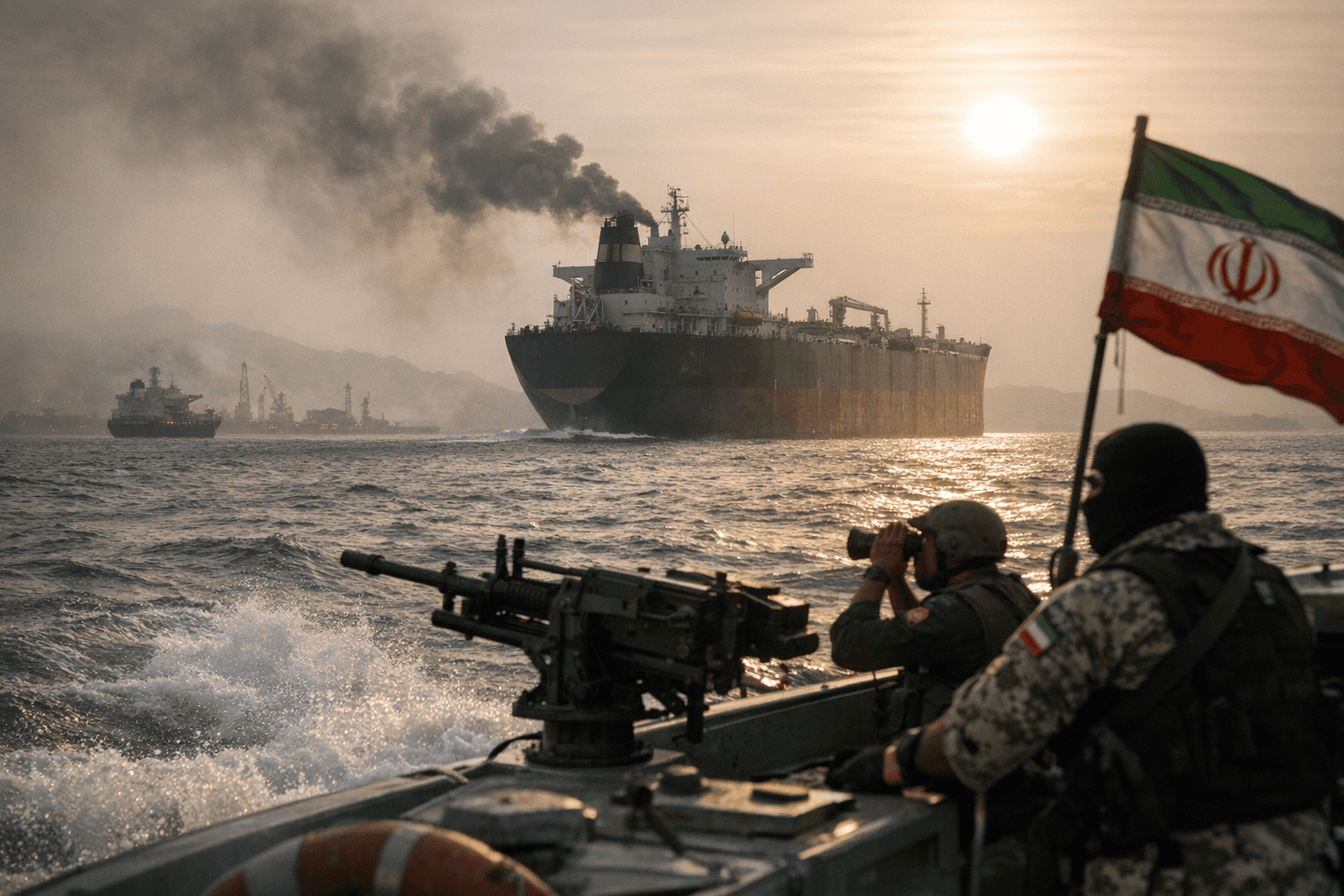
Iran's Revolutionary Guard declared the Strait of Hormuz closed and warned that any vessel attempting to transit the waterway would be targeted, triggering an energy crisis across Asia that analysts warned could spiral into economic shocks and social unrest.
The closure, combined with strikes on key Gulf energy infrastructure, collapsed oil flows through the strait to less than 10% of pre-war levels. Gulf oil production fell by an estimated 10 million barrels per day compared with March 2025. The strikes hit Ras Tanura in Saudi Arabia, Qatar's Ras Laffan Industrial City and Mesaieed Industrial City, and the Ruwais refinery complex in the United Arab Emirates. Qatar halted production entirely after Iranian drones struck both Qatari facilities. Only about 90 vessels, mostly Indian, Pakistani and Chinese-flagged ships, made it through the strait since Israeli and U.S. attacks on Iran and Iran's retaliatory strikes against Israel and Gulf Arab neighbors began on Feb. 28.
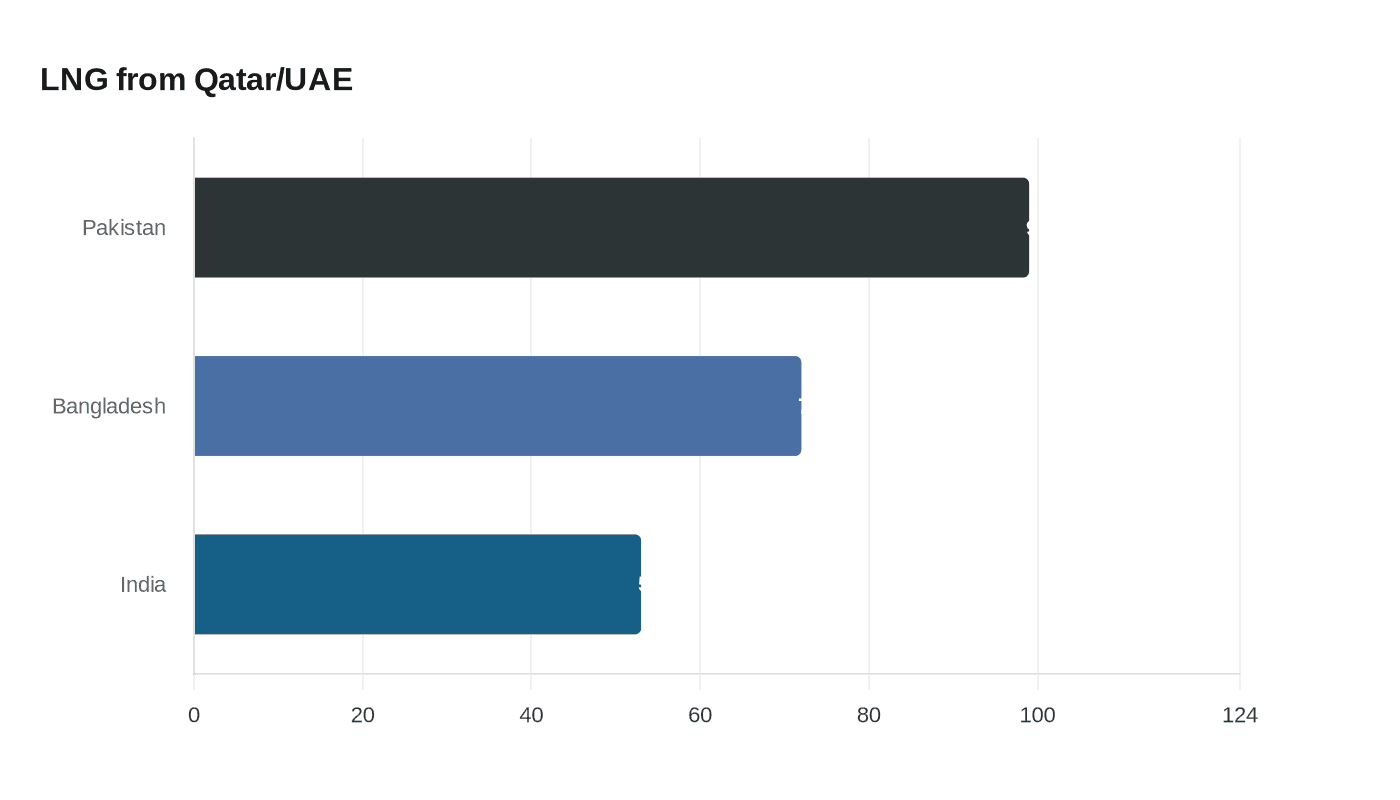
The human cost landed hardest in Asia. The continent relied on the Middle East for 59% of its crude imports in 2025, according to data firm Kpler. Nearly 90% of the liquefied natural gas transiting the strait that year was destined for Asian buyers. Pakistan sourced 99% of its LNG from Qatar and the UAE; Bangladesh, 72%; and India, 53%. Bangladesh was already running a structural gas deficit exceeding 1,300 million cubic feet per day before the crisis began, according to the Institute for Energy Economics and Financial Analysis.
"The countries that are exposed to that supply disruption are not so much in Europe, or in the Americas, they're actually really in the Asia region," said Michael Williamson of the United Nations Economic and Social Commission for Asia and the Pacific.
Asian benchmark LNG prices jumped nearly 40% at the start of the crisis, and forward curves for 2026 implied materially higher export prices for both Asia and Europe. Oil futures closed at $95 a barrel in one snapshot, while prices surged to four-year highs before falling back below $100 and then rising again as markets struggled to find a floor. Governments released hundreds of millions of barrels of emergency crude from strategic reserves, which calmed markets temporarily.
Nomura identified Thailand, India, South Korea and the Philippines as the most vulnerable Asian economies due to their heavy import dependence, while Malaysia stood as a relative beneficiary given its status as an energy exporter.
Iran's Revolutionary Guards made their position explicit: they would not allow "one litre of oil" to be exported from the Middle East if U.S. and Israeli attacks continued. Several merchant ships were struck in and around the strait, raising war-risk premiums and insurance costs that compounded the physical supply shortage with a logistics shock affecting the entire global shipping network.
Yousef Alshammari, president of the London College of Energy Economics, described the situation as "certainly very worrying" and warned that the longer the strait stayed closed, "the more likely that these stocks will be exhausted, and prices will continue to rise, leading to major global economic crisis. The only solution to this is to reopen the strait and enable navigation to resume."
The Council on Foreign Relations warned that consumer panic in some Asian states had reached a level sufficient to risk not just economic shocks but potential violence over scarce energy supplies, a consequence that would extend the war's damage far beyond the Middle East.
This article was produced by Prism’s automated news system from verified source data, official records, and press releases, then run through automated quality and moderation checks before publishing. The system is built and supervised by the people who set the standards it runs under. Read our full AI policy.
Did this article answer your question?

