Iran’s shadow fleet enabled clandestine jet fuel shipments to Myanmar junta
An investigation traces ship movements, satellite imagery and shipping documents linking clandestine Iranian deliveries of jet fuel to Myanmar, enabling intensified air strikes.
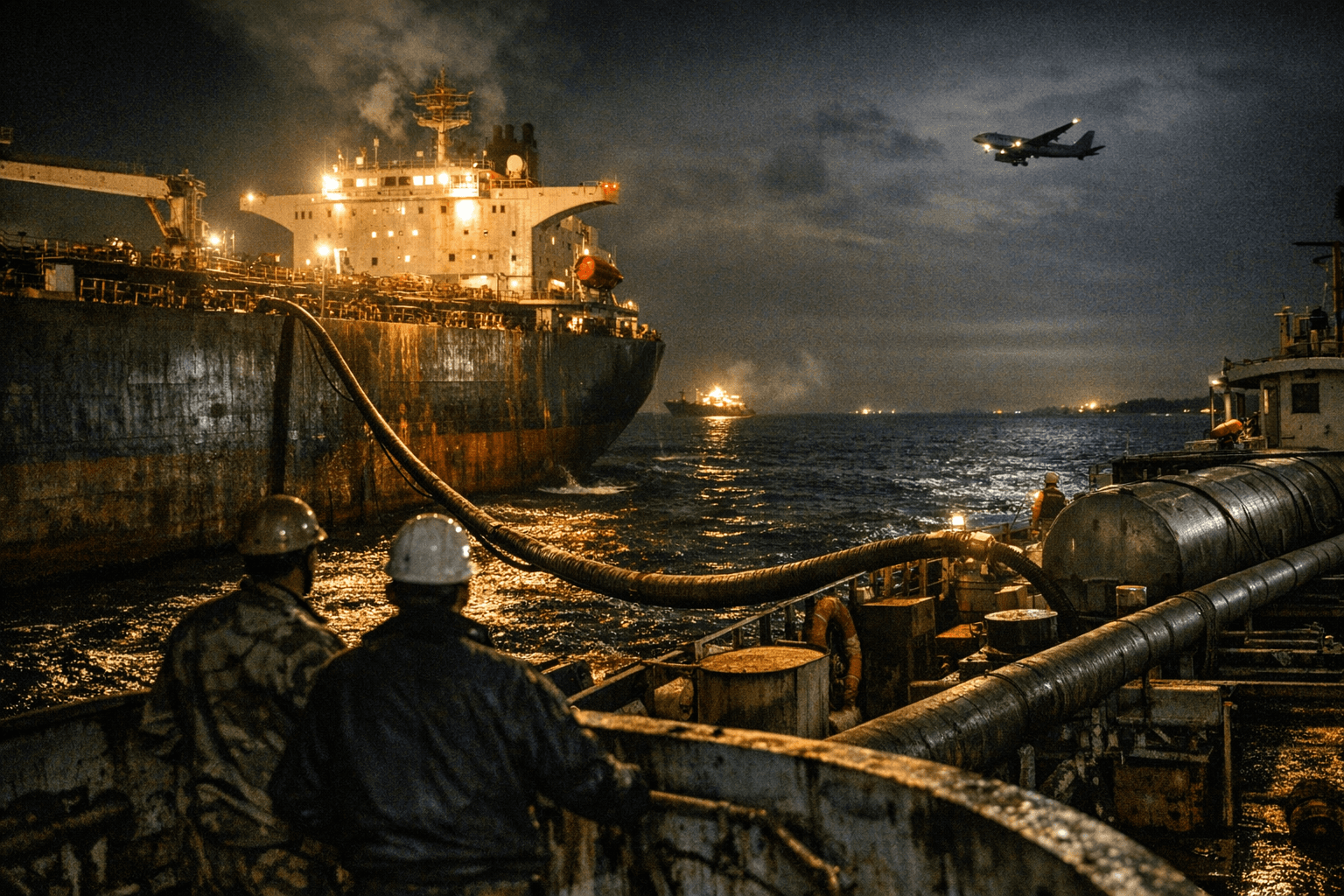
Investigators have traced a sustained pattern of clandestine maritime deliveries of jet fuel from Iran to Myanmar that began in October 2024 and continued into early 2026, providing the fuel that helped the Myanmar military step up its aerial campaign. The findings are based on a convergence of ship movement records, satellite imagery and shipping documents that together map an opaque supply chain often described by analysts as a "shadow fleet."
The shipments, which avoided standard commercial transparency, appear to have allowed the junta to increase the tempo and reach of air operations at a time when domestic and international scrutiny over its conduct was intensifying. Satellite imagery of port movements and at-sea transfers, matched to vessel tracking data and logistics paperwork, shows a pattern of deliberate obfuscation designed to conceal the origin, ownership and final recipient of the fuel cargoes.
This revelation adds a new layer to an already fraught geopolitical and humanitarian situation. For years the Myanmar military has relied on air power to suppress resistance and control recalcitrant regions, producing large numbers of civilian casualties and internal displacement. Fuel is a critical logistical enabler of sustained air operations; the arrival of external supplies under clandestine arrangements helps explain the observed escalation despite sanctions and diplomatic isolation.
The use of covert maritime networks raises distinct questions under international law and the norms governing state behavior at sea. Supplying materials that materially contribute to attacks on civilian populations can expose suppliers to legal and reputational risk, particularly if transfers contravene United Nations measures, unilateral sanctions or maritime safety regulations. The pattern documented by investigators underscores how commercial and logistical channels can be exploited to bypass regulatory scrutiny, complicating enforcement for states and international bodies.
Regionally, the revelation is likely to sharpen tensions between partners seeking to contain instability and those that prioritize noninterference or different strategic aims. Southeast Asian governments already face difficult choices in balancing humanitarian concerns, economic ties and the imperative of regional stability. For external powers, the findings will test the effectiveness of existing monitoring regimes and may prompt calls for stepped-up maritime surveillance, stricter vetting of shipping documentation and coordinated action to disrupt shadow fleets.
Accountability will depend on follow-through by states and multilateral institutions. The technical evidence cited by investigators - vessel positions, imagery and paperwork - provides a basis for targeted inquiries into owners, operators and intermediary companies involved in the supply chain. Yet binding enforcement remains politically fraught; proving legal culpability requires tracing beneficial ownership, contractual links and intent in a sector deliberately engineered for deniability.
For civilians caught under intensified aerial operations, the upstream logistics of fuel deliveries will be of little solace. The new analysis places responsibility not only on those who order strikes but also on the networks that sustain them. If international norms against supplying materiel used in repression are to mean more than rhetoric, governments must translate these findings into clearer policy responses that address the maritime mechanisms enabling violence while minimizing unintended harm to legitimate commerce and regional economies.
This article was produced by Prism’s automated news system from verified source data, official records, and press releases, then run through automated quality and moderation checks before publishing. The system is built and supervised by the people who set the standards it runs under. Read our full AI policy.
Did this article answer your question?


