Iran's succession crisis intensifies as Khamenei is declared dead
Iran's power centers race to name a successor to Khamenei, a choice that will shape nuclear policy, sanctions relief and the country's fragile economy.

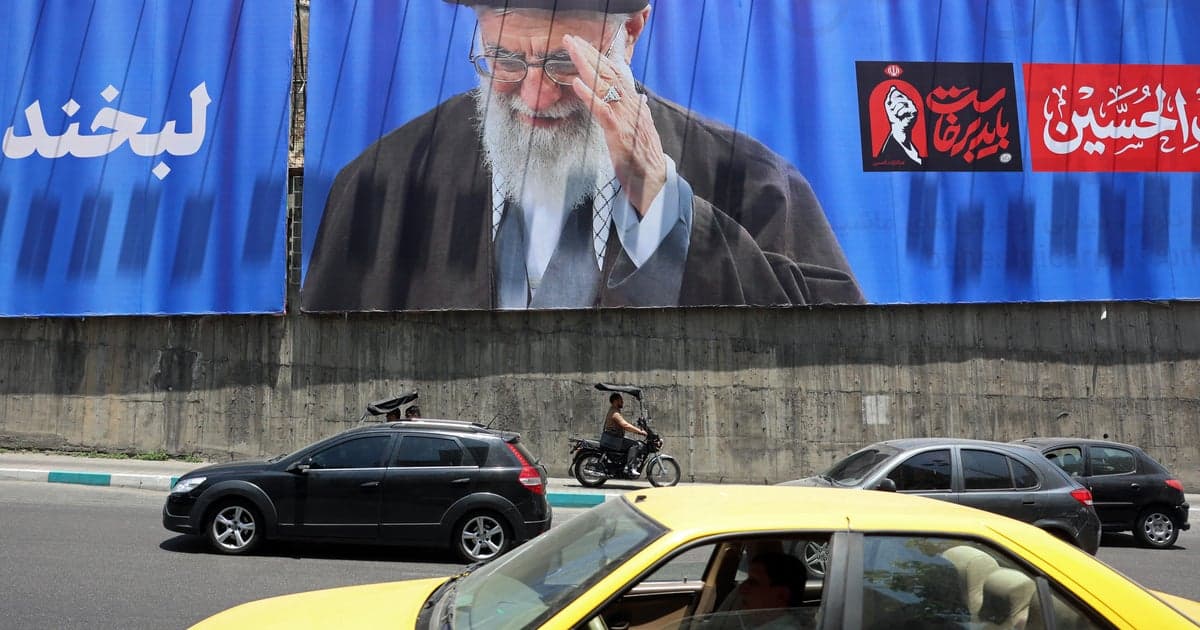
Iran declared today that Supreme Leader Ayatollah Ali Khamenei has died, setting in motion a fast-moving and opaque contest to choose the Islamic Republic's next top authority. The 88-member Assembly of Experts, the clerical body charged by the constitution with naming a new supreme leader, now faces a decision with immediate geopolitical and economic consequences.
The assembly has the formal power to appoint a single cleric or a leadership council if no individual candidate secures consensus. In practice the selection will be shaped by three interlocking institutions: the Assembly of Experts itself, the Guardian Council which controls the legal and political gatekeeping of the clerical elite, and the Islamic Revolutionary Guard Corps, whose commanders have increasingly fused military leverage with political influence. The Expediency Council and key clerical networks around Tehran will also press their preferences.
Possible outcomes fall into three broad scenarios. One is the elevation of a hardline cleric closely aligned with the IRGC and the conservative core of the regime, which would likely harden Iran's posture in the region, entrench the security establishment's role in economic decisions and reduce the prospects for rapid sanctions relief. A second is the selection of a pragmatic senior cleric who could seek limited accommodation with the West to loosen economic pressure, especially if the assembly calculates that internal stability and revenue needs outweigh ideological priorities. The third is a move to collective leadership, invoking the constitutional option for a council, which would mitigate the concentration of power but could produce institutional paralysis at a perilous moment.
The stakes are economic as well as political. Oil and gas exports remain the backbone of Iran's external earnings and account for roughly 40 percent of government revenues. A successor who signals continuity in confrontational policies would likely prolong sanctions regimes and keep oil export volumes constrained, preserving a risk premium on crude from the region. A leader perceived as open to diplomacy could prompt international investors to reassess the outlook for sanctions relief, but substantial changes would hinge on concrete diplomatic steps that have historically taken months or years to negotiate.

Financial markets in Tehran are likely to show acute short-term volatility. Past episodes of political shock have produced rapid depreciation pressures on the rial and spikes in domestic inflation expectations. Capital allocation decisions by state-controlled firms, which play an outsized role in the economy, will depend on how quickly the new leader consolidates power and signals policy priorities for subsidies, public sector wages and the investment climate.
Beyond immediate market moves, succession will shape long-term trends that predate Khamenei's death. The increasing politicization of the IRGC, generational tensions in a country where a majority of the population is under 35, and the erosion of clerical legitimacy after repeated rounds of repression and economic hardship mean the next leadership could face greater challenges to state capacity and social consent than previous transitions.
The Assembly of Experts is expected to convene urgently; its timetable and the level of secrecy around deliberations will be critical variables for markets and foreign capitals. For regional actors from Baghdad to Riyadh and global powers engaged on nuclear issues, the identity of Iran's next supreme leader will rapidly become the most important signal about the country's likely foreign policy trajectory and the timing of any economic opening.
This article was produced by Prism’s automated news system from verified source data, official records, and press releases, then run through automated quality and moderation checks before publishing. The system is built and supervised by the people who set the standards it runs under. Read our full AI policy.
Did this article answer your question?