Ireland coalition weakened as fuel protests trigger defections
Fuel protests split Ireland’s coalition, forcing a minister to quit and exposing a government just five seats from losing its grip.
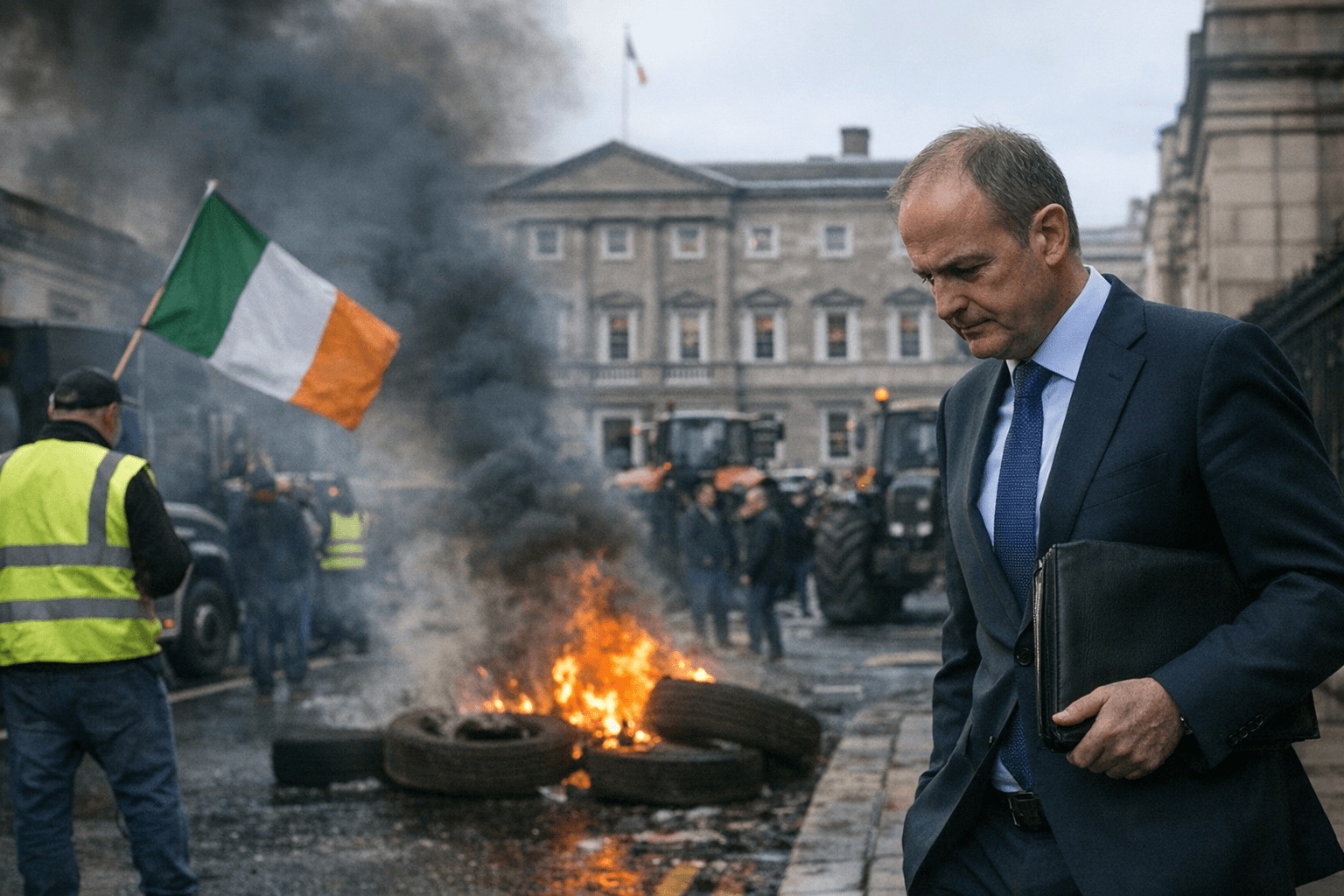
A fuel-price revolt pushed Ireland’s governing coalition into its sharpest political test in months, as two supporters walked away and junior agriculture minister Michael Healy-Rae resigned even though the government survived a Dáil confidence vote by 92 to 78.
The pressure built after about six days of protests led by hauliers, farmers and agricultural workers, with blockades hitting Ireland’s only oil refinery at Whitegate in County Cork and key depots around the country. Fuel supplies and road networks were disrupted nationwide, and roughly a third of petrol stations were left without fuel the previous week, turning a cost-of-living grievance into a direct challenge to cabinet authority.
In response, ministers approved a €505 million package on April 12, adding it to an earlier €250 million set of measures announced nearly three weeks before. The plan included a 10 cent cut in excise duty on petrol and diesel until the end of July, a 2.4 cent cut on green diesel, a delay to the carbon tax increase until the October budget, expanded transport supports for haulage operators and local link and school transport providers, and a fuel subsidy scheme for farming and fisheries. Some of the excise changes still required European Commission approval and were due to take effect from midnight on Tuesday, subject to parliamentary approval.
The political damage came on April 14. Michael Healy-Rae, who had served as Minister of State for Agriculture, resigned and told parliament the government had “let the people of Ireland down.” His brother, independent lawmaker Danny Healy-Rae, voted against the government as well, trimming the coalition’s parliamentary cushion to just five seats. Outside Leinster House, supporters cheered as Michael Healy-Rae spoke to reporters after stepping down.
Taoiseach Micheál Martin defended the response, saying the state’s help so far was proportionately the largest assistance package of any European country. He said Spain’s package was more than a quarter smaller, while Germany’s and Poland’s were roughly 90% lower in relative terms. Martin also warned that the blockades at ports and depots threatened basic supplies, and said Whitegate was in danger of having oil redirected to other countries if the disruption continued.
The episode left Ireland’s Fine Gael and Fianna Fáil alliance with its majority intact but visibly weakened, dependent on independents and exposed to rural anger over fuel, transport and farm costs. An Garda Síochána extended an “exceptional event” declaration to redeploy police resources, and Sinn Féin said it would bring a no-confidence motion with support from several opposition parties. The government survived the vote, but the margin showed how quickly a pocketbook protest can become a coalition problem.
This article was produced by Prism’s automated news system from verified source data, official records, and press releases, then run through automated quality and moderation checks before publishing. The system is built and supervised by the people who set the standards it runs under. Read our full AI policy.
Did this article answer your question?

