Israel Deploys Iron Dome to UAE Amid Iranian Missile Attacks
Israel reportedly moved an Iron Dome battery and troops into the UAE, intercepting Iranian missiles in a first that could reshape Gulf security ties.
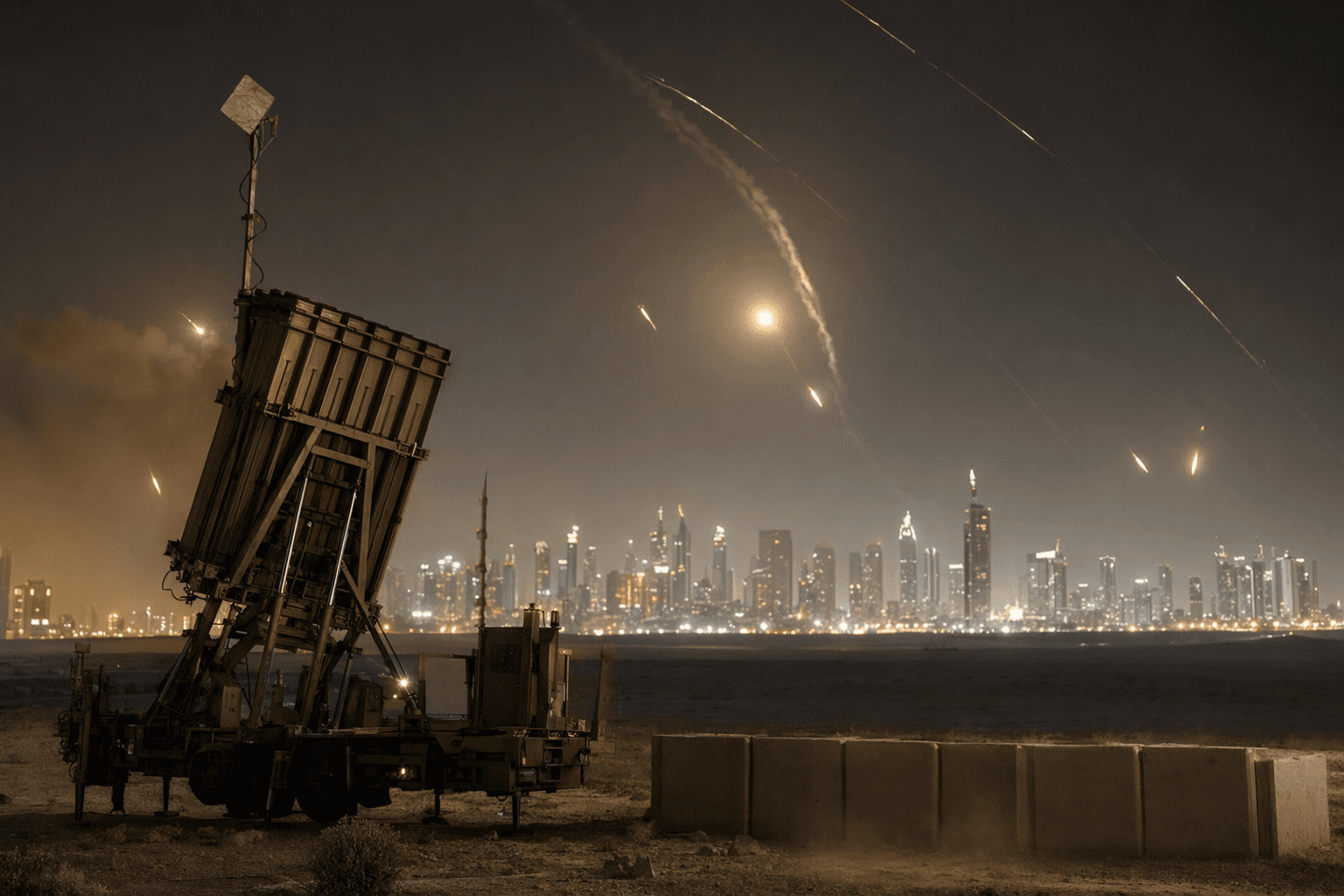
Israel quietly sent an Iron Dome air-defense system to the United Arab Emirates early in the war with Iran, a deployment that marked the first known time the system was used operationally on Arab soil and, multiple outlets said, the first time Israel had transferred Iron Dome to another country.
The move followed a direct call between UAE President Mohammed bin Zayed Al Nahyan and Israeli Prime Minister Benjamin Netanyahu. Israeli officials said Netanyahu then ordered the Israel Defense Forces to dispatch an Iron Dome battery, interceptors and several dozen personnel to operate it in the Emirates. Israeli and U.S. officials said the battery intercepted dozens of incoming Iranian missiles, though they did not identify where it was positioned or specify the exact number of intercepts.
The deployment came as the United Arab Emirates absorbed the heaviest regional barrage in Iran’s retaliatory campaign. One account said Iran fired about 550 ballistic and cruise missiles and more than 2,200 drones at the UAE. Another tally put the total at 2,469 missiles and drones by early April. The scale of the attacks exposed strain on Emirati air defenses, despite the country’s wealth, advanced military procurement and long-standing investment in missile defense.
The episode also showed how fast the security relationship between Israel and the UAE has deepened since the Abraham Accords were signed on September 15, 2020. What began as diplomatic normalization has, under the pressure of war, moved into visible battlefield cooperation, with military and intelligence ties reaching a new level. For Israel, the deployment signaled a willingness to project one of its most closely guarded defenses beyond its own borders. For the UAE, it underscored both vulnerability and strategic alignment against Iran.
The visibility of the mission carries risks as well as benefits. What had often been handled quietly now stands as an unmistakable precedent: Israeli missile defense assets, operated by Israeli personnel, defending an Arab partner under fire. A senior Emirati official later called the intervention “a real eye-opening moment” and said, “We are not going to forget it,” a remark that captured how the war has accelerated a regional security alignment that was once easier to conceal than to display.
This article was produced by Prism’s automated news system from verified source data, official records, and press releases, then run through automated quality and moderation checks before publishing. The system is built and supervised by the people who set the standards it runs under. Read our full AI policy.
Did this article answer your question?


