Israel escalates airstrikes across Lebanon as war spills beyond Iran
Israel has launched intense strikes across Lebanon, ordering mass evacuations as Iran and allied actors widen attacks on regional bases and shipping, raising humanitarian and market risks.

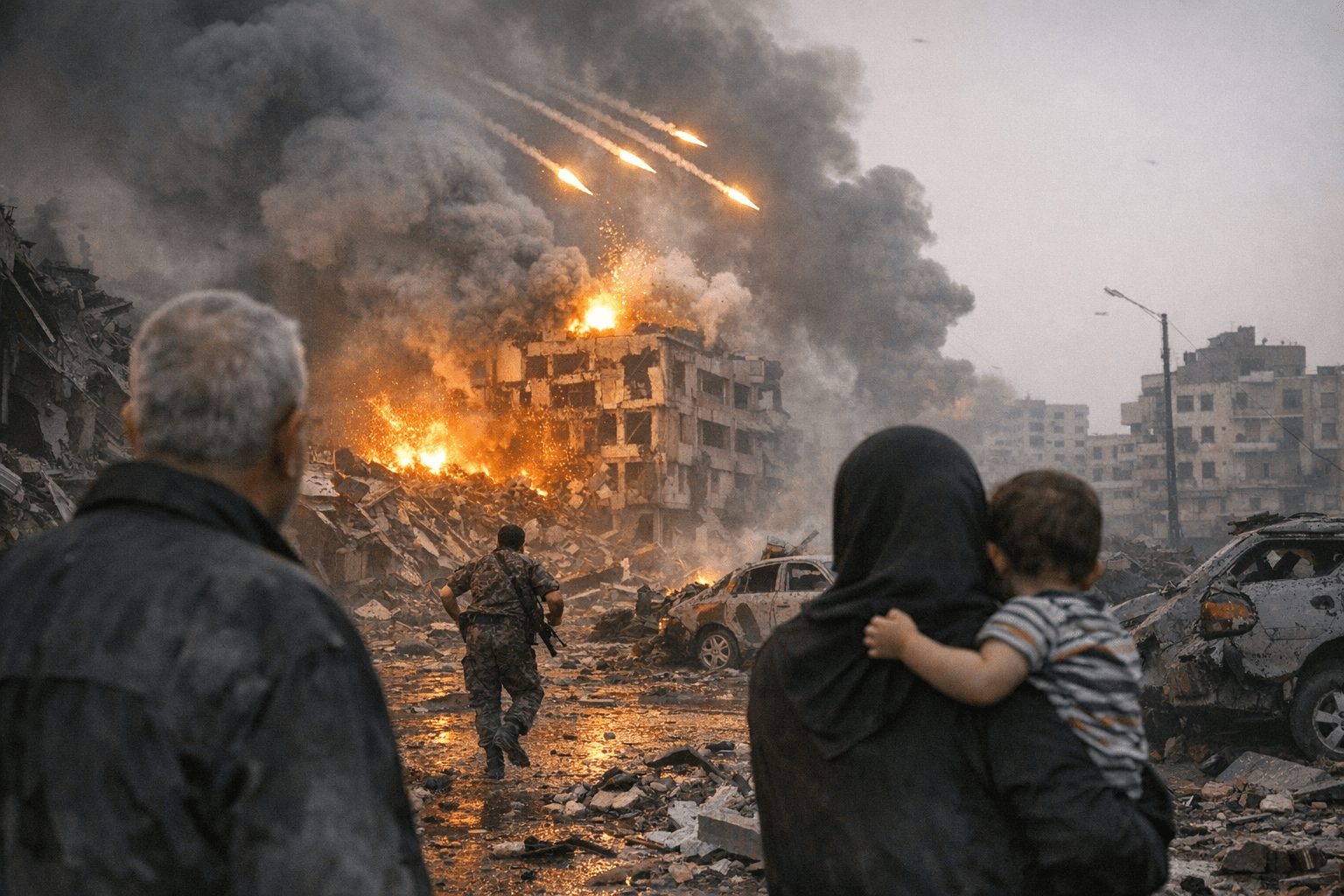
Israel has carried out repeated airstrikes across Lebanon, hitting Hermel, Labweh, towns in the southern province and Hezbollah-controlled southern Beirut suburbs while ordering evacuations that have uprooted thousands, according to AP and Politico Europe. The Israeli military posted maps and evacuation warnings on X, where IDF spokesperson Avichay Adraee urged residents: "Save your lives, evacuate your homes immediately" (The Globe and Mail).
The strikes form part of an intensifying confrontation that has spread beyond a U.S.‑Iran exchange to involve Lebanon, the Gulf and Cyprus. Human Rights Watch, cited by AP, said the bombardment has put civilians "across the country at grave risk" and reported that more than 560 people have been killed in Lebanon in recent days. AP called this the deadliest week in Lebanon since the 2006 Israel‑Hezbollah war.
Israel says it has targeted dozens of Hezbollah sites in Lebanon and struck facilities in Iran. The Israeli military told reporters it hit "80 targets in Lebanon linked to the Iranian‑backed Hezbollah militant group" in a 24‑hour period (The Globe and Mail). Separate reporting that draws on Israeli claims via a YouTube/Firstpost account said the IDF struck nearly 70 weapon depots and rocket launching sites, a distinction that highlights divergent tallies across outlets (YouTube / Firstpost; The Globe and Mail). The IDF also posted a terse message on X, "Hezbollah just made a big mistake," as exchanges intensified (Politico Europe).
Hezbollah has acknowledged opening fire into northern Israel, with outlets reporting barrages of rockets and swarms of drones that Israeli defenses say they intercepted (The Globe and Mail; YouTube / Firstpost). Lebanese Prime Minister Nawaf Salam called the rocket fire "irresponsible" and warned it "endangers Lebanon's security and safety" while pledging that Lebanese authorities would act against those responsible, Politico reported.
The crisis has widened regionally. Iran launched what The Globe and Mail described as a new wave of attacks on Israel, U.S. bases and other regional targets, and Iranian state media called a reported U.S. torpedo strike on an Iranian naval ship an "atrocity" while threatening retaliation (The Globe and Mail; Original aggregated item). Original reporting also notes Iranian drones landed in Azerbaijan and an array of maritime attacks in Gulf waters have targeted tankers, including a Bahamas‑flagged crude tanker near Iraq's Khor al Zubair and a second vessel off Kuwait that was damaged and spilling oil, according to Reuters material cited by The Globe and Mail.
The spread of violence has prompted diplomatic alarm and material responses. Egypt, Jordan and Iraq urged the U.N. Security Council to act, warning that averting a regional war requires stopping "the Israeli aggression on Gaza" and accusing Israel of "pushing the region into an all-out war" (AP). European Commission President Ursula von der Leyen convened a security meeting after a drone struck the United Kingdom's Akrotiri airbase in Cyprus, Politico and The Globe and Mail reported. Italy pledged to supply air defense weapons to Gulf states, according to aggregated reporting that has not yet disclosed specific systems or recipients (Original).
Beyond the humanitarian toll, markets have reacted. The Globe and Mail reported jumps in oil prices and disruptions to Gulf air travel after the tanker attacks and base strikes, signaling immediate economic consequences for energy and shipping sectors. Human Rights Watch has called for a United Nations investigation into strikes in Lebanon and Hezbollah rocket fire into northern Israel, underscoring mounting legal and humanitarian scrutiny as the conflict broadens (AP / HRW).
This article was produced by Prism’s automated news system from verified source data, official records, and press releases, then run through automated quality and moderation checks before publishing. The system is built and supervised by the people who set the standards it runs under. Read our full AI policy.
Did this article answer your question?


