Israel launches pre-emptive strike on Iran - explosions heard across Tehran
Israel says it launched a pre-emptive strike on Iran; explosions shook Tehran and smoke was seen over downtown, raising fears of wider escalation.

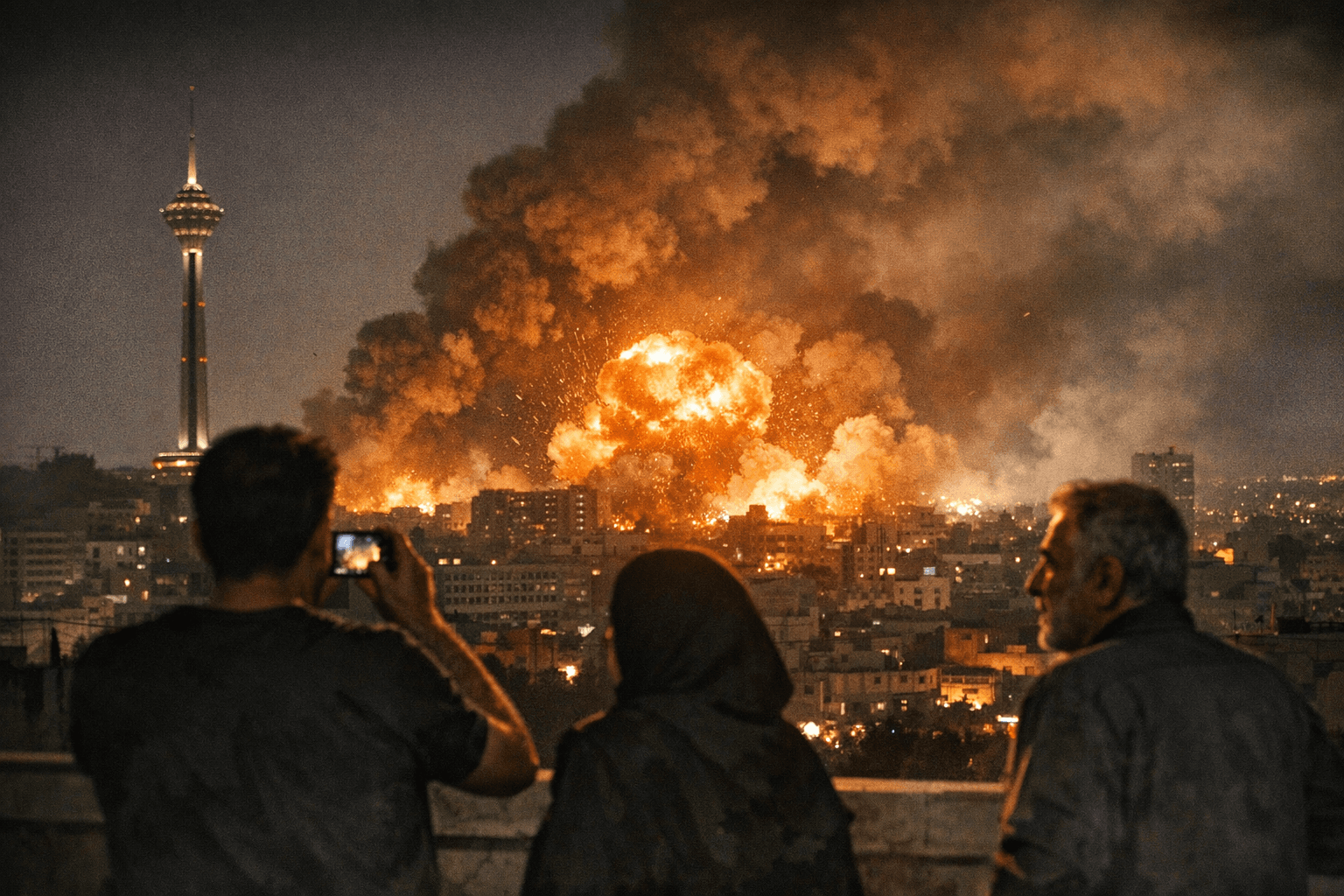
Israel announced it had launched a strike on Iran early Saturday, and explosions were reported across Tehran as smoke rose over parts of the city, officials and residents said. The Israeli defense ministry and Defence Minister Israel Katz said the action was intended to remove an imminent threat to the state.
“The State of Israel launched a pre-emptive attack against Iran to remove threats to the State of Israel,” Defence Minister Israel Katz said, according to Al Jazeera and India Today. The Israel Defense Ministry told CBS and the Associated Press that it launched the strike because it was expecting “a missile and drone attack” from Iran “in the immediate future.”
Local and international wire services reported blasts and smoke in several Tehran neighborhoods. Al Jazeera, citing the Fars news agency, said “several missiles have struck University Street and the Jomhouri area.” Reuters, cited by India Today, reported thick smoke rising near Pasteur Street in downtown Tehran. The Associated Press reported the strike occurred near offices of Supreme Leader Ayatollah Ali Khamenei. Witnesses in Tehran told outlets they heard blasts, and Iranian state television reported an explosion without immediately offering a cause.
Initial reporting did not provide verified casualty figures. No immediate casualties were reported in the earliest dispatches, but authorities and hospitals had not released comprehensive confirmations at the time, leaving the human toll unverified.
Israel moved quickly to shore up domestic defenses. CBS reported sirens sounded across parts of Israel and that the government declared a state of emergency while closing Israeli airspace. The Israeli military issued civil-protection instructions, quoting the Home Front Command: “You must obey the instructions of the Home Front Command and the authorities and remain in the protected areas.” India Today said the military announced a “prohibition on educational activities, gatherings, and workplaces,” with essential sectors exempted.
The strike comes against a backdrop of heightened tensions between Washington and Tehran. The New York Times noted the region has been on edge after President Trump threatened military strikes against Iran if Iranian leaders did not meet his demands, including curbs on the nuclear program. It remained unclear whether the United States played any role in the operation; the U.S. military “declined to immediately comment on the attack,” CBS reported, and the NYT said U.S. involvement was uncertain.
Beyond the immediate human and political risks, markets and regional economic linkages face near-term disruption. A direct Israeli strike on Iran raises the prospect of higher insurance and shipping costs in the Gulf, upward pressure on oil risk premia, and volatility in regional equity and currency markets. Those shifts could translate into higher fuel costs and supply-chain strain for global manufacturers reliant on just-in-time routes through the Middle East. Analysts caution that much will depend on whether Iran retaliates and on the duration of any sustained conflict.
The situation is developing, with major outlets running live coverage and reporters seeking confirmation from Iranian authorities, hospital sources, and independent imagery to verify target coordinates and assess damage. Key open questions include casualty totals, the number and type of weapons used, whether other Iranian sites were struck, and whether Washington had prior knowledge or involvement. Journalists on the ground and international agencies continued to seek those confirmations.
Know something we missed? Have a correction or additional information?
Submit a Tip