Israel Orders Demolition of Litani Bridges as Lebanon Death Toll Passes 1,000
Israel's defense minister ordered intensified destruction of bridges and homes in southern Lebanon, raising fears of a permanent buffer zone and cutting off aid routes.
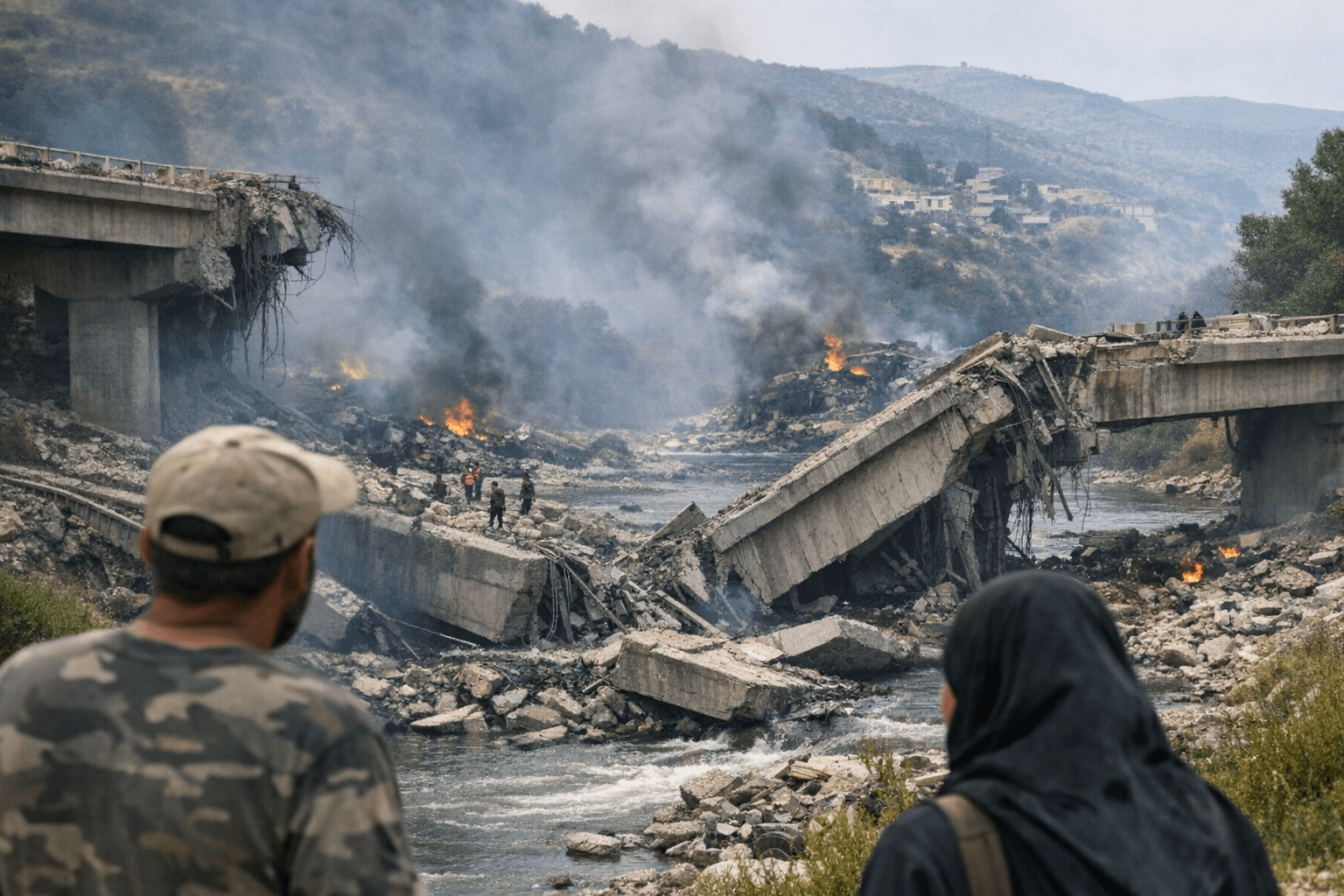
Israeli Defense Minister Israel Katz ordered the military to destroy bridges over the Litani River and demolish homes in "front-line villages" across southern Lebanon, escalating a campaign that has already killed more than 1,000 people and displaced over one million.
Katz said he had "ordered the military to step up its destruction of bridges and houses in southern Lebanon," charging that Hezbollah, the Iran-backed Lebanese armed group, was using the crossings "to bring reinforcements to the south to fight Israel." He instructed forces to destroy all bridges over the Litani used for what he called "terrorist activity," framing the demolitions as essential to severing Hezbollah's supply lines.
The Israeli military had already destroyed three bridges in southern Lebanon in the ten days prior to Katz's announcement. On Sunday, a strike pulverized a crossing on Lebanon's coastal highway, one of the main routes linking southern and central Lebanon. Al Jazeera footage captured the moment Israeli jets struck the Qasmiyeh Bridge over the Litani River, and air strikes also targeted houses and commercial shops across the southern Lebanese district of Tyre.
Katz, who issued the orders alongside Prime Minister Benjamin Netanyahu according to Reuters, explicitly compared the demolition campaign to military operations in Beit Hanoun and Rafah in Gaza, where the Israeli military created buffer zones by clearing and demolishing buildings near the border. That comparison deepened concerns that Israel intends to expand a military-controlled buffer zone in southern Lebanon rather than pursue a temporary tactical objective.
The humanitarian consequences are already severe. More than 1,000 people have been killed in Lebanon since the conflict escalated, with nearly 120 of them children. More than one million people have been displaced, some sheltering in sites including the Camille Chamoun Stadium in Beirut. The same bridges and roads being destroyed serve as evacuation routes for civilians trying to flee north.
Aid organizations face a compounding crisis. Al Jazeera correspondent Heidi Pett, reporting live from Tyre, described the situation as dire for civilians who have defied forced evacuation orders and remain in the south. "They say that they're doing that to prevent Hezbollah from moving men and weapons to the south of the country," Pett reported, "but the impact on the civilian population is obviously huge." She noted that beyond the bridge destruction, the Israeli military announced it would target any trucks traveling on the coastal highway, effectively choking off the last viable supply route for food, medicine, and emergency assistance reaching trapped civilians.
The Israeli military also issued evacuation warnings for seven neighborhoods in the southern suburbs of Beirut and struck what it described as Hezbollah targets there, with no immediate reports of casualties.
The United Nations human rights office warned that some Israeli strikes on Lebanon could amount to war crimes under international law, which generally prohibits attacks on civilian infrastructure. The UN human rights chief separately criticized Israel's use of widespread evacuation orders across densely populated areas.
The conflict drew Lebanon into a regional war after Hezbollah opened fire on Israeli territory on March 2, following U.S. and Israeli strikes on Iran days earlier. Israel has been sending additional troops to support its ground operations in southern Lebanon, with the destruction of bridges and civilian infrastructure signaling that the military campaign has shifted toward a longer-term strategy of territorial control.
This article was produced by Prism’s automated news system from verified source data, official records, and press releases, then run through automated quality and moderation checks before publishing. The system is built and supervised by the people who set the standards it runs under. Read our full AI policy.
Did this article answer your question?

