Israel to reopen Rafah crossing for pedestrians only under inspections
Israel said the Rafah crossing will reopen only for pedestrians under strict Israeli inspection and as part of a limited truce framework.
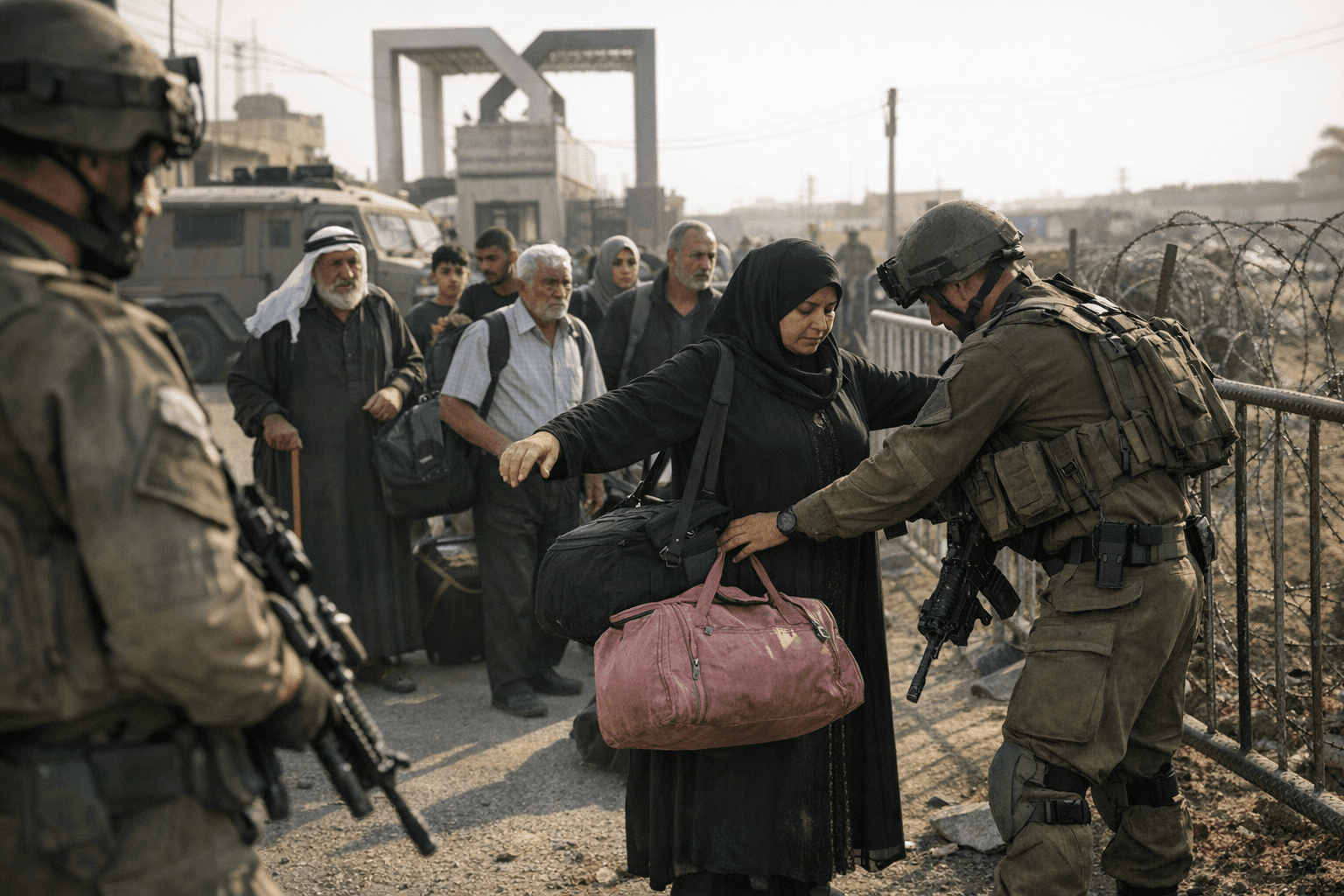
Israel announced a limited reopening of the Rafah crossing that will allow only pedestrians to cross into Egypt, subject to a full Israeli inspection mechanism and tied to a truce framework negotiated between the parties. The move, disclosed on January 26, represents a narrowly circumscribed easing of one of the most consequential chokepoints affecting Gaza’s humanitarian supply lines and civilian mobility.
The pedestrian-only opening will not permit commercial truck traffic or the large-scale movement of goods, which means that food, fuel and medical supplies will continue to flow mainly through other checkpoints under Israeli control. For the more than 2 million residents of Gaza, who depend heavily on imports for basic supplies, that distinction matters: limited people movement can ease some immediate civilian evacuations and family reunifications but will do little to restore bread-and-fuel availability that underpins daily life and economic activity.
Operationally, the requirement for a full Israeli inspection mechanism is likely to slow crossings further. Inspections introduce additional processing time and logistical requirements for aid convoys and individual travelers, and they give Israel discretionary control over who and what passes. Humanitarian agencies have previously warned that delays and closures at crossings sharply reduce weekly aid tonnage and strain medical facilities; a pedestrian-only pass therefore risks protecting the appearance of humanitarian access while keeping the bulk of commerce and aid constrained.
Economically, the reopening is unlikely to alleviate the acute shortages that have driven price spikes and market distortions across Gaza. The enclave’s pre-existing economy was fragile, with widely reported unemployment rates above 40 percent and near-total dependence on imports. Months of restricted access have reduced market inventories, pushed up the cost of staple goods, and increased the role of informal supply chains that raise prices further. Restoring commercial throughput will be essential to stabilizing prices and reviving basic economic activity.
Regionally, the decision places Egypt in a delicate position. Cairo controls the Egyptian side of Rafah and has balanced humanitarian concerns with security and diplomatic ties to Israel and other regional actors. For Israel, retaining inspection authority stations its leverage within any truce framework, allowing it to tie further opening of trade and aid routes to security assurances and implementation of negotiated terms.
For markets and donors, the immediate signal is caution. International aid agencies may face higher operational costs and slower delivery times, increasing the funds required to meet the same humanitarian outcomes. Longer term, reconstruction and economic recovery depend on sustained commercial access and a durable ceasefire; piecemeal pedestrian crossings cannot substitute for the steady flow of goods and materials needed to rebuild infrastructure and revive private-sector activity.
The reopening marks a tactical shift in access policy, but it stops short of resolving the structural economic crisis. Unless pedestrian access expands into a predictable, monitored conduit for commercial imports and fuel, Gaza’s markets and public services will remain under acute pressure, with ripple effects for regional stability and donor budgets.
This article was produced by Prism’s automated news system from verified source data, official records, and press releases, then run through automated quality and moderation checks before publishing. The system is built and supervised by the people who set the standards it runs under. Read our full AI policy.
Did this article answer your question?


