Israel uncovers Hezbollah drone base hidden under south Lebanon mountain
Israeli troops said they found a hidden mountain 'airbase' in south Lebanon with 50 explosive drones, raising the stakes for northern Israel.

Israeli troops say they uncovered a Hezbollah drone factory and launch site carved deep inside a mountain in south Lebanon, a concealment method that could make the border war harder to monitor and harder to contain. The Israeli military described the complex as an underground “airbase” dozens of meters below a village near the Israel-Lebanon border and said it held 50 Iranian-made explosive UAVs ready to be launched through hidden hillside shafts.
The discovery sharpens the threat picture for northern Israel because it suggests Hezbollah has preserved launch capacity even under sustained Israeli pressure. A site buried beneath a mountain, rather than exposed on the surface, is designed to frustrate surveillance and complicate any effort to stop attacks before they begin. It also undercuts the diplomatic logic behind the current ceasefire, which was meant to slow an escalation that has already pulled in regional powers and strained U.S.-Iran diplomacy.
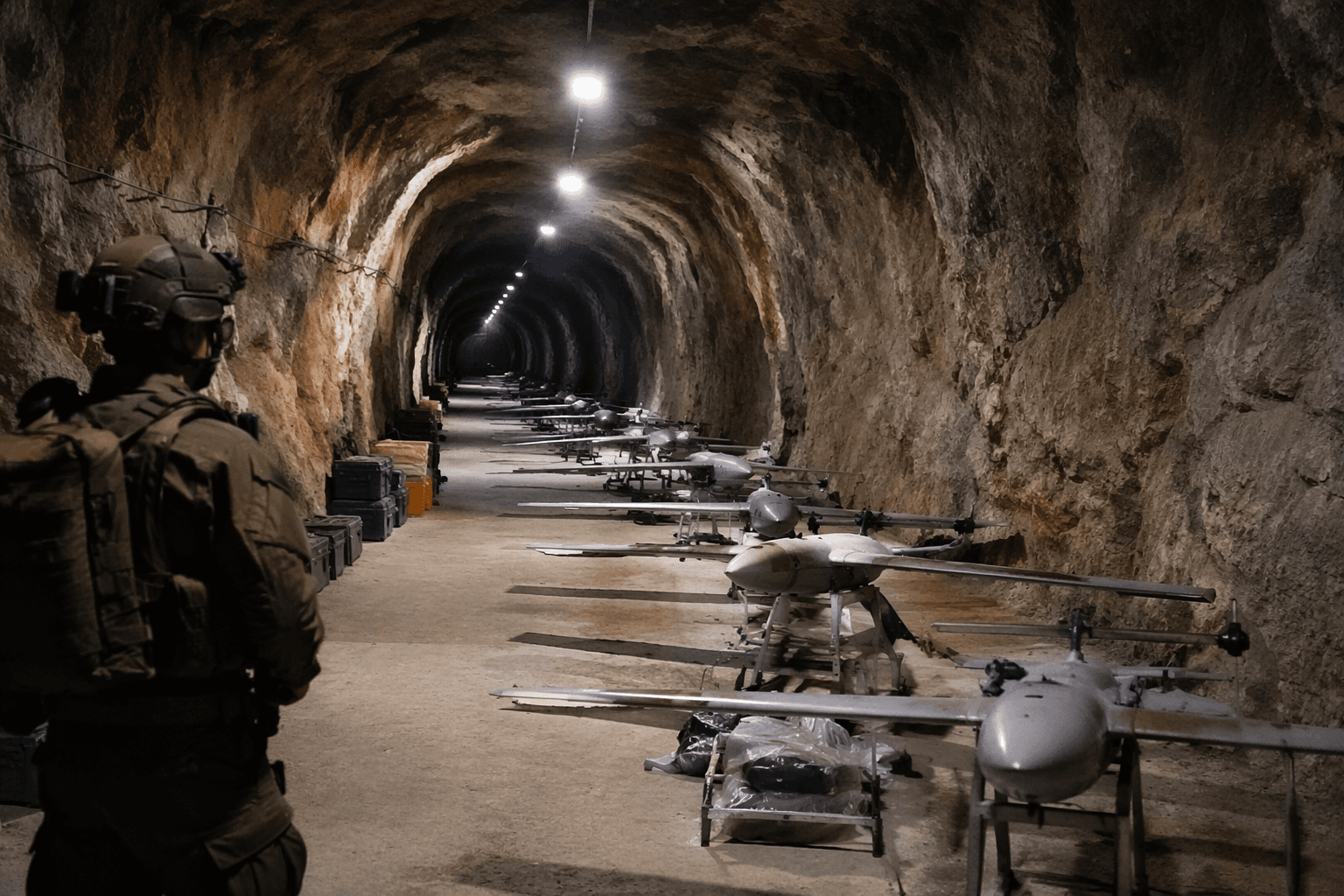
The claims are coming from the Israeli military, and the site itself was presented through that lens. What the Israeli account shows, however, is a shift in the geography of the conflict: not only rocket pads and drone labs in open terrain, but underground infrastructure near civilian areas in south Lebanon. The military has recently said Hezbollah uses homes, schools and other civilian structures for weapons and operations, a pattern it says also extends north of the Litani River.
The underground complex is the latest in a string of strikes and disclosures that point to a wider campaign. Israeli forces said they struck more than 70 Hezbollah sites near Nabatieh on June 13, and on March 4 they said they hit numerous rocket and missile launch sites south of the Litani River, along with a drone manufacturing lab. Those strikes, together with the mountain site now described by the army, suggest Israel is trying to push Hezbollah’s launch line farther from its border communities rather than merely respond to isolated fire.
The ceasefire announced on June 19, with fighting set to stop at 4 p.m. local time, has not brought calm. Israeli strikes in Lebanon killed at least 20 people on June 20, one day after the truce took effect, after Israel said projectiles were fired overnight. Earlier in the month, Israeli drone strikes in southern Lebanon killed at least four people. For residents on both sides of the border, the hidden mountain base signals that the conflict remains active beneath the surface, even as diplomacy tries to freeze it in place.
This article was produced by Prism’s automated news system from verified source data, official records, and press releases, then run through automated quality and moderation checks before publishing. The system is built and supervised by the people who set the standards it runs under. Read our full AI policy.
Did this article answer your question?


