Israeli Knesset Approves 2026 Budget, Securing Netanyahu Coalition's Survival
A 62-55 vote in the small hours saved Netanyahu's coalition from collapse, with billions funneled to Haredi institutions in exchange for their support.
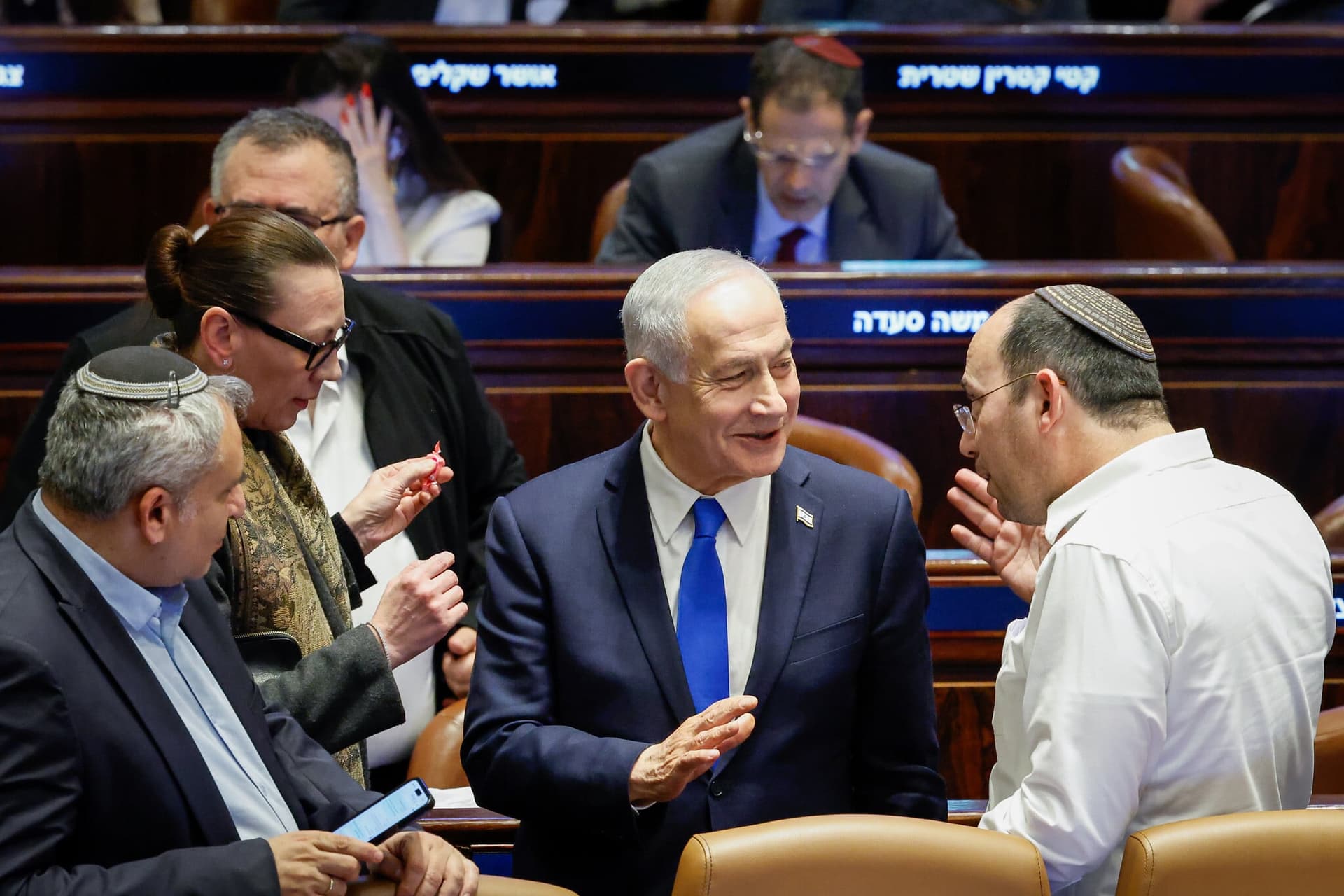
Just before 2 a.m. in Jerusalem, with lawmakers assembled in a fortified alternate chamber because the war with Iran had made the Knesset's regular hall a security risk, Israeli legislators voted 62 to 55 to approve a record NIS 850.6 billion ($271 billion) budget, preventing the automatic dissolution of Prime Minister Benjamin Netanyahu's government with hours to spare.
The margin was thin. The moment was revealing. The price of coalition survival was written plainly in the line items.
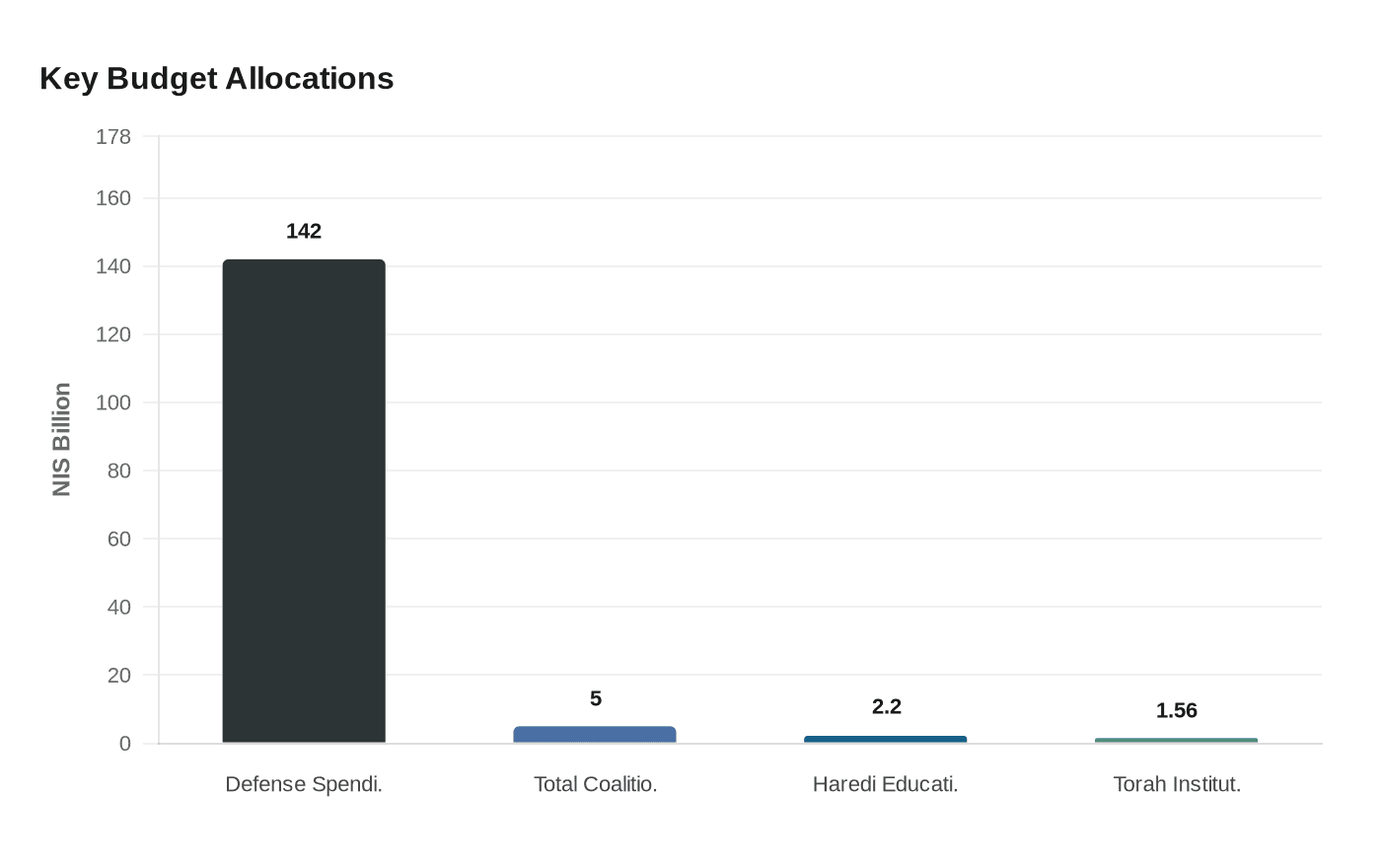
Finance Minister Bezalel Smotrich, whose far-right Religious Zionist Party holds the treasury and commands significant leverage over coalition math, framed the passage as both a wartime necessity and a historic milestone. "This is the first time since 1999 that a government has passed a budget in an election year, and during a war," he said. The war shaped everything about the budget's final form. More than NIS 30 billion, roughly $10 billion, was added to the Defense Ministry's allocation under Operation Roaring Lion, Israel's campaign against Iran, bringing total defense spending to over NIS 142 billion. To partially offset those costs, a 3 percent across-the-board cut was applied to every other government ministry's budget.
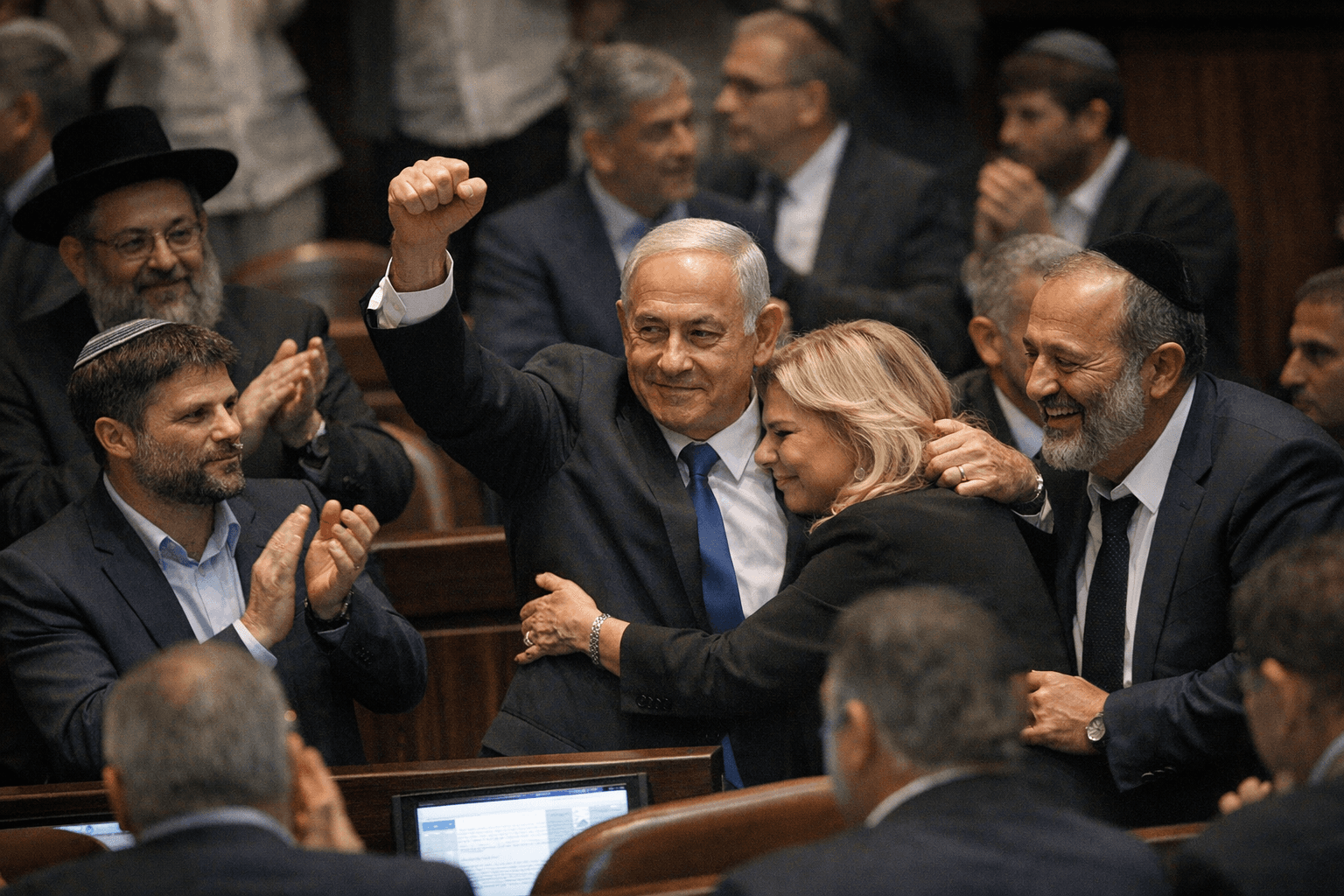
The Haredi ultra-Orthodox parties, Shas and United Torah Judaism, had threatened to withhold their votes over military conscription legislation that would have required yeshiva students to serve. Their allegiance was ultimately secured after conscription discussions were postponed due to the war. The final budget directed approximately NIS 2.2 billion to the Haredi community through the education budget, plus NIS 1.56 billion to Torah institutions including yeshivas and kollels. Nearly NIS 5 billion in total coalition funds were dispersed among the government's parliamentary partners.
Opposition leader Yair Lapid was unsparing. Writing on social media just after the vote, Lapid said he found it "most astonishing" to watch at 1:34 a.m. "how proud the coalition is that it is looting the State of Israel and channeling the money to the corrupt and the draft-dodgers." Former Prime Minister Naftali Bennett echoed the criticism, calling it a "protection" budget from a government "extorted by draft-dodgers, and bankrupting those who serve."
The opposition also suffered a notable embarrassment during proceedings: when Haredi lawmakers submitted amendments adding further funding for Haredi education, opposition members failed to notice and briefly voted in favor, sending 109 legislators on record supporting the allocations before the error was recognized.
Under Israeli law, failure to pass the budget before March 31 would have triggered automatic Knesset dissolution and snap elections within three months. That legal deadline gave Netanyahu's coalition its most powerful internal argument for cohesion: defection meant an election nobody in the governing bloc was positioned to win while the country was at war. Smotrich captured the coalition's posture directly: "We are passing this budget under a right-wing government committed to fulfilling its term."
Whether that term holds depends on factors no spending bill can resolve. The Iran war's trajectory, the unresolved conscription standoff with Haredi parties and a public watching wartime austerity applied selectively will test coalition cohesion far beyond what a 62-55 vote can guarantee.
This article was produced by Prism’s automated news system from verified source data, official records, and press releases, then run through automated quality and moderation checks before publishing. The system is built and supervised by the people who set the standards it runs under. Read our full AI policy.
Did this article answer your question?