Israeli Police Block Cardinal Pizzaballa From Palm Sunday Mass at Holy Sepulchre
Israeli police blocked Cardinal Pizzaballa from entering the Church of the Holy Sepulchre on Palm Sunday, in what church leaders called the first such barring in centuries.
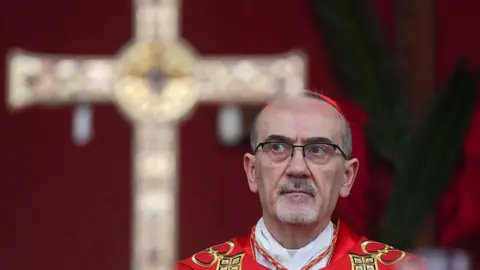
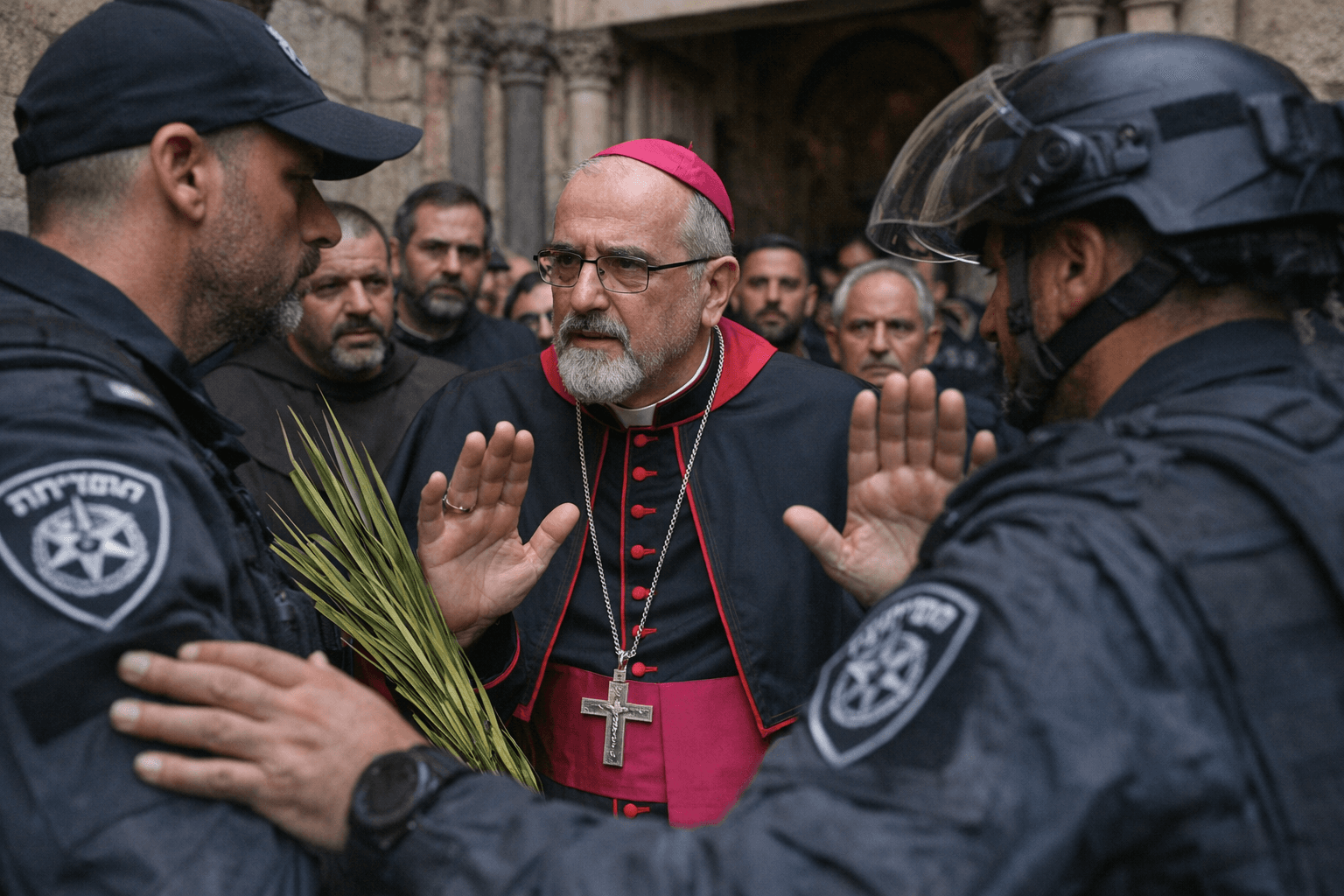
Cardinal Pierbattista Pizzaballa was not leading a procession. He was not dressed ceremonially or commanding a crowd. The Latin Patriarch of Jerusalem was simply trying to walk, privately, into the Church of the Holy Sepulchre to celebrate Palm Sunday Mass when Israeli police stopped him at the door and sent him back.
The incident on March 29 drew immediate international condemnation, with French President Emmanuel Macron calling for guaranteed worship "for all religions" in Jerusalem, and the Latin Patriarchate declaring it the first time in centuries that the head of the Catholic Church in the Holy Land had been barred from celebrating Palm Sunday Mass at Christianity's most sacred site.
In a joint statement, the Latin Patriarchate of Jerusalem and the Custody of the Holy Land said Cardinal Pizzaballa, together with the Custos of the Holy Land, were stopped by Israeli police "while proceeding privately and without any characteristics of a procession or ceremonial act" and were forced to turn back. Vatican News and the Latin Patriarchate identified the Custos as Fr. Francesco Ielpo, OFM, the official Guardian of the Church of the Holy Sepulchre, while EWTN News identified him as Father Francesco Patton.
Israeli police told AFP that the Patriarch's request had been reviewed the day before and "could not be approved." Officers cited a standing security policy: all holy sites in Jerusalem have been closed since the start of the war, and public gatherings are limited to around 50 people. "The Old City and the holy sites constitute a complex area that does not allow access for large emergency and rescue vehicles, which significantly challenges response capabilities and poses a real risk to human life in the event of a mass casualty incident," police said. Prime Minister Benjamin Netanyahu described the measure as a safety precaution following recent Iranian strikes.
The Latin Patriarchate called the police action "a manifestly unreasonable and grossly disproportionate measure" and "a serious and dangerous precedent," adding that it "disregards the sentiments of millions of believers around the world whose eyes turn to Jerusalem during this week." The claim that it was the first time in centuries that the heads of the Church were prevented from celebrating Palm Sunday Mass at the Holy Sepulchre originated with the Patriarchate and was echoed across multiple outlets, though it has not been independently verified historically.
Macron's condemnation sharpened the diplomatic stakes of what Israeli authorities framed as a security procedural matter, transforming a checkpoint decision into a flashpoint over who controls access to one of Christianity's holiest landmarks during its most sacred week.
Despite the blockade at the Holy Sepulchre, Palm Sunday was not extinguished in Jerusalem. Cardinal Pizzaballa led a prayer service at the Church of All Nations. Mass went ahead at the Franciscan Monastery of Saint Saviour in the Old City, where altar servers led a full procession. Christians walked through the Old City carrying palm branches, and pilgrims gathered on the Mount of Olives overlooking the ancient skyline.
Whether those sites were exempt from the closure order, or operated under some form of limited authorization, Israeli police have not clarified. The gap between a denied permit for the Latin Patriarch and an apparently permitted procession at the Monastery of Saint Saviour, blocks away, is precisely the kind of discrepancy that church leaders and foreign governments are now demanding answers to explain.
Know something we missed? Have a correction or additional information?
Submit a Tip