Israeli strikes kill 14 in Lebanon as ceasefire strain deepens
Israeli strikes killed 14, including two children and two women, as evacuation orders pushed beyond the buffer zone and widened fears of a new frontier.
The Israeli military widened its warnings in southern Lebanon on Sunday, ordering residents out of seven towns beyond the buffer zone it had occupied before the ceasefire and telling them to move north and west. The move signaled that the line of safety around the border was shrinking fast, with areas beyond the old buffer now treated as vulnerable as the truce frayed again.
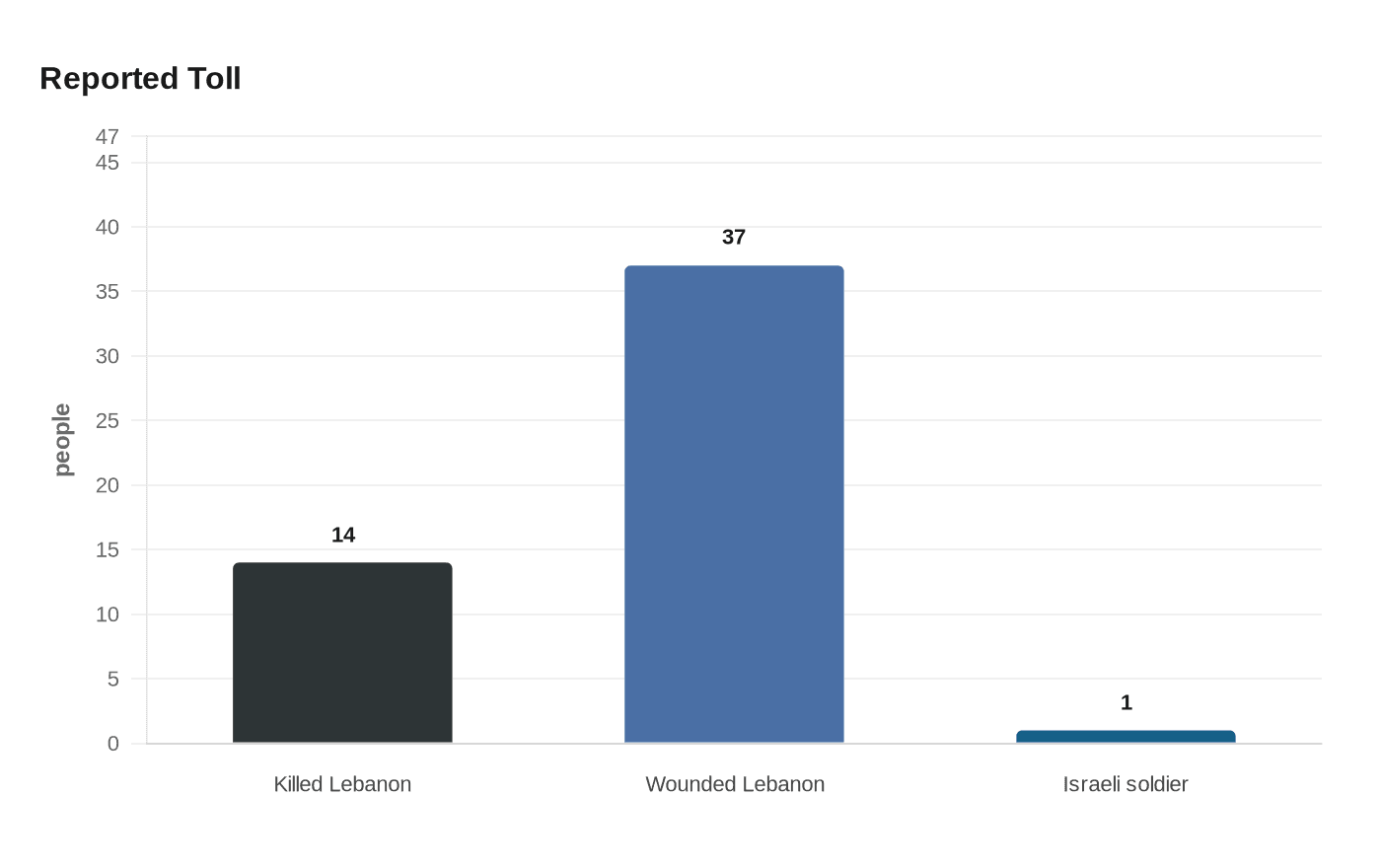
Lebanon’s health ministry said the strikes killed 14 people and wounded 37, including two children and two women. Israel said one of its soldiers was also killed in southern Lebanon. The toll made the day the deadliest in Lebanon since the ceasefire took effect on Nov. 27, 2024, after roughly 14 months of fighting between Israel and Hezbollah.
The ceasefire was supposed to reset the frontier. Hezbollah was required to pull its forces north of the Litani River, while Israel was to withdraw from southern Lebanon under a U.S.-led monitoring arrangement. Instead, the truce has been repeatedly strained by mutual accusations of violations, with both sides treating each fresh exchange as evidence that the agreement is becoming harder to enforce.
That strain deepened further after United Nations officials warned on April 24 that Israeli strikes in Lebanon and Hezbollah rockets into Israel may breach international law. The warning added a legal dimension to a conflict now defined not only by firepower but by competing claims over where the rules still hold.
The political temperature rose with it. Benjamin Netanyahu ordered the military to “vigorously attack” Hezbollah, while Hezbollah lawmaker Ali Fayyad said the ceasefire was “meaningless” because of Israeli hostile acts. Together, those statements point to a wider shift: this is no longer only a fight over whether the border stays quiet, but over how far beyond the original buffer zone Israel is prepared to enforce new limits on movement, safety and civilian life.
For residents in southern Lebanon, that change is immediate and concrete. Towns once imagined as outside the most dangerous perimeter are now under evacuation warnings, and the geography of the conflict is expanding in real time. What began as a ceasefire built around withdrawal and restraint now looks increasingly like a contest over which areas can still be treated as secure.
This article was produced by Prism’s automated news system from verified source data, official records, and press releases, then run through automated quality and moderation checks before publishing. The system is built and supervised by the people who set the standards it runs under. Read our full AI policy.
Did this article answer your question?