Israel's Strike on Iran Shattered Putin's Path to Peace Deal
Russia's oil revenues had collapsed 50% before Israel and the US struck Iran on Feb. 28. The Strait of Hormuz closure rescued Moscow's budget overnight and killed peace talks.
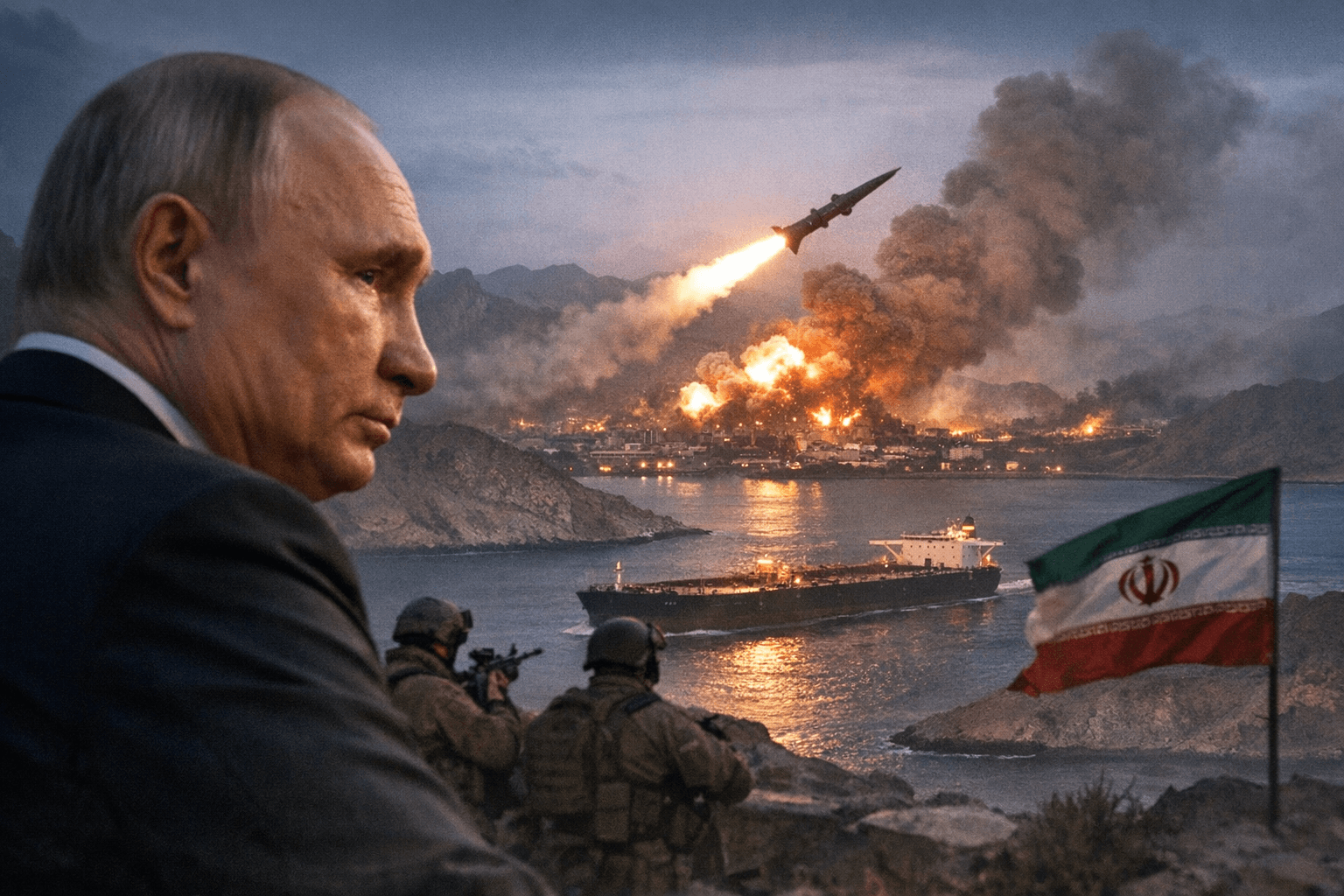
On February 28, 2026, the United States and Israel launched coordinated strikes on Iran, killing Supreme Leader Ali Khamenei. In response, Iran's Islamic Revolutionary Guard Corps issued warnings prohibiting vessel passage through the Strait of Hormuz, leading to an effective halt in shipping traffic. For Vladimir Putin, the timing could not have been better engineered had he scripted it himself.
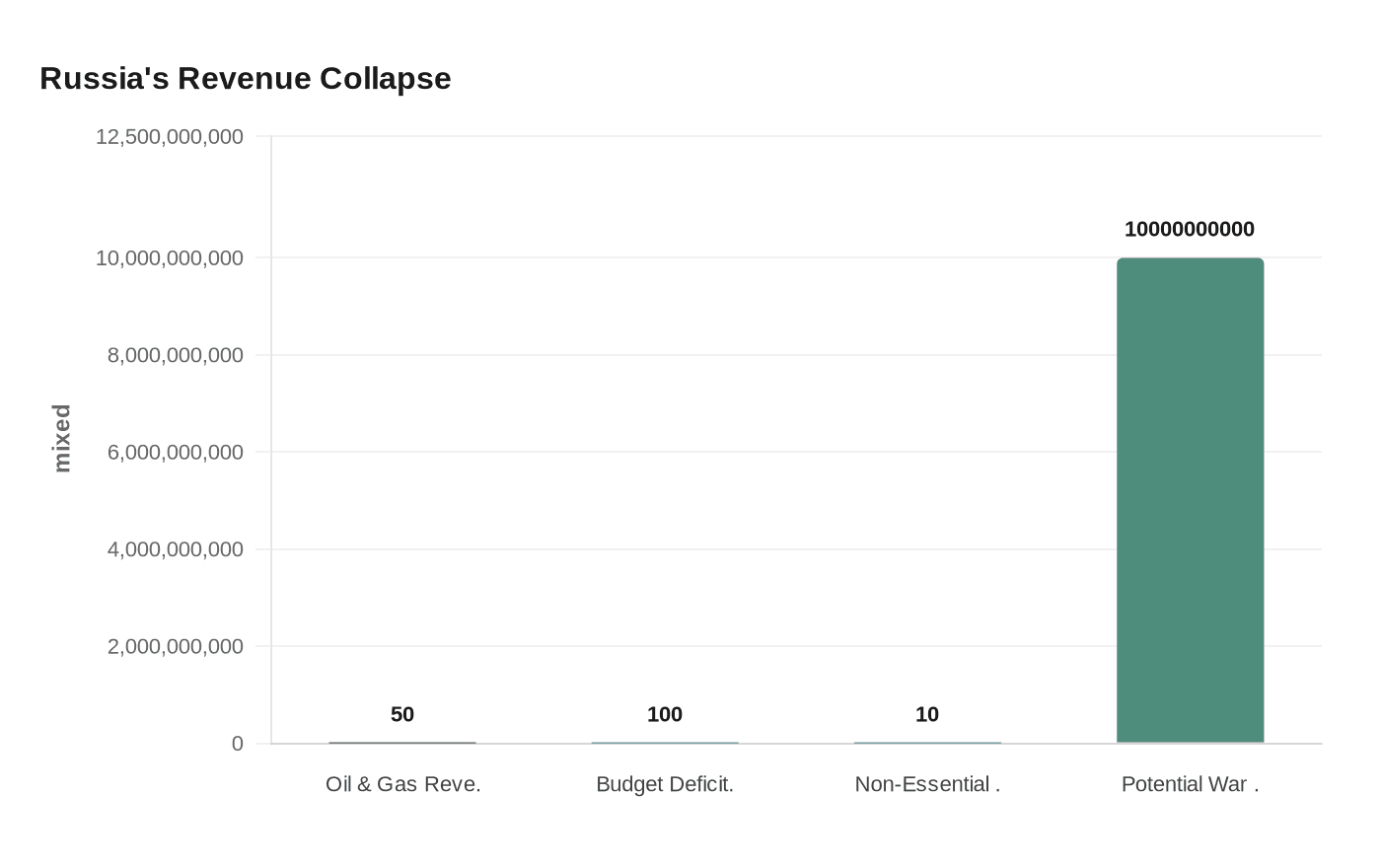
Heading into that final week of February, the Kremlin was facing a fiscal crisis of its own making. Russia's oil and gas revenues had "collapsed by roughly 50% year-on-year by February," driven by U.S. sanctions on Rosneft and Lukoil, declining purchases from India and China, and depressed global energy prices. The Kremlin had "blew through nearly its entire full-year budget deficit target in just the first two months of 2026" and was preparing "10% cuts to non-essential spending, everything but military and social outlays." The Atlantic Council described the economy as "showing signs of severe strain" from the combined toll of international sanctions, Ukrainian airstrikes, and ballooning defense spending. Sustaining the Ukraine war was requiring genuinely tough choices.
Then the Strait closed, and oil prices spiked. "Moscow's fiscal picture was transformed overnight."
The United States temporarily lifted sanctions on Russian oil as Washington tried to contain energy prices sent soaring by the American-Israeli assault on Iran. Treasury Secretary Scott Bessent, looking to ease a supply crisis caused by the Iran war, announced on March 6 a 30-day waiver of sanctions so that India could buy Russian oil. The decision caused dismay in Europe, where officials feared it would give a timely boost to the Moscow war machine on their doorstep as attention shifted to the Middle East.
Ukrainian President Volodymyr Zelensky expressed his opposition to the U.S. decision and warned that "even this single easing by the U.S. could give Russia roughly ten billion dollars for its war." The Atlantic Council framed the broader consequence starkly: "With energy prices already spiking and the Strait of Hormuz blocked, the world is entering a fuel crisis that could reinvigorate Putin's war economy." If the conflict becomes prolonged, "Moscow may be able to repair much of the economic damage done over the past four years."
The diplomatic wreckage was just as significant as the fiscal windfall. The United States delayed the next round of trilateral talks with Ukraine and Russia due to the escalating war in the Middle East, with Zelensky noting that "partners' priority and all attention are focused on the situation around Iran." Kremlin spokesman Dmitry Peskov confirmed the pause, telling state media that "the trilateral group is on pause." Heading into early March, there had been real momentum toward negotiations, built on the hope that economic pressure, military stalemate, and American insistence would push Putin to moderate his maximalist demands and accept some version of a ceasefire. That hope, in the words of GZERO Media, is "gone."
Trump eased sanctions on Russia instead of tightening them, and told Zelensky that Ukraine now had "even fewer cards" than before, even as Ukrainian air defense experts were simultaneously deployed to the Gulf helping defend against Iranian drones. The Atlantic Council warned the reallocation runs deeper than personnel: the U.S. is expected to prioritize shipments of air defense interceptor missiles to the Middle East over Ukraine, and with limited numbers produced annually, "Ukrainian air defense crews might soon find themselves short of the ammunition required to defend their cities and infrastructure against Russian ballistic missiles. The consequences for the civilian population could be disastrous."
The strategic implications extend well beyond Ukraine's front lines. The Iran war is reinforcing Putin's worldview about U.S. unilateralism, "legitimizing his disdain for norms against territorial conquest and political interference," according to GZERO's analysis. That calculus raises the risk of bolder moves in what Moscow calls its "near abroad," with the Baltics, the Caucasus, and Moldova all now facing heightened vulnerabilities as American reliability erodes and European unity strains under the weight of two simultaneous crises.
The Iran war has also exposed the awkward asymmetry in the Russia-Iran relationship. Since 2022, Tehran supplied Moscow with "large quantities of drones, missiles, and ammunition," support the Atlantic Council notes was "especially important during the early stages of the war, before Russia was able to expand domestic production and diversify its lines of supply." Despite the fanfare around a "comprehensive strategic partnership agreement" signed in January 2025, that backing has not translated into significant Russian aid to Iran since the current conflict erupted. Putin did congratulate Iran's new supreme leader and reiterated Moscow's "unwavering support" for Tehran, but words, as Kyiv knows well, are cheaper than interceptor missiles.
"In one swoop," as one analyst put it, the war in Iran "overturned the conditions for conciliation." The pressure that might have forced Russian concessions has evaporated. Putin now has zero reasons to soften his position.
This article was produced by Prism’s automated news system from verified source data, official records, and press releases, then run through automated quality and moderation checks before publishing. The system is built and supervised by the people who set the standards it runs under. Read our full AI policy.
Did this article answer your question?


