ISSF Releases Fourth Edition Skippers’ Guidebook for Sustainable Purse-Seine Fishing
Approximately 75 pages - ISSF announced the fourth edition on March 4, 2026; the guide (Fourth Edition, December 2025) is online in English and as downloadable PDFs in ten languages.
Approximately 75 pages long, the Skippers’ Guidebook to Sustainable Purse Seine Fishing Practices - Fourth Edition (December 2025) was announced by the International Seafood Sustainability Foundation on March 4, 2026 and is available as an English webpage plus downloadable PDFs in English, Simplified Chinese, Traditional Chinese, French, Indonesian, Japanese, Korean, Spanish, Tagalog, and Vietnamese on ISSF’s guidebooks site. The publication is presented as an online guidebook with a Table of Contents and an image of the cover for purse seine skippers.
The guidebook is described in ISSF metadata as "An International Seafood Sustainability Foundation Publication" and in an abbreviated announcement as "a practical, science‑based resource for purse‑seine skippers" (the announcement excerpt is truncated after "v"). As a continuing-education resource for purse-seine tuna fishers, the guidebook explicitly "helps to support seafood company and vessel compliance with ISSF Conservation Measure 3.4."
The manual links learning to compliance: by reviewing the guidebook and completing its concluding form, skippers fulfill a bycatch education requirement for ISSF Participating Companies and for purse-seine vessels listed on the ISSF ProActive Vessel Register. ISSF materials state this connection as "directly linking fishing best-practices capacity building with verified industry sustainability commitments," making the concluding form the practical step that ties onboard training to industry commitments.
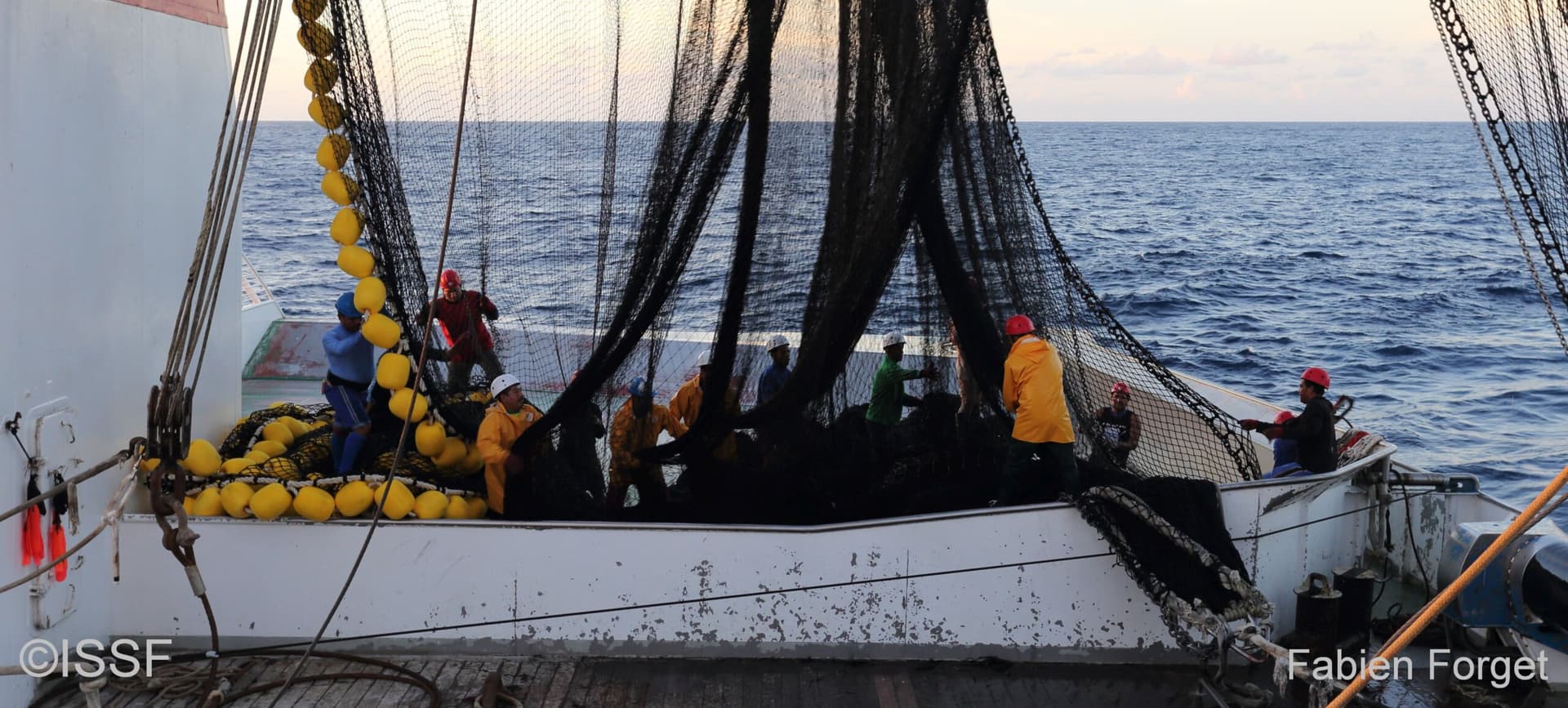
Science and field inputs are central to the fourth edition. “The guidebook is the result of years of hands-on research and collaboration,” said Dr. Victor Restrepo, ISSF Vice President of Science and Chair of the Scientific Advisory Committee. “It draws on at-sea trials of bycatch mitigation techniques; testing of non-entangling, biodegradable fish aggregating devices; input from research institutes and environmental non-governmental organizations; and direct feedback from skippers through ISSF workshops. By bringing together science and real-world experience, we are equipping tuna fishers with practical tools they can use every day to reduce impacts and continuously improve the sustainability of their fisheries.”
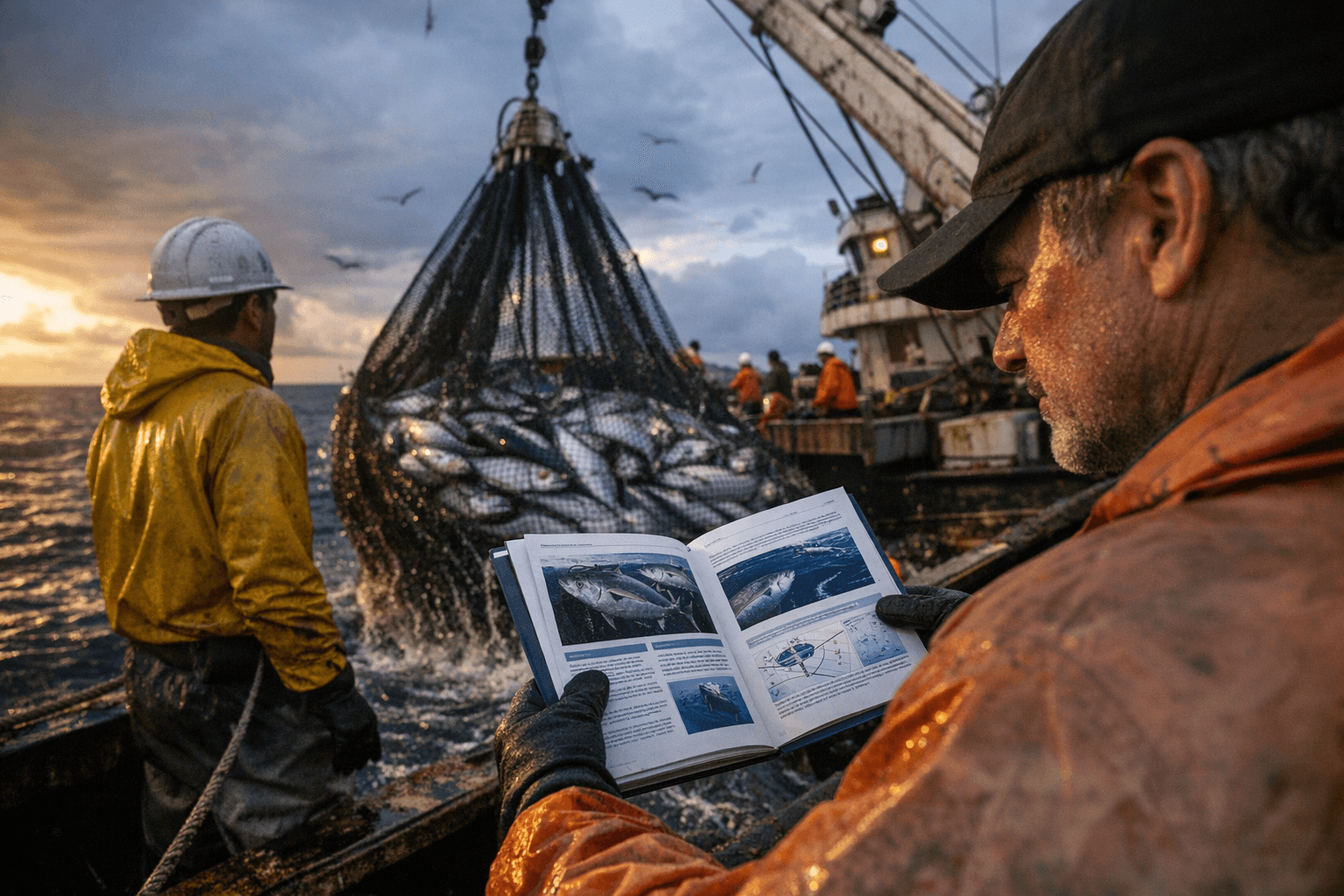
Chapter 1 opens with the line "Welcome to the International Seafood Sustainability Foundation’s guide to best practices in purse seine tuna fishing" and sets clear objectives: introduce ISSF’s mission and approach; provide examples of ISSF’s ongoing activities and outreach; and provide information about ISSF’s Participating Companies. The guide also addresses operational challenges, including species identification; one chapter notes that "another common challenge for skippers is distinguishing between small yellowfin and bigeye tunas" and supplies galleries highlighting the characteristic features of each.
The fourth edition sits inside a broader ISSF suite of guides for other gear types and tuna fishery observers and includes historical at-sea work such as an "experimental release panel in a purse seine net" tested during an ISSF bycatch research cruise in the western Pacific in June 2012. ISSF traces its origins to 2008, when fisheries scientists, industry leaders, and the World Wildlife Fund founded the organization, with the global coalition launching publicly in March of 2009; ISSF now lists partners and supporters working in Europe, Asia, Africa, North America, South America, Australia, and Oceania.
The materials present both the Fourth Edition date of December 2025 in the guide metadata and the March 4, 2026 announcement date; the documents do not state the relationship between those two dates. The guidebook’s multilingual downloads, the concluding form for bycatch education, the Conservation Measure 3.4 compliance link, and the explicit lineage of at-sea trials and FAD testing make the fourth edition a practical compliance and training tool for purse-seine skippers and for companies tracking ProActive Vessel Register obligations.
Know something we missed? Have a correction or additional information?
Submit a Tip