Istanbul becomes a global hub for Argentine tango
Istanbul has turned tango into a nightly ritual across two continents, with milongas, schools and festivals driving the scene. The city now balances Argentine roots with its own local style.
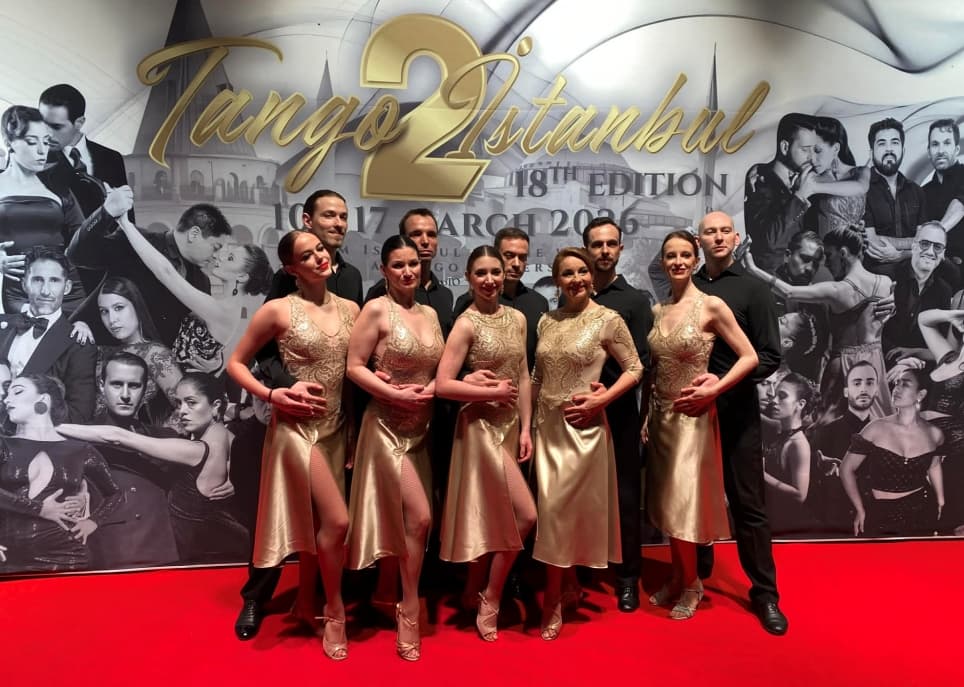
Every night, tango moves through Istanbul as if the city had always belonged to it. Milongas fill both the European and Asian sides of a metropolis that bridges two continents, and the dancers on the floor now include Turkish locals, foreign residents, visiting teachers and travelers.
From the Río de la Plata to the Bosphorus
Tango’s original home is far from the Bosphorus. UNESCO places its roots in the Río de la Plata basin, where the Argentine and Uruguayan tradition developed among the urban lower classes of Buenos Aires and Montevideo before being inscribed on the Representative List of the Intangible Cultural Heritage of Humanity in 2009. That lineage matters in Istanbul because it sharpens the city’s transformation: this is not a place where tango was born, but a place where it has been absorbed, practiced and made socially central.
That distance also explains why Istanbul’s rise stands out. The city has earned recognition from Argentine maestros and serious dancers because its tango life is no longer limited to a few imported performances. Instead, it now rests on a dense network of teachers, clubs, social dancers and event organizers who have turned an imported art form into part of the city’s cultural rhythm.
How Istanbul built a tango scene from the ground up
Argentine tango reached Istanbul in the late 1990s and early 2000s, when Turkish dancers encountered it abroad and returned home with the urge to build something local. That detail explains the scene’s character today: it did not arrive as a package from abroad, but through people who learned the dance elsewhere and then created the conditions for it to survive in Istanbul.
The result is a social world that feels both international and distinctly rooted in the city. Istanbul’s milongas run nightly, and the crowd is broad enough to keep the rooms in motion without making the scene feel anonymous. Gonca Çetin, one of the dancers helping define that world, describes the community as diverse and welcoming, a fitting description for a dance culture that depends on trust, etiquette and repeated face-to-face contact.
The city’s geography adds to the effect. Because tango happens on both sides of Istanbul, it becomes part of the city’s everyday cross-continental life rather than a niche event confined to one district. In practice, that means the dance belongs to the commuter city, the nightlife city and the city of visitors, all at once.
The institutions that keep the floor full
Istanbul’s tango identity is sustained by institutions as much as by charisma. Schools, clubs, universities, festivals and nightly dance halls together create a training and performance pipeline that keeps new dancers entering the scene while experienced dancers continue to shape it. Istanbul Tango Academy sits within that broader ecosystem as part of the city’s educational backbone, where technique and social dancing reinforce each other.
Large events have also given the scene scale and visibility. The Sultans of Istanbul Tango Marathon and Festival advertises an international lineup of renowned tango champions and teachers, including a world champion in Tango Salón. That kind of programming matters because it ties Istanbul to the global tango circuit without reducing the city to a mere stopover. It also signals that local dancers are practicing at a level that can hold its own in front of top-tier performers and instructors.
The 2026 Turkish Tango Championship at Atatürk Cultural Center shows how deeply the scene is now embedded in public cultural life. The event is co-organized with the Ministry of Culture of Buenos Aires and supported by the Argentine General Consulate in Istanbul, a rare blend of municipal prestige, foreign cultural diplomacy and grassroots dance culture. Those partnerships make the championship more than a competition: they turn tango into a shared institutional project between Istanbul and the tradition’s South American centers.
Preserving the roots, building a Turkish version
Istanbul’s tango boom carries an inherent tension. The city has built its reputation by honoring a dance whose language, technique and social codes are tied to Buenos Aires and Montevideo, yet the scene has also become unmistakably local through Turkish dancers, Turkish venues and Turkish institutions. That duality is the point of the story: the dance remains legible to visiting Argentine maestros, but it has also been reworked by the people who practice it every night in Istanbul.
What keeps that balance from tipping too far in either direction is repetition. Milongas keep the music and social ritual intact, festivals bring in outside expertise, and championships give the community a formal stage. At the same time, the daily work of teaching, hosting and dancing in Istanbul gives the scene its own accent, one shaped by a city that lives between continents and has learned to make that position part of its cultural identity.
The broader lesson is visible on the dance floor. Tango arrived in Istanbul as an import from the Río de la Plata, but it stayed because local dancers, institutions and international visitors built enough continuity to make it feel at home. That is how a borrowed art form became one of the city’s most recognizable urban identities, and why Istanbul now stands as a global tango hub with its own unmistakable character.
This article was produced by Prism’s automated news system from verified source data, official records, and press releases, then run through automated quality and moderation checks before publishing. The system is built and supervised by the people who set the standards it runs under. Read our full AI policy.
Did this article answer your question?