Italian production of August Wilson's Jitney heads to three U.S. cities
August Wilson’s Jitney is crossing the Atlantic in Italian, with projected English supertitles and a cast of African-origin Italian actors.
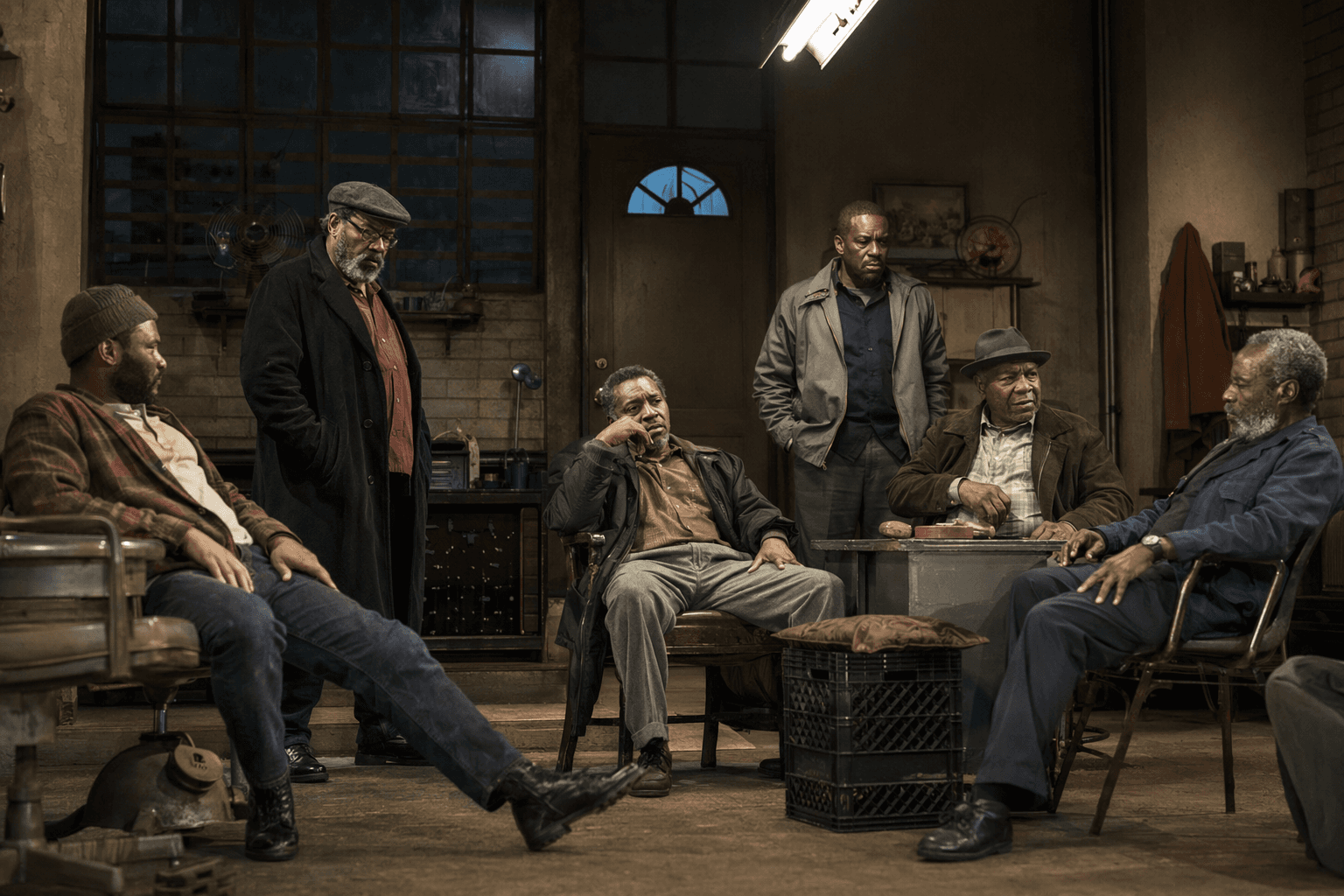
August Wilson’s cabdriver drama is heading back to the United States in a form few American audiences have ever seen, performed in Italian and carried by projected English supertitles. The production began as a milestone in Vicenza, Italy, where it premiered in early 2023 as the first Italian translation and stage performance of any August Wilson play.
The touring version comes out of The Wilson Project, a collaboration that ran from September 2022 to November 2023 and brought together La Piccionaia Centro Produzione Teatrale, August Wilson Legacy LLC, the University of Padua’s Department of Linguistic and Literary Studies, and the University of Pittsburgh’s European Studies Center, with support from the U.S. Consulate General in Milan. Renzo Carbonera directed the staging, Angela Soldà translated it, and the original Italian cast was composed entirely of Italian actors of African origin, including Alessandra Arcangeli, Yonas Aregay, Maurizio Bousso, Germano Gentile and Aron Tewelde.
What makes the production stand out is not only that it is Italian, but that it introduces Wilson to a country where organizers said he remained little known to the general public. Before this project, La Piccionaia said none of his plays had been staged in Italy, and none had been translated into Italian except for a few university theses on Fences and The Piano Lesson. The project also built a public framework around the play, with workshops, film screenings, open rehearsals and discussion events meant to deepen understanding of Wilson’s work.
That context gives Jitney an unusual second life. Set in 1977 in Pittsburgh’s Hill District, the play follows men who drive unlicensed cabs, a setting that places everyday hustle, race, labor and survival at the center of the drama. University of Pittsburgh programming linked those themes to contemporary Italian debates over immigration and xenophobia, making Wilson’s Pittsburgh speak to a different civic argument on the other side of the Atlantic. The Hill District’s own multiethnic history, including Jewish, Italian and Black communities, adds another layer to the play’s travel between places and languages.
For U.S. audiences, the point is not nostalgia for a familiar revival. Jitney was first written in 1979 and reached Broadway in 2017, completing Wilson’s American Century Cycle, the ten-play body of work that earned him Pulitzer Prizes for The Piano Lesson and Fences. Bringing the play home through Italy rather than a domestic revival tests what survives translation and what changes in transit. In that shift, Wilson’s work is not diluted. It is being measured against new histories, new publics and new forms of recognition.
This article was produced by Prism’s automated news system from verified source data, official records, and press releases, then run through automated quality and moderation checks before publishing. The system is built and supervised by the people who set the standards it runs under. Read our full AI policy.
Did this article answer your question?