Italy misses third straight World Cup, deepening national crisis
Italy will watch its third straight World Cup from home after a 4-1 penalty shootout loss to Bosnia and Herzegovina. The collapse triggered resignations and a fierce reckoning with FIGC.
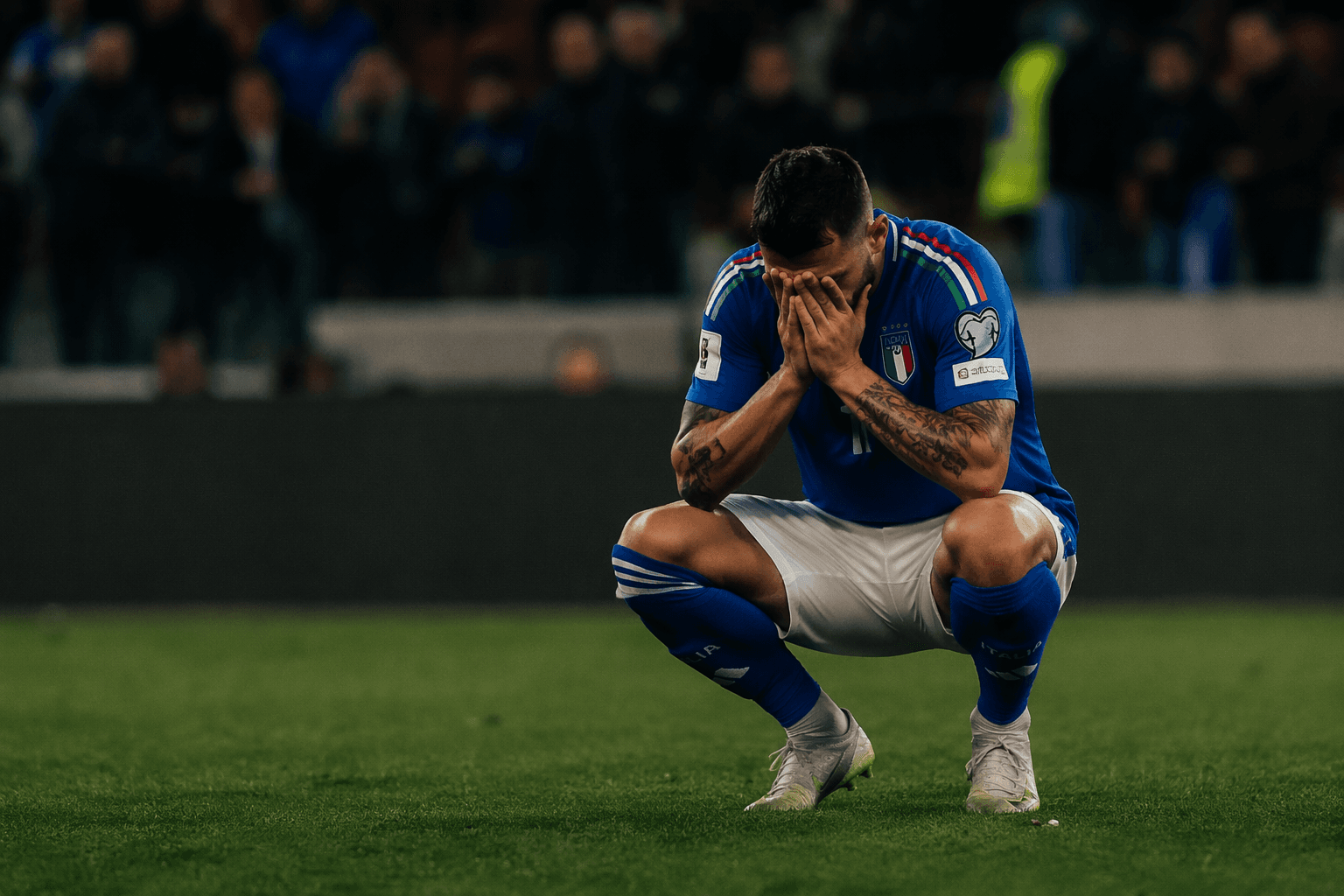
Italy’s failure to reach the 2026 FIFA World Cup became the sort of result that reaches far beyond sport: a 4-1 penalty shootout loss to Bosnia and Herzegovina in March after a 1-1 draw through extra time, and a third straight absence from soccer’s biggest stage.
The four-time world champions will miss a tournament they last won in 2006, extending a slide that already included elimination in the group stage in 2010 and 2014, then failed qualification for 2018 and 2022. Italy is now the first former World Cup winner to miss three consecutive editions, a statistic that has sharpened the sense that the national team’s decline is no longer a one-off shock but a prolonged unraveling.
The reaction at home was immediate and unforgiving. Italian newspapers branded the result a “third apocalypse,” and the language around the defeat turned quickly from disappointment to institutional indictment. The national team’s collapse was treated as evidence of deeper problems in player development, leadership and the domestic game’s ability to renew itself.
Gennaro Gattuso stepped down as Italy manager three days after the failure, leaving by mutual consent and, as he put it, “with pain in his heart.” His resignation removed the coach who was expected to steady the team after another qualifying failure, but it did not calm the broader backlash surrounding the federation and the structure that produced the result.
FIGC president Gabriele Gravina also resigned in the fallout, facing pressure that included criticism from the government. The federation moved toward an extraordinary assembly to confront the crisis and set a course for a reset, a step that underscored how deeply the defeat cut into Italian football’s leadership.
The symbolism has spread well past the pitch. For many Italians, the World Cup absence echoes wider complaints about institutions that struggle to reform, invest and adapt. The national team’s exile from the tournament has become a blunt reminder that one of football’s most accomplished countries is still searching for a way out of its own long stagnation.
This article was produced by Prism’s automated news system from verified source data, official records, and press releases, then run through automated quality and moderation checks before publishing. The system is built and supervised by the people who set the standards it runs under. Read our full AI policy.
Did this article answer your question?