James Webb reveals millions of stars in Cigar Galaxy image
Webb resolved about 16.5 million stars in the Cigar Galaxy, exposing a distorted starburst disk 12 million light-years away. The image shows how mergers can reshape galaxies.

NASA’s James Webb Space Telescope has turned Messier 82, the Cigar Galaxy, into a map of about 16.5 million stars, exposing a level of detail that earlier instruments could not deliver. The new composite was built from 65 hours of observing time with Webb’s NIRCam instrument and shows not only stars, but also dust grains and ionized hydrogen gas across the galaxy’s stretched disk.
M82 sits about 12 million light-years from Earth in Ursa Major and has been under watch since Johann Elert Bode discovered it in 1774. NASA describes it as one of the nearest and most intense starburst galaxies in the local universe, with a central star formation rate about 10 times that of the Milky Way. That burst is temporary on cosmic timescales, expected to last only a few hundred million years before it becomes self-limiting as it consumes or destroys the material needed to make new stars.
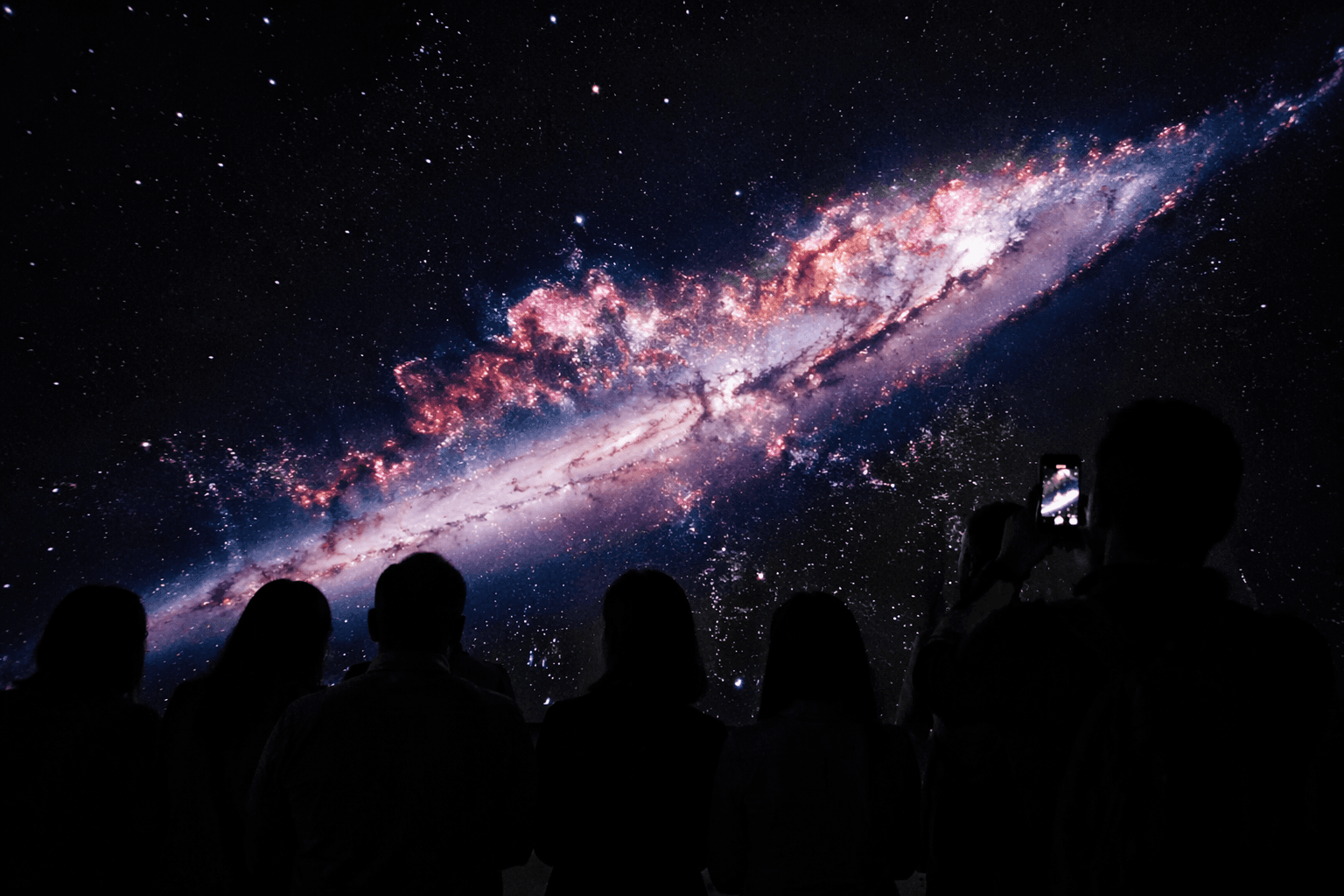
The Webb view matters because M82 has been hard to study in visible light. Thick dust had obscured the galaxy in earlier observations, including those from the Hubble Space Telescope. Webb’s infrared sensitivity cut through that veil and revealed the galaxy’s asymmetric, distorted disk in a form that matches the kind of structure expected when galaxies interact or merge. ESA’s Webb release said the outflows above and below the disk show a layered structure, with ionized gas closer to the plane of the galaxy and dust grains farther out.
That geometry helps explain why astronomers see M82 as more than a dramatic image. NASA’s long-running descriptions of the galaxy’s superwind have tied its structure to supernova explosions and winds from massive stars, which can drive material out of the center and reshape the galaxy over time. Eric Bell of the University of Michigan said Webb will help address how star formation has moved within M82 over the last few billion years. Vaishnav Rao said the new image lets astronomers see individual stars near the galaxy center in far greater detail than before.
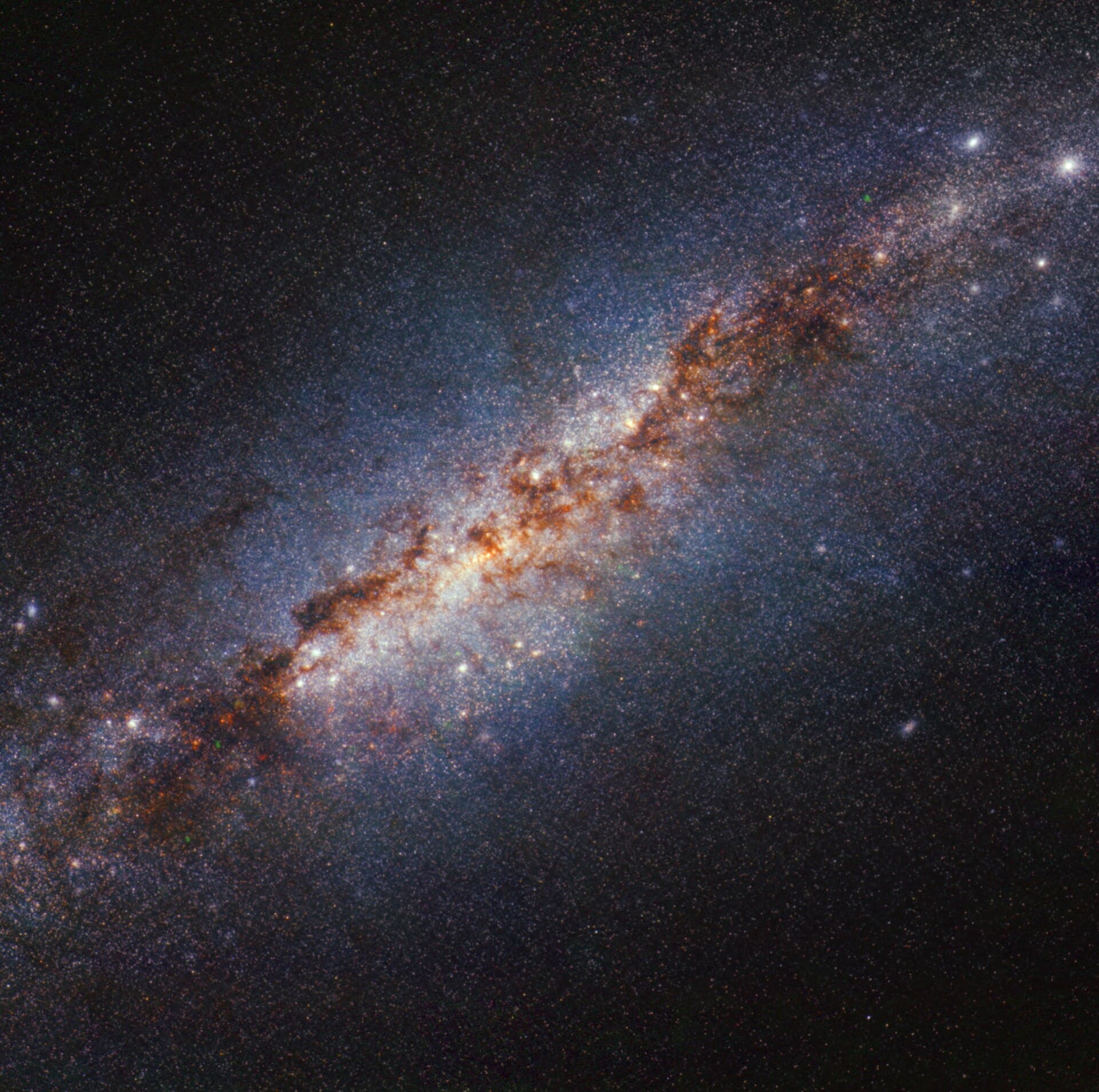
The result is not just a sharper picture of a nearby galaxy. It is a view into how mergers, starbursts and outflows can transform a system over time, making M82 a close-range laboratory for processes that may have been common when the universe was younger. The lead scientist described the galaxy as chaotic but scientifically beautiful, a fitting description for a system Webb has now made legible in unprecedented detail.
This article was produced by Prism’s automated news system from verified source data, official records, and press releases, then run through automated quality and moderation checks before publishing. The system is built and supervised by the people who set the standards it runs under. Read our full AI policy.
Know something we missed? Have a correction or additional information?
Submit a Tip