Tech sell-off deepens as rate worries hit Wall Street, Asia
A tech-led sell-off knocked the S&P 500 down 1.4% as rate fears and AI valuation worries spread from Asia to U.S. markets.
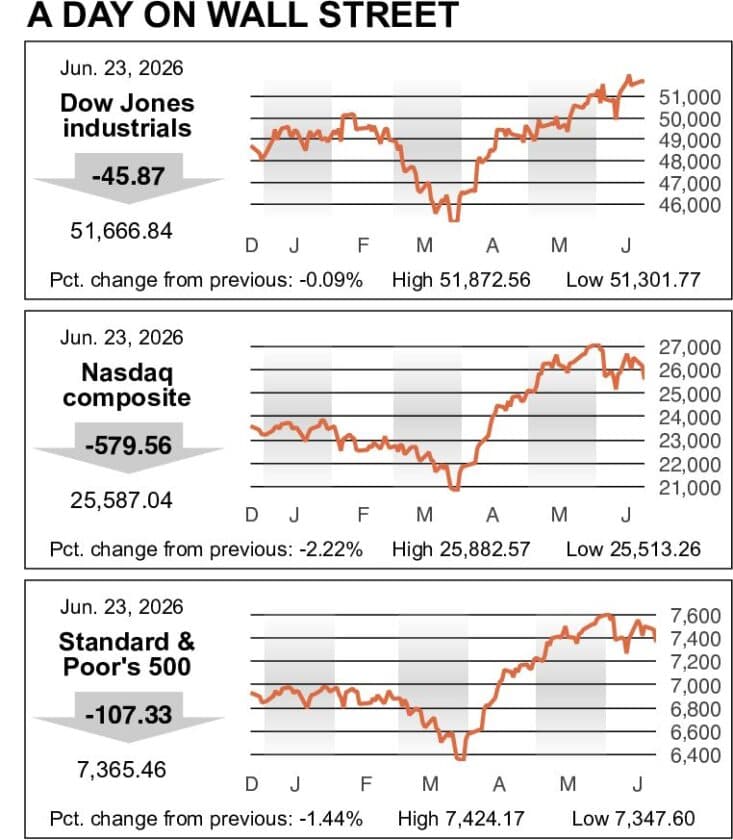
Wall Street gave up more of its recent gains Tuesday as a sell-off in big technology stocks spread from Asia back to the United States, pulling the S&P 500 down 1.4% and the Nasdaq Composite 2.2% lower. The Dow Jones Industrial Average closed just 0.1% lower after briefly moving higher, a sign that gains in other parts of the market were not enough to offset losses in a small group of giant tech names.
The retreat came as investors worried that higher borrowing costs could return later this year, just days after the Federal Reserve kept its benchmark federal funds rate at 3.5% to 3.75% at its June 16 to 17 meeting. Long-term rates were already elevated: the 30-year Treasury yield stood at 4.95% on June 22, according to FRED. More stocks within the S&P 500 gained than fell on Tuesday, but tech companies overpowered those advances and set the tone for the broader market.

The pressure was heaviest in chipmakers and other AI-linked stocks. Micron Technology slumped 13.2% and Nvidia fell 4.1% in New York, while Samsung Electronics dropped 12.3% in South Korea. The Kospi in Seoul fell 10% during the sell-off, then recovered only slightly to 8,241.23 on June 24, a sign that the shock was still moving through Asian markets. Reuters said the Philadelphia SE Semiconductor index fell 7.9% and the S&P 500 information technology sector slipped 3.7%, underscoring how concentrated the selling was.
The move reached Europe as well, showing that the anxiety was global rather than confined to a single trading session in New York. Tech shares had been among the market’s strongest performers, with the sector up 25.5% over the previous three months and 16.6% for the year. That run had helped push major indexes to record-setting levels throughout 2026, but it also left them exposed when sentiment shifted toward rates, valuations and the sustainability of AI spending.
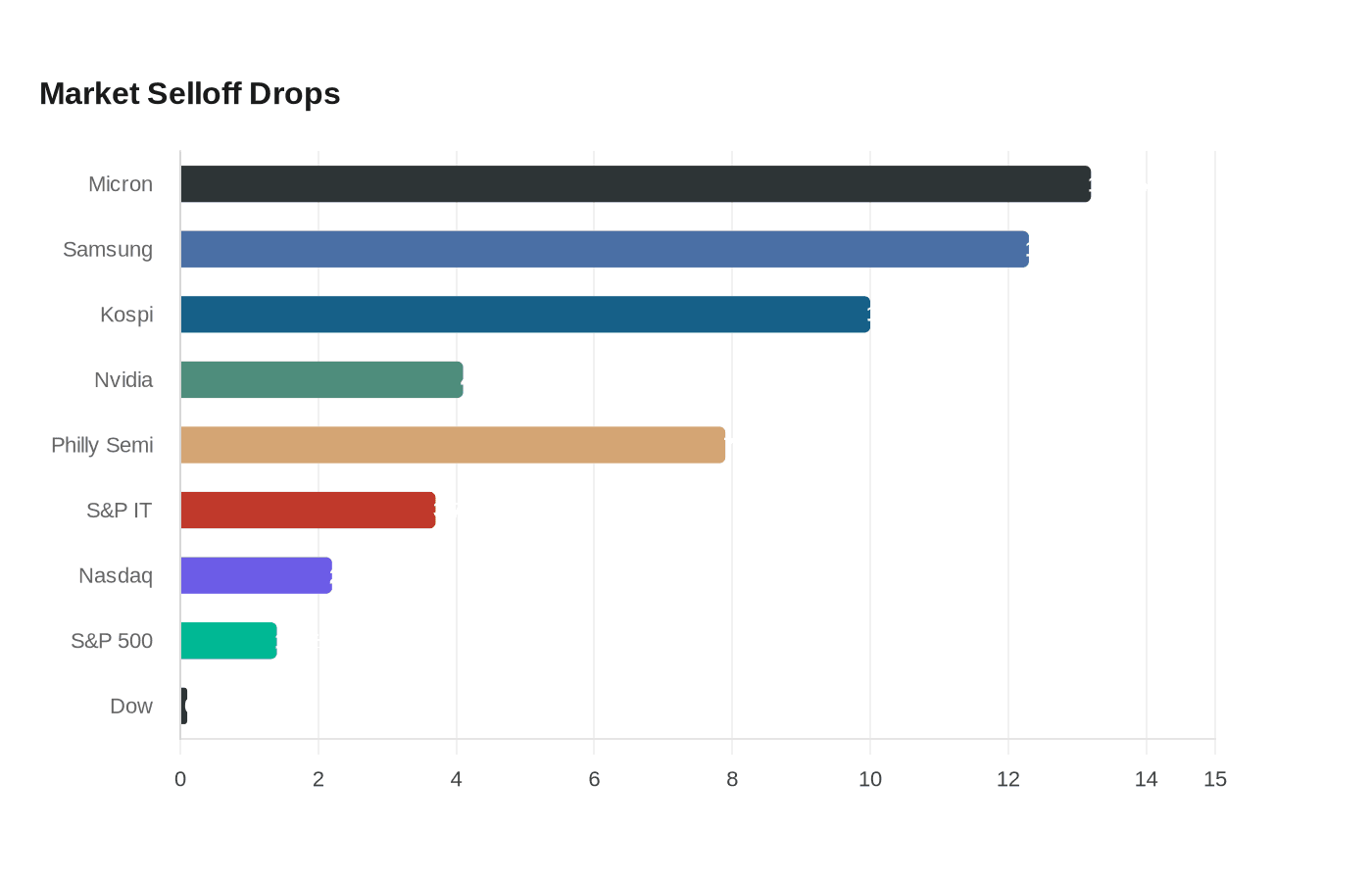
Investors were increasingly scrutinizing debt-funded AI spending and bracing for a more hawkish Federal Reserve. Brock Weimer of Edward Jones said some consolidation was reasonable after such a sharp move higher. For now, the sell-off has left the market confronting a narrow question with broad consequences: whether the year’s defining trade can keep carrying the rest of the index.
This article was produced by Prism’s automated news system from verified source data, official records, and press releases, then run through automated quality and moderation checks before publishing. The system is built and supervised by the people who set the standards it runs under. Read our full AI policy.
Know something we missed? Have a correction or additional information?
Submit a Tip